


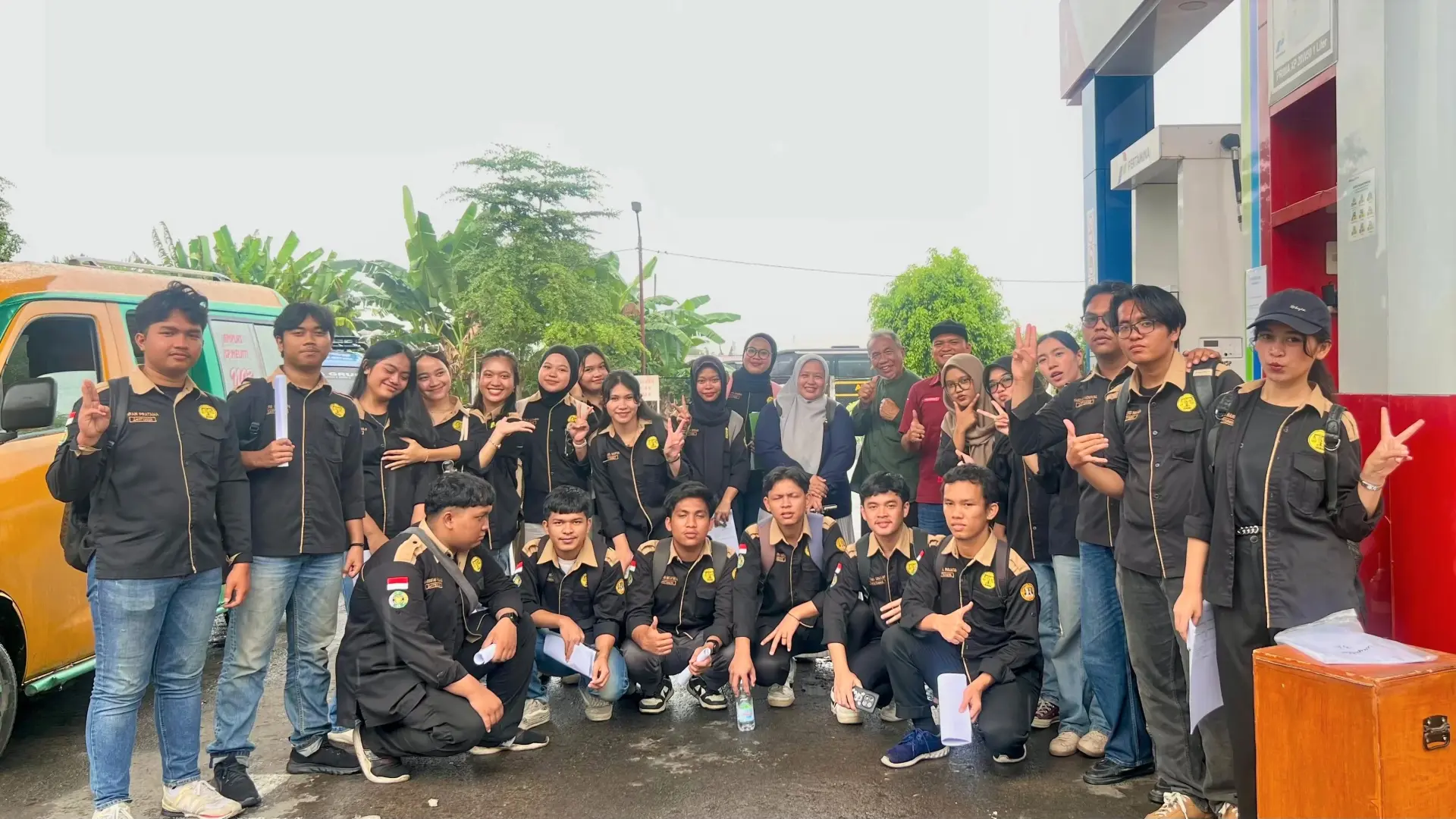
Medan, November 17, 2026 – Fifth-semester students of the Diploma Program in Metrology and Instrumentation, Faculty of Vocational Education, Universitas Sumatera Utara (USU), conducted a practical session for the Oil and Gas Measurement Systems course, taught by Mr. Tanto Kuntoyo and Ms. Sally Irvina Ritonga, on Tuesday, November 17, 2026. Unlike practical sessions conducted in campus laboratories, this activity was held directly at Gas Station 14.202.149, located at Jl. Jend. Besar A.H. Nasution, Pangkalan Mashur, Medan, directly across from the Medan Hajj Dormitory. This Pertamina gas station is an industry partner of the study program.
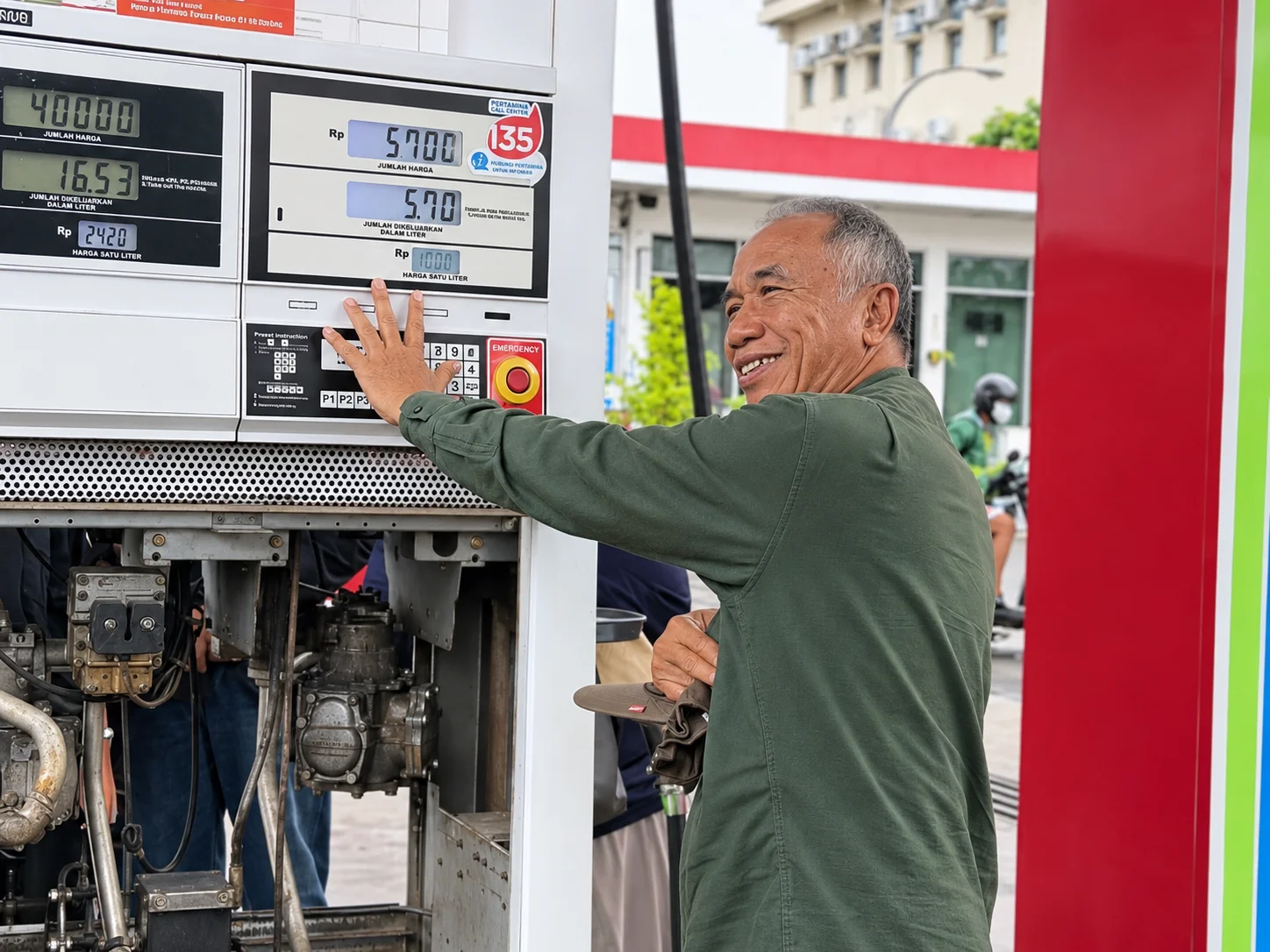
This practical session allowed students to observe and directly practice how the accuracy of fuel dispensing pumps is tested in the field. Fuel dispensing pumps at gas stations are measuring instruments that must undergo initial verification and periodic re-verification, because the fuel volume displayed on the dispenser screen must correspond to the actual amount received by consumers.
The activity began with instructions from the course lecturers, Mr. Tanto Kuntoyo and Ms. Sally Irvina Ritonga, regarding safety procedures in the gas station area and the testing stages to be carried out. Students were then introduced to the components of the fuel dispensing pump, starting from the counting unit (counter) and the displays for price, volume in liters, and price per liter, to the components inside the dispenser, such as the meter, pump, and channels, which are usually not visible to consumers.
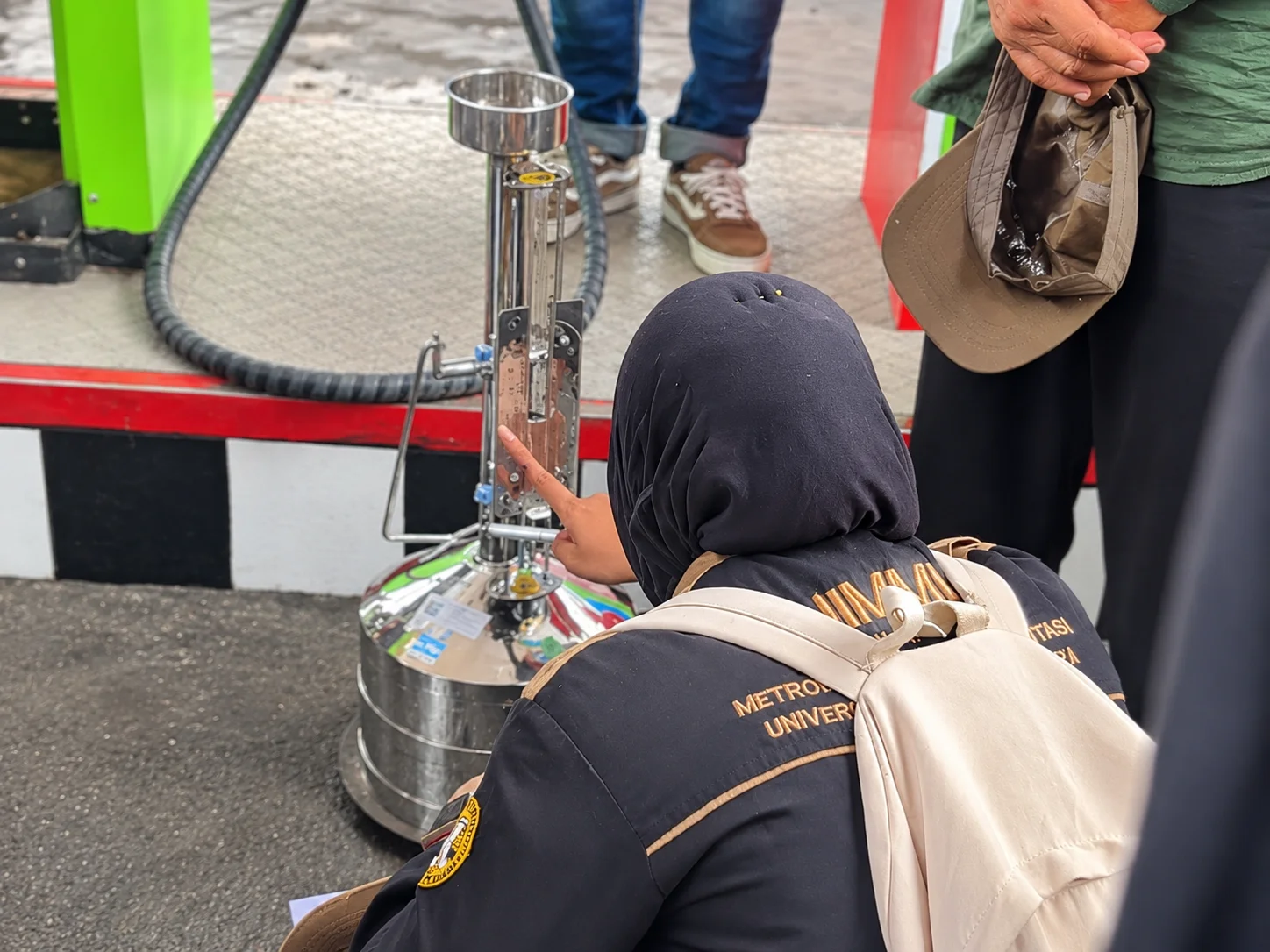
During the main session, students conducted tests using a standard stainless-steel measuring vessel. Fuel was dispensed from the nozzle into the measuring vessel until a specific volume was indicated on the dispenser. Students then read the scale on the neck of the vessel to determine the actual volume and compared it with the figure displayed on the pump screen. The difference between the two was calculated as the indication error and compared with the maximum permissible error (BKD) in accordance with legal metrology regulations.
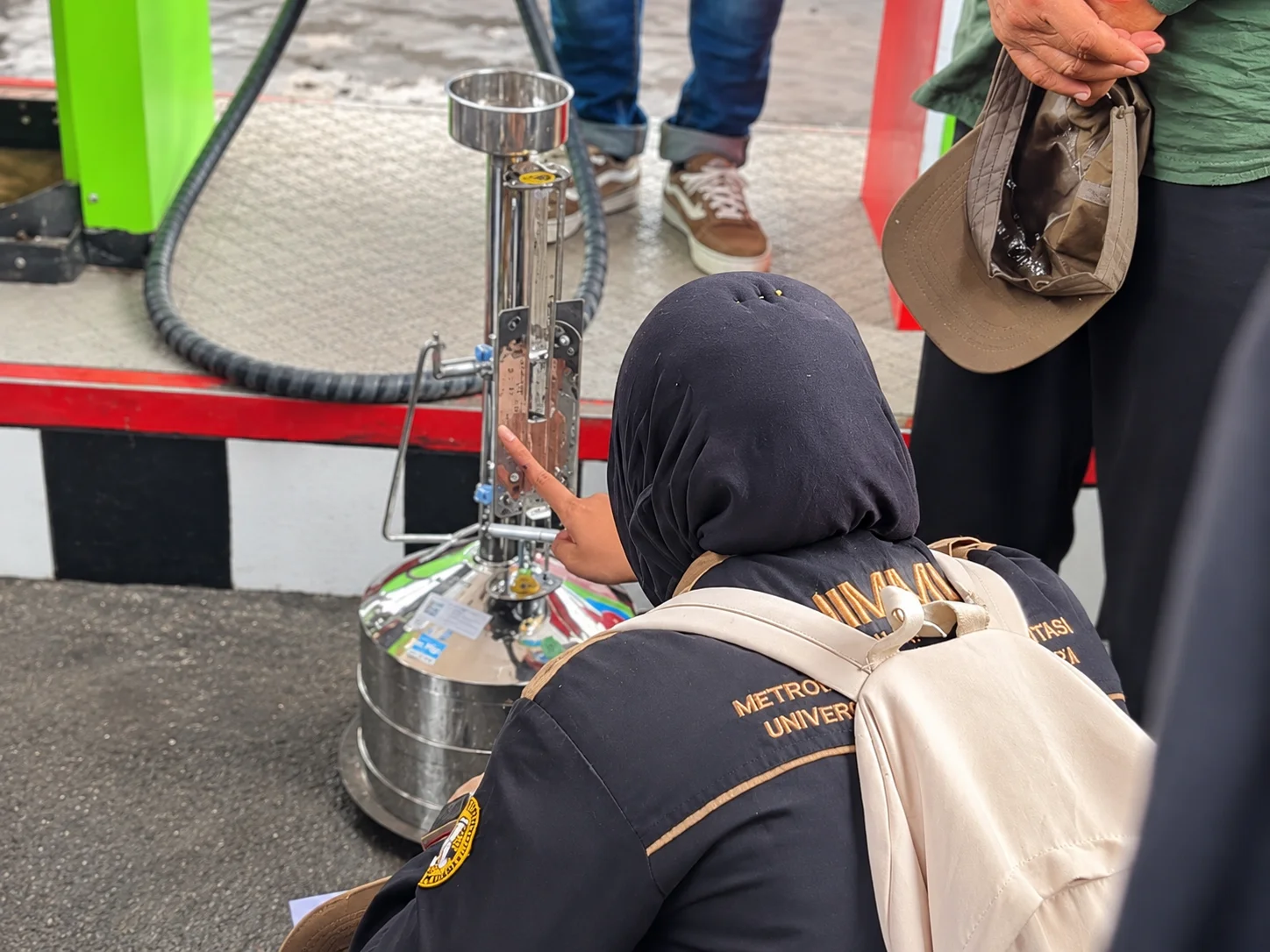
In turn, students participated in every stage: positioning the vessel so that it was upright and level, waiting for the liquid to stabilize before taking readings, recording the results on observation sheets, and discussing sources of measurement uncertainty, such as eye position when reading the scale, fuel temperature, and air bubbles. The practical session was interactive, with students actively asking questions and engaging in discussions directly with the on-site supervisor.
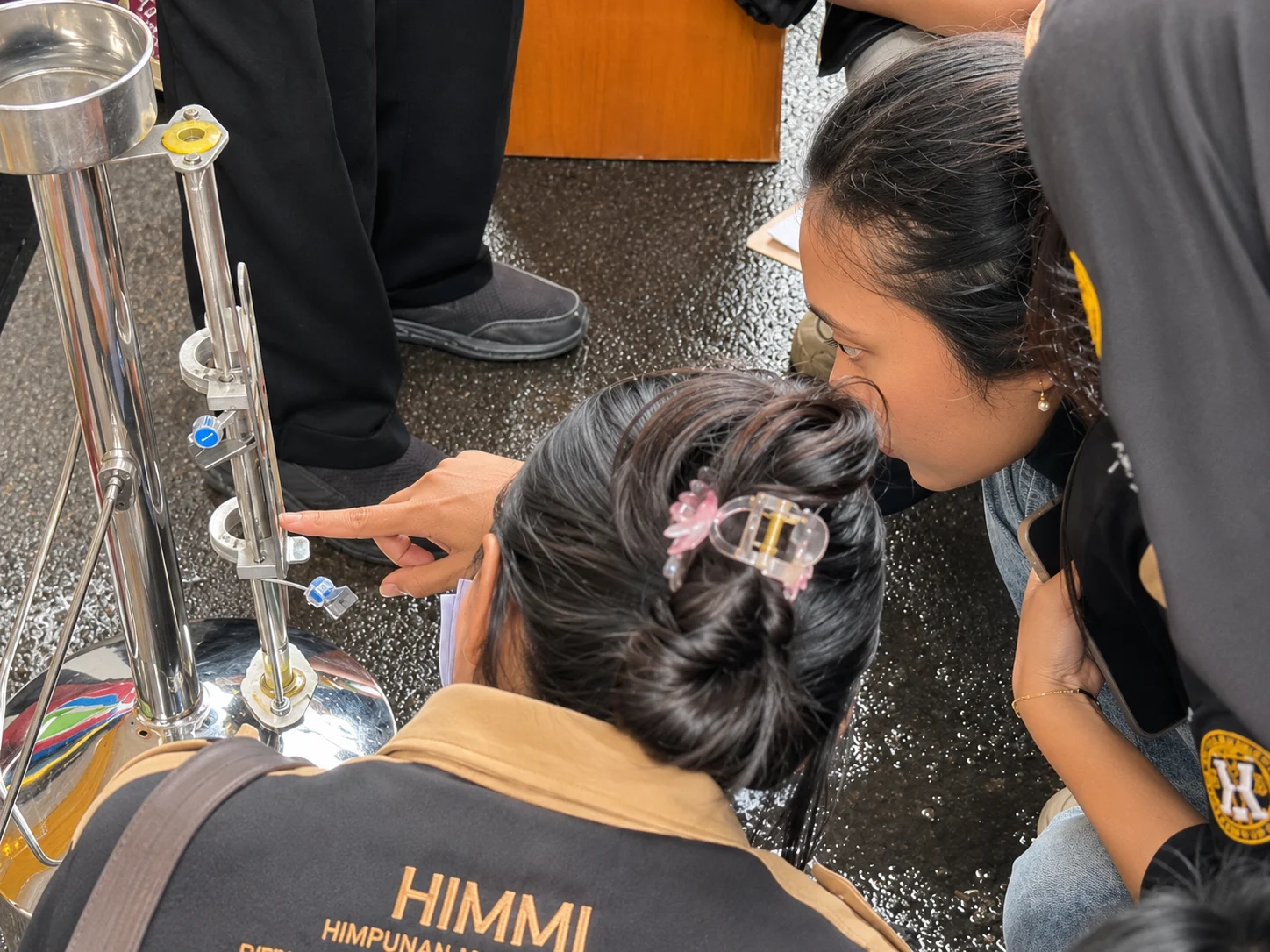
Through this field practical session, students are expected not only to understand the theory of oil and gas measurement systems in the classroom but also to acquire the practical skills required in the workplace, particularly in legal metrology, measuring instrument supervision, and the oil and gas industry. Direct experience in a real working environment also trains students in accuracy, teamwork, and discipline in implementing safety procedures.
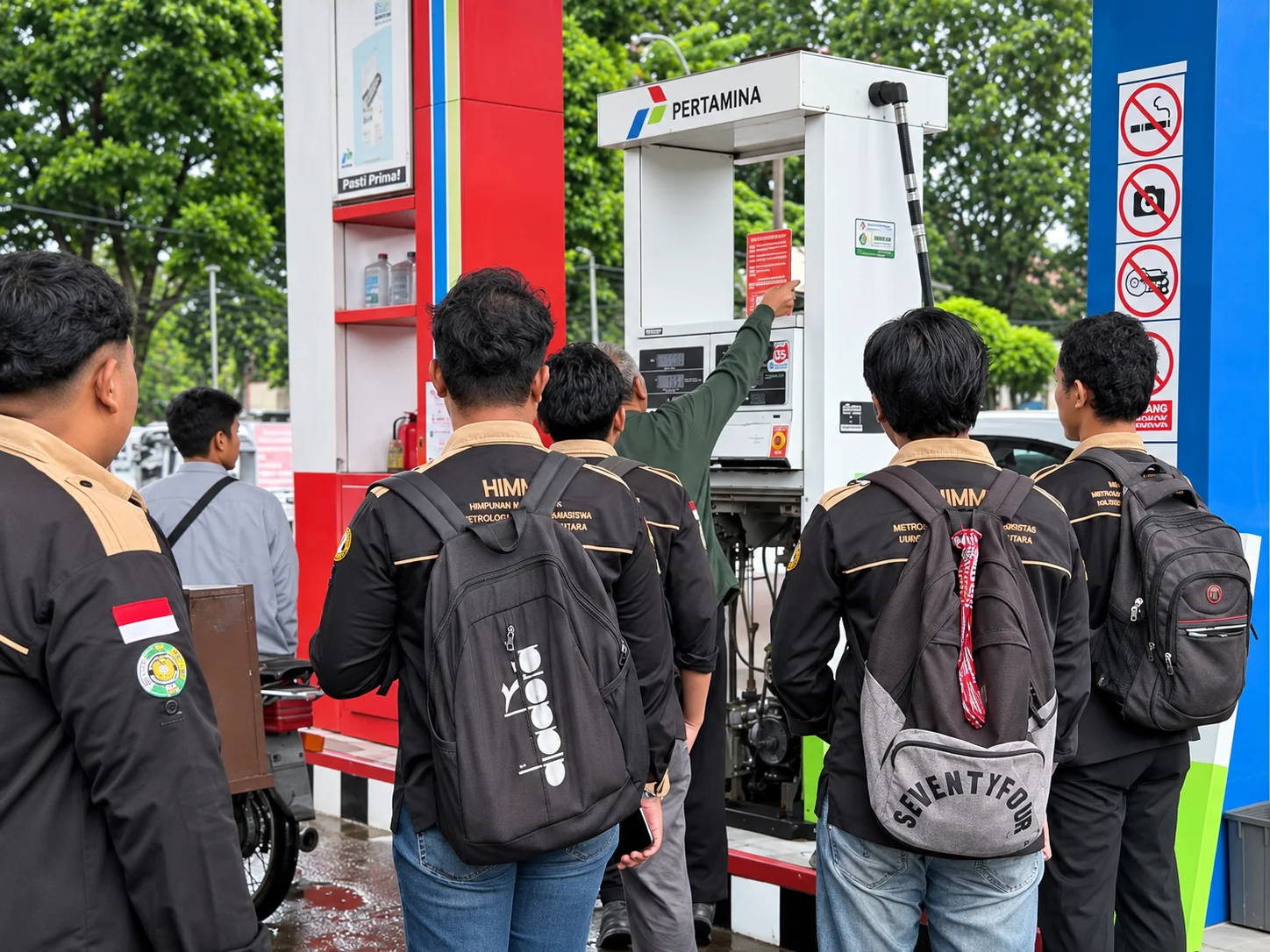
The Metrology and Instrumentation Study Program expresses its gratitude to Gas Station 14.202.149 for the opportunity and support provided. Collaboration with industry partners such as this will continue to be strengthened as part of the Faculty of Vocational Education USU's commitment to producing competent, skilled, and work-ready vocational graduates.