


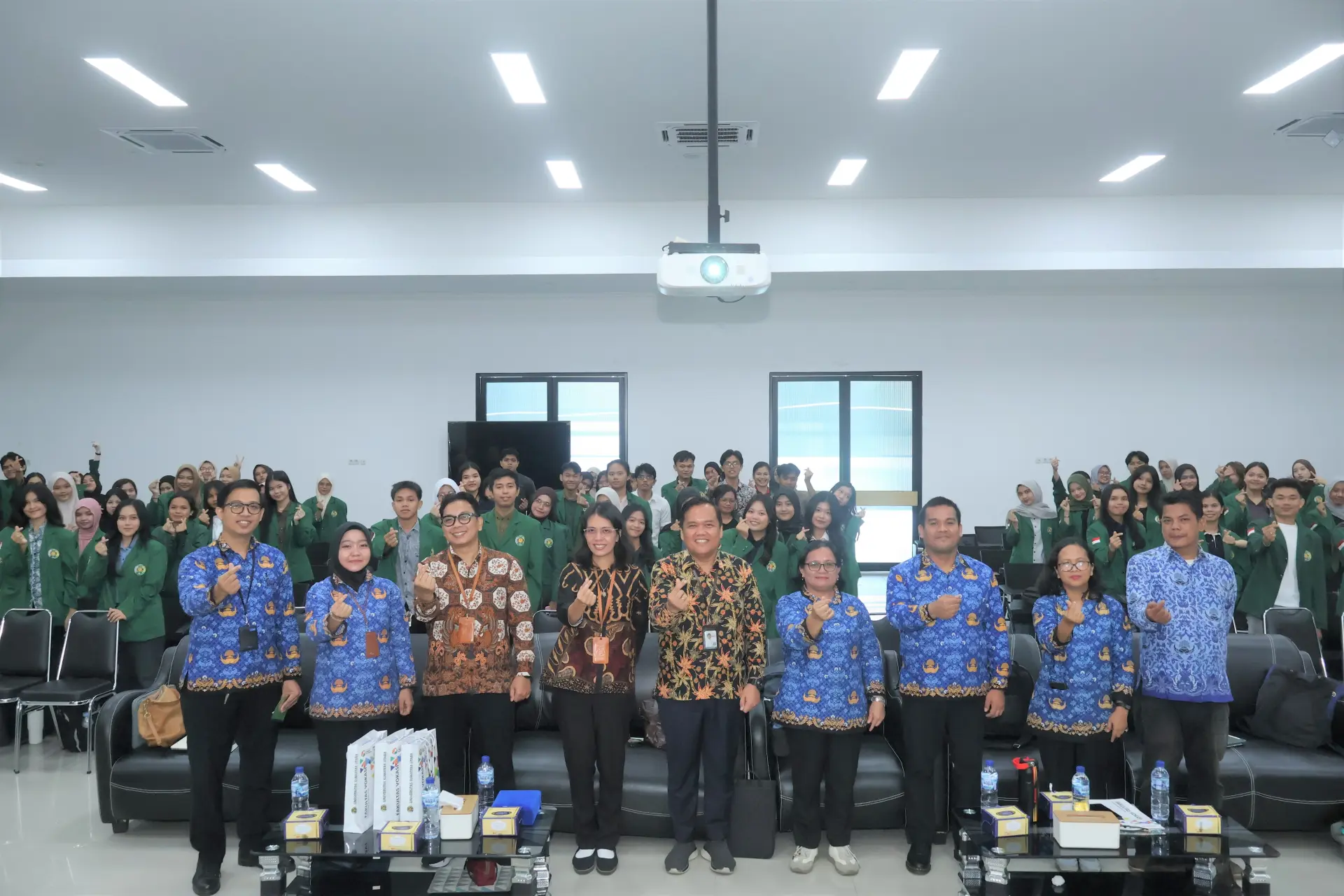
Medan, October 28, 2026 – The Undergraduate Program in Applied Statistics, Faculty of Vocational Education, Universitas Sumatera Utara (USU), held a Guest Lecture on Regional Statistics Partnership with the theme “Data Analysis-Based Regional Statistics to Support Development Planning in Karo Regency” on Wednesday, October 28, 2026, at the USU Student Center Hall.
The event was attended by the Vice Dean, Head of the Undergraduate Program in Applied Statistics, lecturers, educational staff, and students. This guest lecture was organized as a platform to broaden students' insights and understanding of the use of statistical data in supporting regional development planning, while also strengthening synergy and partnerships between higher education institutions and Statistics Indonesia (BPS).
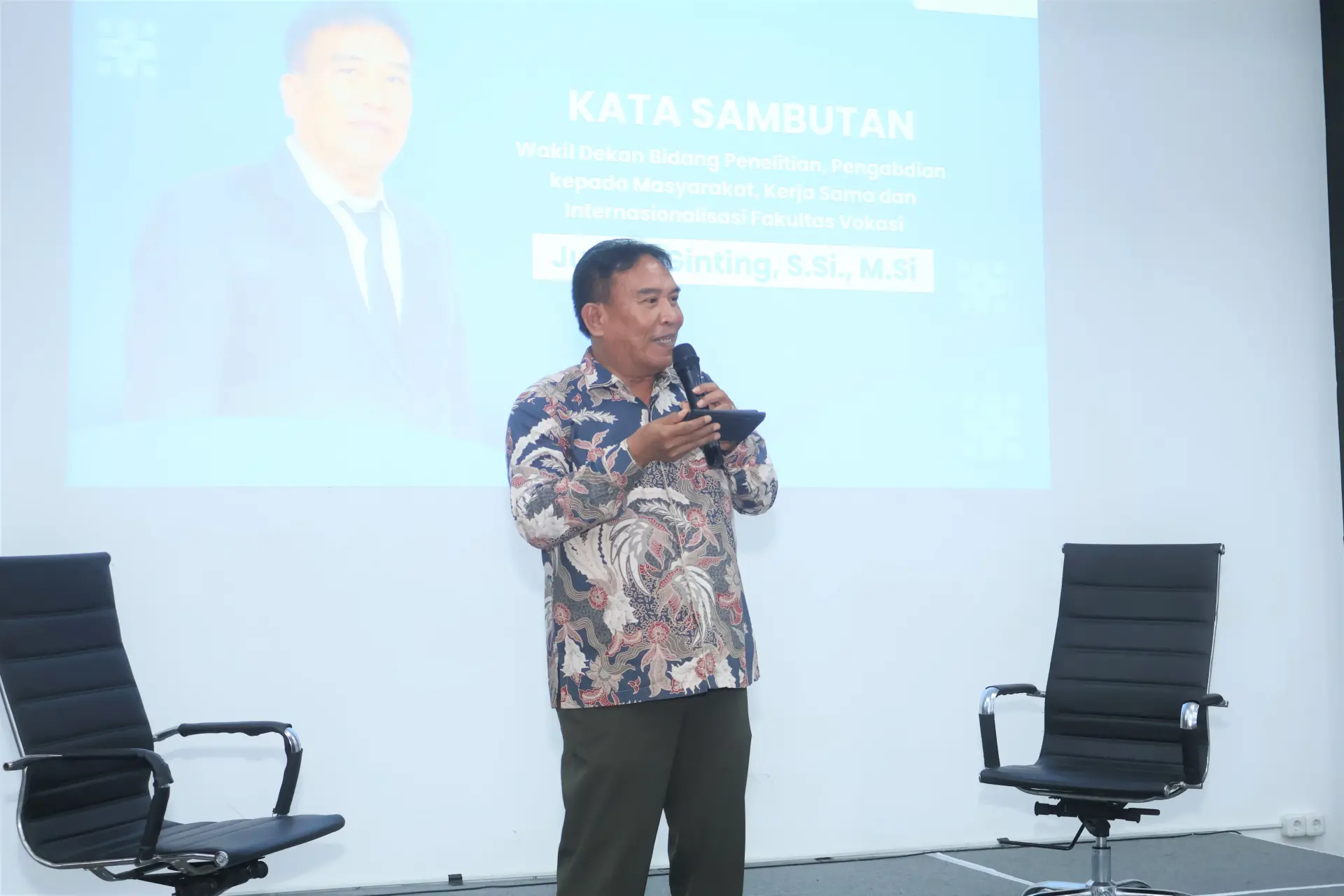
The event began with an opening session and remarks by the Vice Dean for Research, Community Service, Cooperation, and Internationalization of the Faculty of Vocational Education USU, Junedi Ginting, S.Si., M.Si. In his remarks, he emphasized the importance of using statistical data as a foundation for formulating policies and development plans that are appropriately targeted. The event was also expected to serve as an opportunity for students to gain practical knowledge and experience directly from practitioners in the field of statistics.
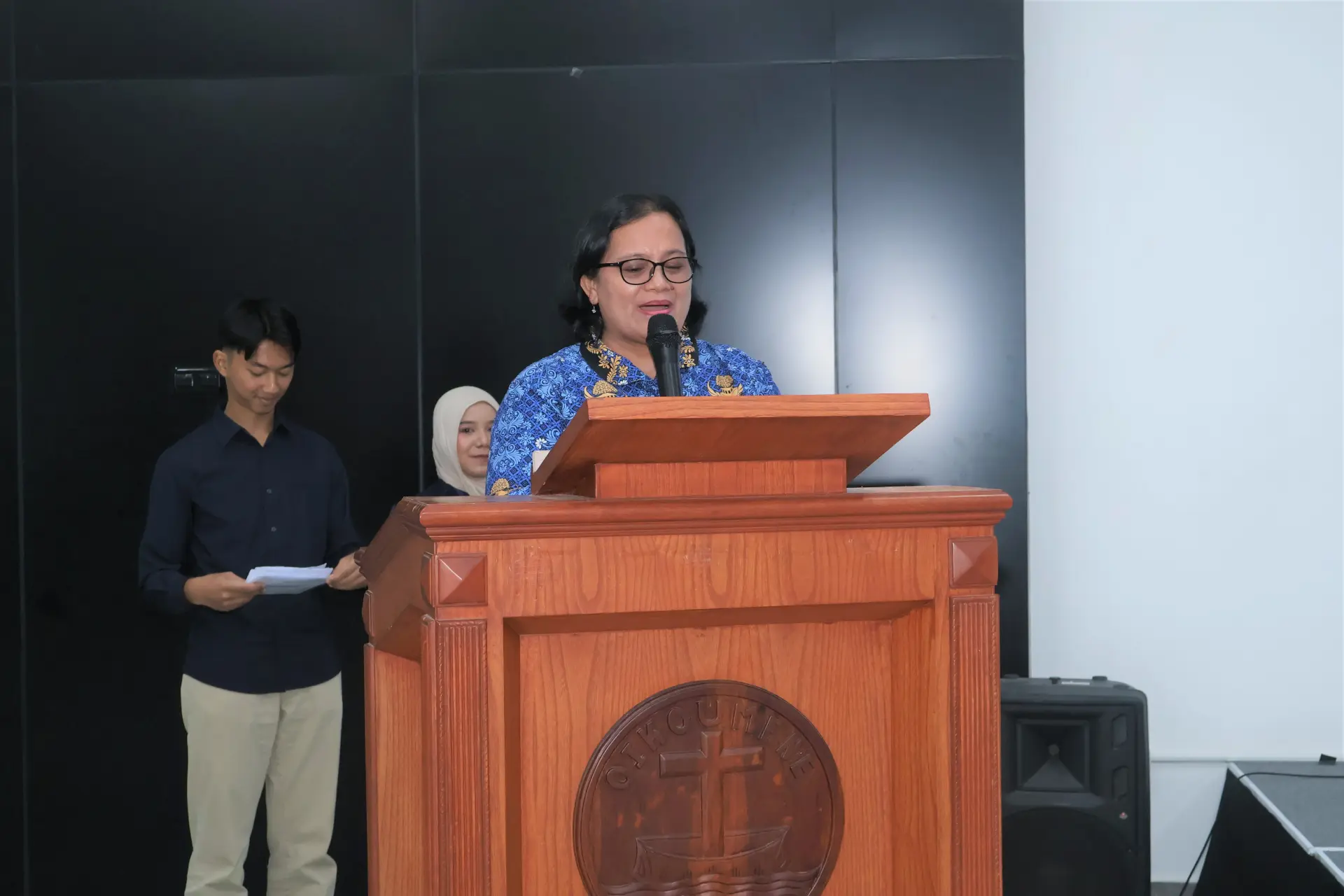
Next, the Head of the Undergraduate Program in Applied Statistics, Asima Manurung, S.Si., M.Si., also delivered remarks and expressed appreciation for the organization of this guest lecture. She hoped that through this activity, students would understand the application of statistical science in the context of regional development and gain direct insight into how statistical data and analysis play a role in generating useful information for decision-making.
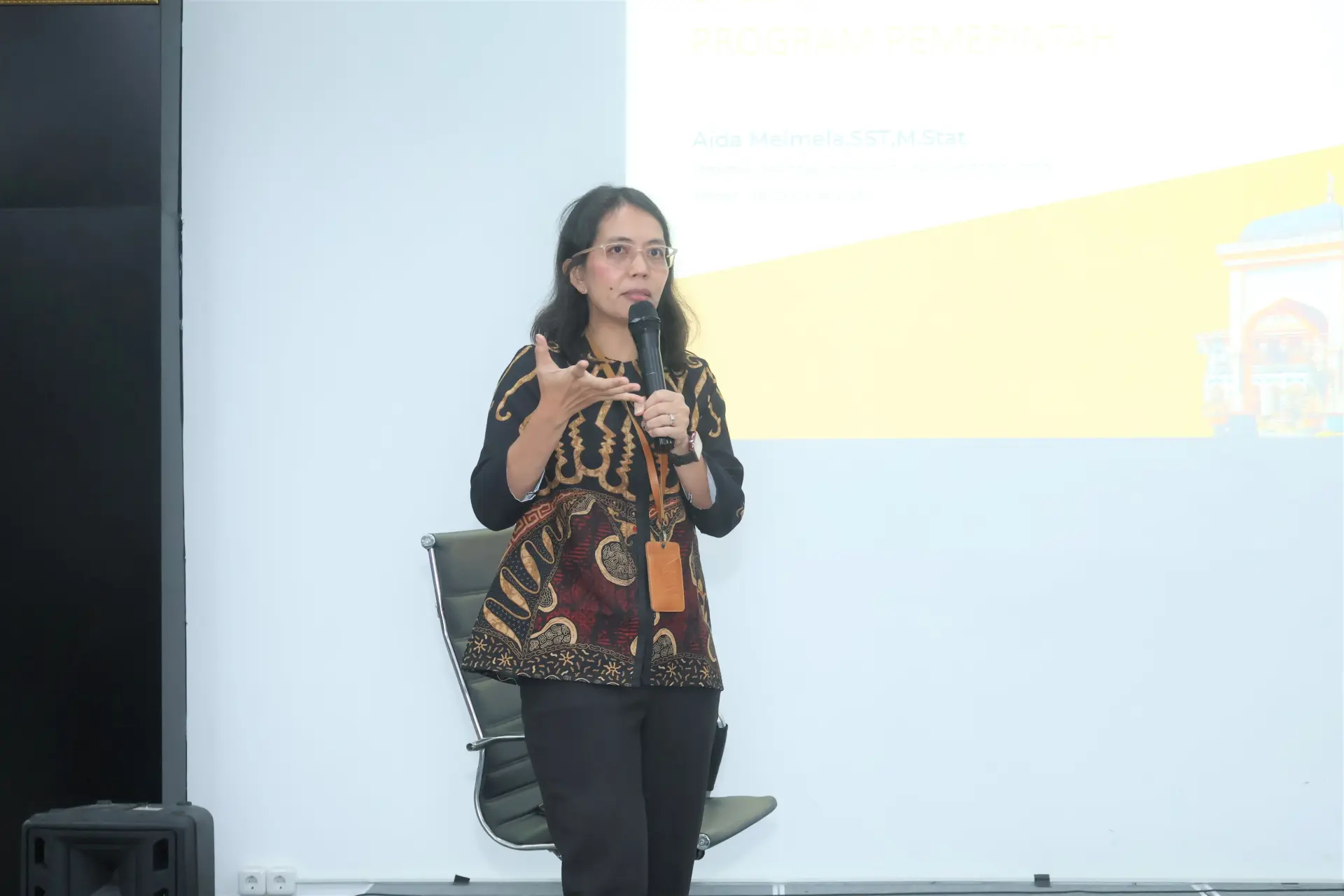
Entering the presentation session, the event featured three speakers from the Statistics Indonesia (BPS) of North Sumatra Province. The first speaker, Aida Meimela, SST., M.Stat., a Senior Expert Statistician at BPS North Sumatra Province, presented material on “DTSEN as a Database for Targeting Government Programs”. In her presentation, she discussed the importance of integrated data as a basis for determining the targets of government programs so that the implementation of various development programs can be more focused and appropriately targeted.
The second presentation was delivered by Deltha A. Lubis, SST., M.Stat., a Senior Expert Statistician at BPS North Sumatra Province, on “The Socioeconomic Transformation of Karo Regency: Analysis of Strategic Regional Development Indicators”. This presentation reviewed several important indicators for measuring regional development progress, including poverty, the Human Development Index (HDI), and economic growth, based on the latest data published by BPS. Through this presentation, participants gained an overview of how statistical indicators can be used to analyze socioeconomic conditions and identify the direction and challenges of development in Karo Regency.
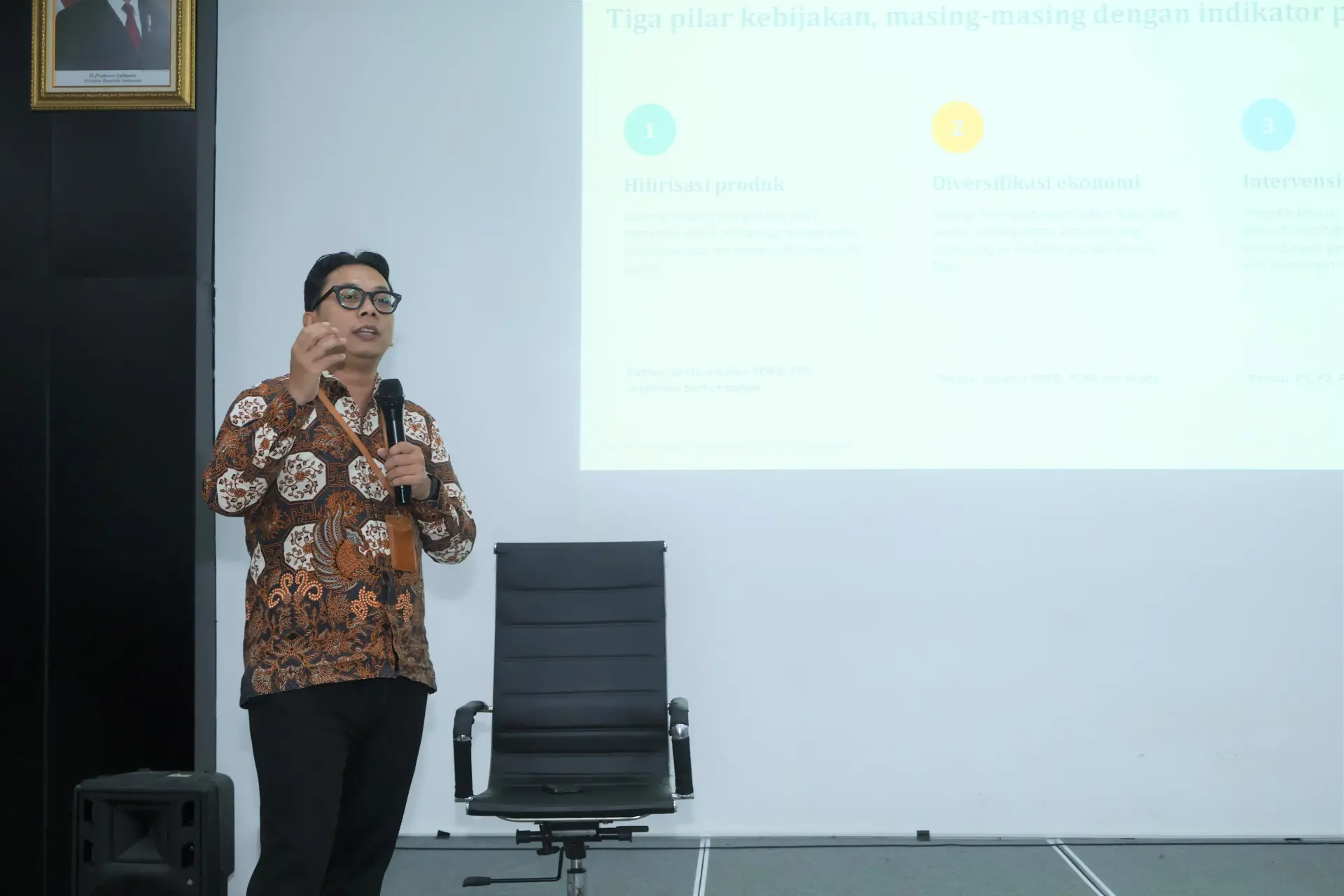
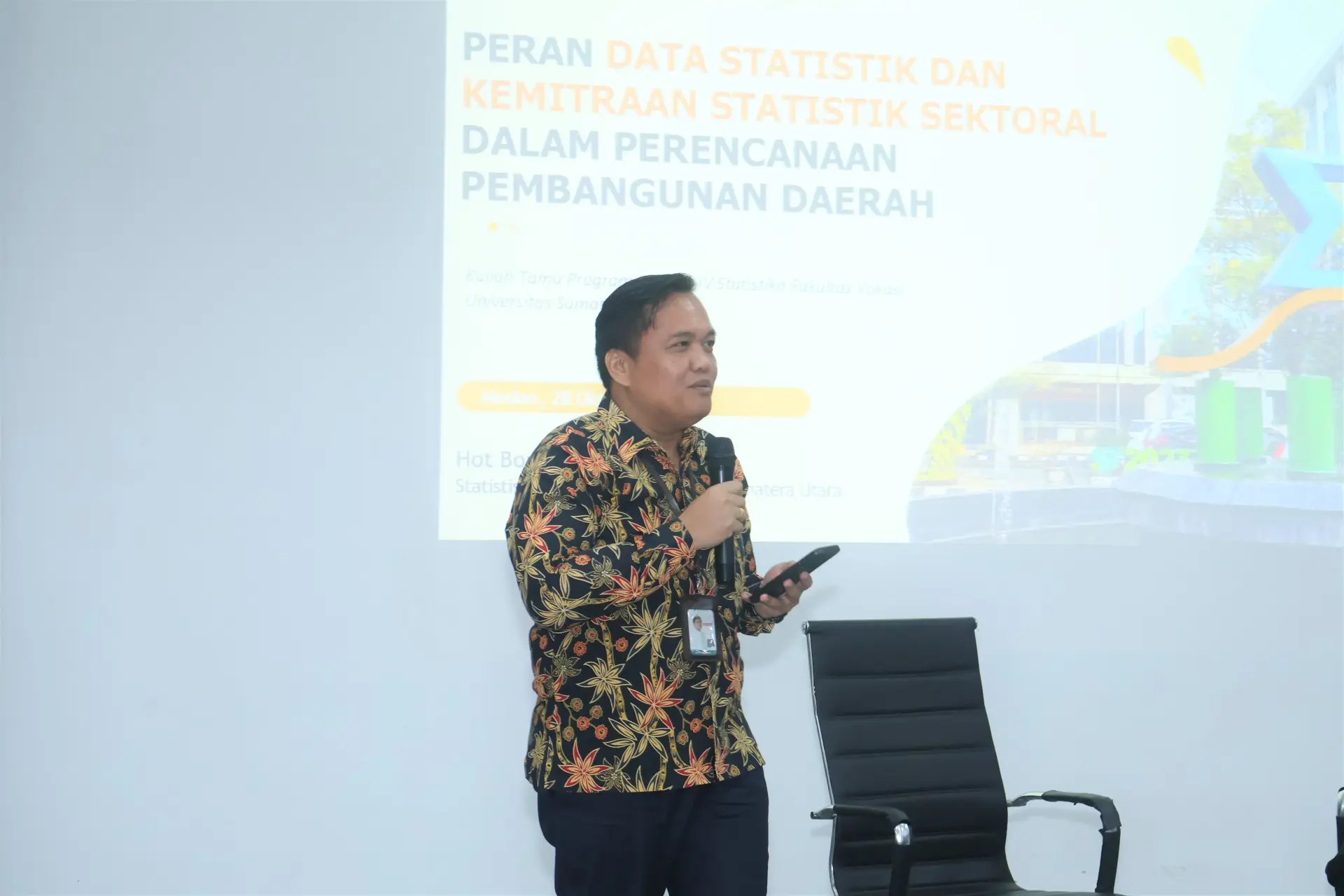
Next, the third speaker, Hot Bonar, SST., M.Stat., a Senior Expert Statistician at BPS North Sumatra Province, presented material entitled “The Role of Statistical Data and Sectoral Statistics Partnerships in Regional Development Planning”. This session discussed the strategic role of statistical data in supporting the development planning process, from providing accurate and high-quality data to the importance of cross-sector collaboration in generating statistical information that can be used as a basis for policymaking.
Through this guest lecture, students of the Undergraduate Program in Applied Statistics gained a broader understanding of the real-world application of statistical science, particularly in supporting regional development. In addition, this event served to strengthen the partnership between the Undergraduate Program in Applied Statistics, Faculty of Vocational Education USU, and BPS North Sumatra Province in promoting the use of high-quality, relevant, and sustainable statistical data.
It is expected that this activity will improve students' competencies in processing, analyzing, and interpreting statistical data, as well as raise awareness of the important role of statisticians in supporting more focused and data-driven regional development.