


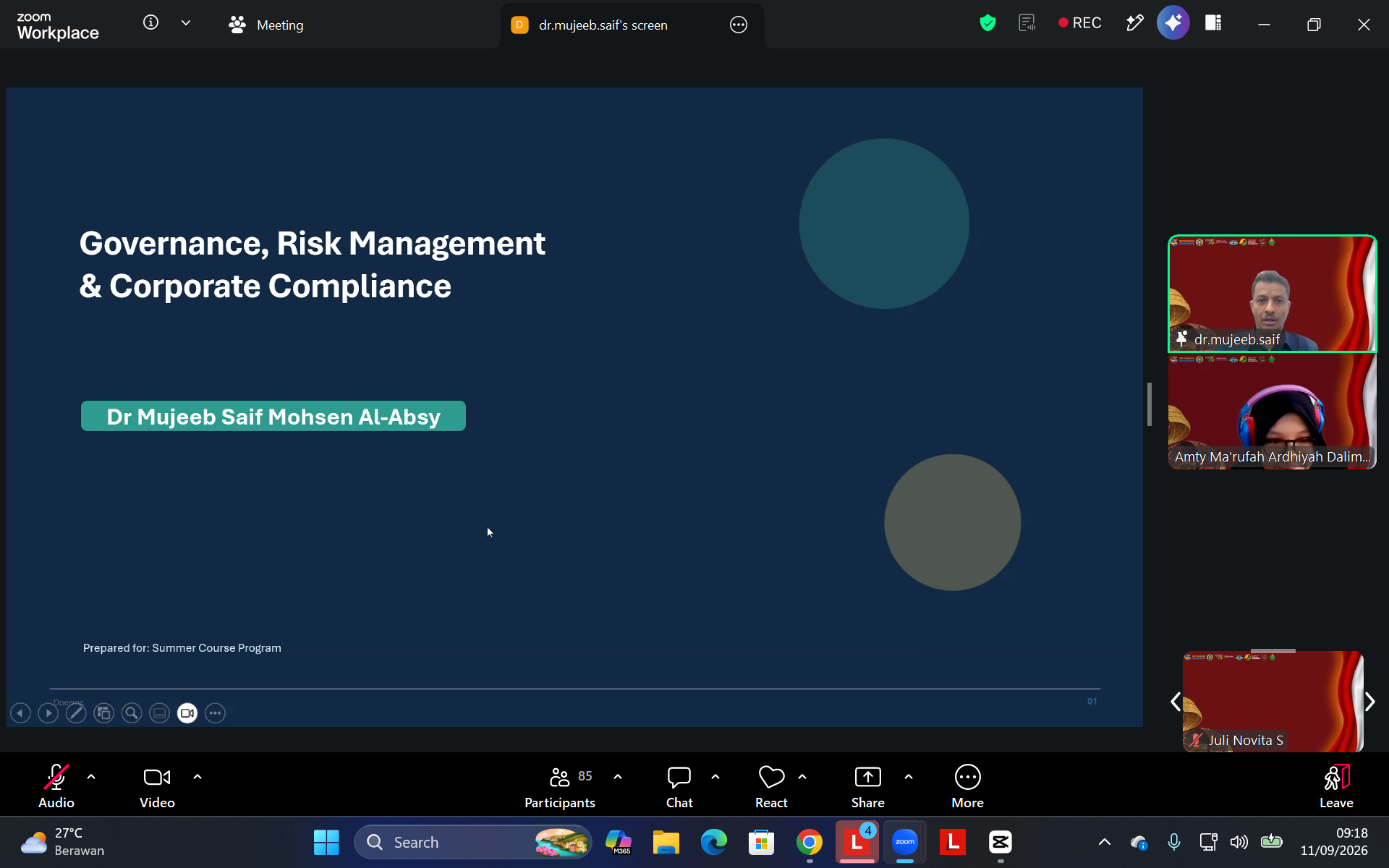
Medan, September 11, 2026 — The Applied Bachelor's Degree Program in Public Sector Accounting at the Faculty of Vocational Education, Universitas Sumatera Utara, again broadens students' horizons through the International Summer Courses 2026, “Future-Proofing Global Business and Accounting: Digital Innovation, Sustainable Finance, and Governance.” Entering the fifth day of the first session, participants attended a session themed “Governance, Risk Management, and Corporate Compliance,” featuring Dr. Mujeeb Saif Mohsen Al-Absy from Gulf University as a speaker.
The session discussed the interconnection between governance, risk management, and compliance as a unified approach to supporting decision-making, accountability, and stakeholder trust. The material also guided participants to understand how these concepts are implemented through board structures, committees, oversight mechanisms, and organizational reporting.
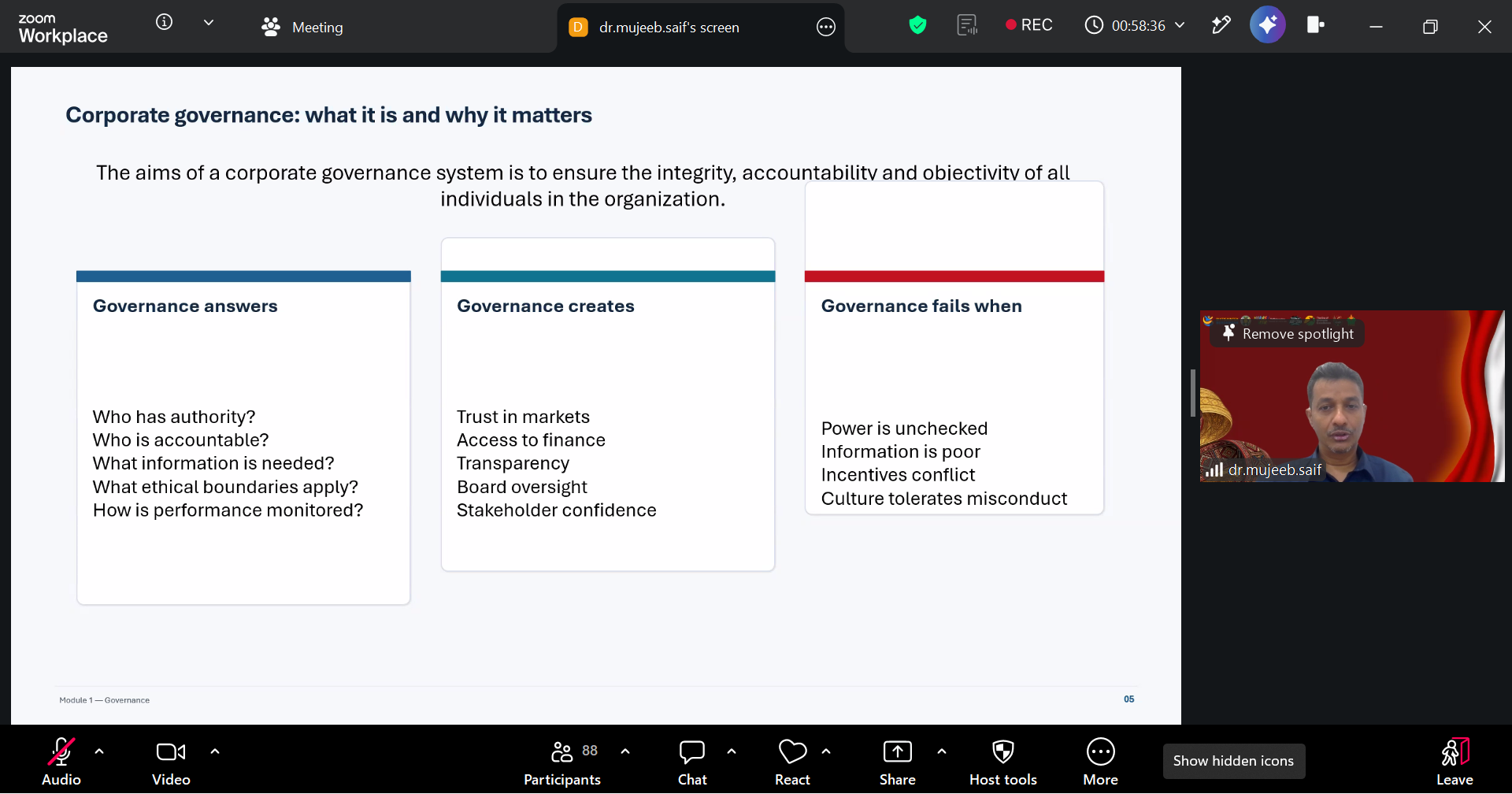
In his presentation, Dr. Mujeeb explained that Governance, Risk Management, and Compliance (GRC) need to be understood as an interconnected system. Governance determines the direction and accountability of the organization, risk management provides information regarding uncertainties faced in decision-making, while compliance ensures that organizations fulfill their obligations and maintain their integrity. The three aim to support better decision-making, reliable performance, and stakeholder trust. In the context of governance, the structure of relationships, decision-making rights, oversight, and accountability are crucial to ensure that the organization's authority operates within responsible corridors.
The material also emphasized that governance can face challenges when power does not receive adequate oversight, available information lacks quality, interests or incentives conflict, or when organizational culture tolerates inappropriate actions. Thus, transparency, accountability, independence, and oversight become essential elements in building effective governance.
The discussion was then directed towards the role of various actors in organizational governance. Shareholders play a role in selecting directors and approving various important decisions, while the board of directors sets the direction of the organization and oversees strategy, risks, culture, executive leadership, and control. On the other hand, senior management is responsible for implementing strategies, designing controls, and reporting performance and risks.
In this oversight structure, committees have the function of providing deeper attention to specific areas without diminishing the overall responsibilities of the board. The Audit Committee focuses on financial reporting, internal control, as well as internal and external audits. The Risk Committee focuses on risk appetite, risk profile, emerging risks, and stress scenarios. Meanwhile, the Compliance/Ethics function relates to behavior, legal obligations, investigations, and relationships with regulators. This concept provides students with the perspective that the division of oversight functions is not merely an organizational structure issue, but also relates to how each mechanism can effectively perform checks and balances.
One of the participants' questions during the discussion session highlighted whether the Risk Management Committee (RMC) should stand alone as a separate committee or be combined with the Audit Committee. In response to this question, Dr. Mujeeb explained that the two committees have different scopes. The Audit Committee focuses more on financial reporting, accounting information systems, internal controls, and the audit process. Meanwhile, the Risk Management Committee has a broader scope in identifying, evaluating, and responding to various risks that may affect the organization.
According to him, separating functions can help each committee to carry out its responsibilities more effectively. However, this structure can vary depending on the size of the company and applicable regulations. The material presented also indicated that in the Indonesian context, the existence of a risk management committee has different provisions depending on the sector; in certain financial sectors, it is mandatory, whereas in non-financial public companies, such specialized committees may be recommended and the risk oversight function can be placed within the existing oversight structure.
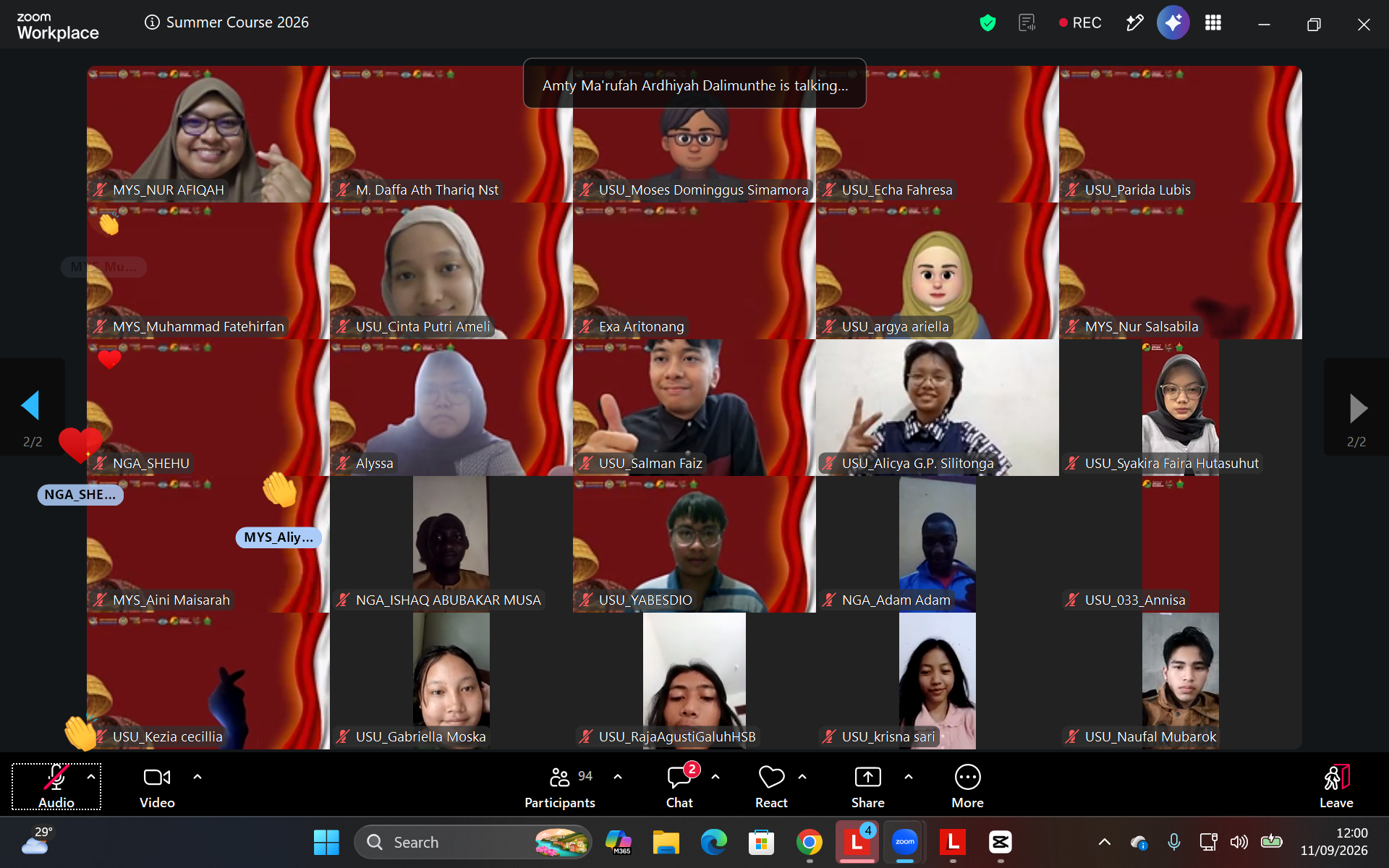
Another intriguing discussion emerged when participants questioned why corporate scandals and significant risks can still occur even though companies have strong governance and compliance systems in place.
Dr. Mujeeb explained that governance, compliance, and audit mechanisms essentially function to reduce risk, but they do not guarantee that all unethical actions or manipulations can be detected. Limitations in information, information asymmetry, manipulation by management, as well as constraints in time and the scope of examinations can be factors that prevent an issue from being promptly identified.
Therefore, the existence of governance structures needs to be accompanied by the quality of information, independence, effective oversight, and an organizational culture that supports integrity. The materials also emphasized that the board has the responsibility to oversee risks, compliance, internal controls, audits, disclosures, and organizational culture.
One discussion in the session also highlighted how shareholders, boards, management, transparency, and regulatory compliance can mutually support the creation of effective governance.
In the Indonesian context, the material introduces several governance mechanisms, including the General Meeting of Shareholders (GMS), Board of Commissioners, Directors, Audit Committees, Nomination and Remuneration Committees, internal audit functions, external audits, and Corporate Secretaries. These mechanisms have different but interconnected functions in building a system of oversight and accountability.
Students were also introduced to the five principles of Good Corporate Governance in the material, namely Transparency, Accountability, Responsibility, Independence, and Fairness. These principles emphasize the importance of information openness, clarity of accountability, compliance with laws and good corporate practices, independence in decision-making, and fair treatment of shareholders and stakeholders.
The discussion also linked governance to emerging issues, including cross-functional risks such as fraud and ESG. Within the governance structure, the board has the responsibility to oversee various risks and ensure the presence of adequate reporting and control mechanisms.
The material also demonstrates that sustainability aspects are increasingly becoming part of organizational governance. In the Indonesian context, sustainability reporting includes sustainability strategies, governance, and economic, social, and environmental performance. This broadens students' perspectives that organizational accountability is not only related to financial performance but also to its impact on stakeholders and the environment.
Through this session, students in the Applied Bachelor's Degree Program in Public Sector Accounting not only gain an understanding of the technical aspects of governance but also see the interconnection between accountability, oversight, risk, compliance, transparency, and decision-making within organizations.
This learning is relevant for public sector accounting students as governance principles are not limited to companies but also form an important part of managing organizations that require accountability to various stakeholders.
Participation in the session on Governance, Risk Management, and Corporate Compliance is part of the efforts of the International Summer Course 2026 to bring together academic perspectives and international practices, while also equipping students with a broader understanding of governance and risk management in facing an increasingly complex organizational environment.