


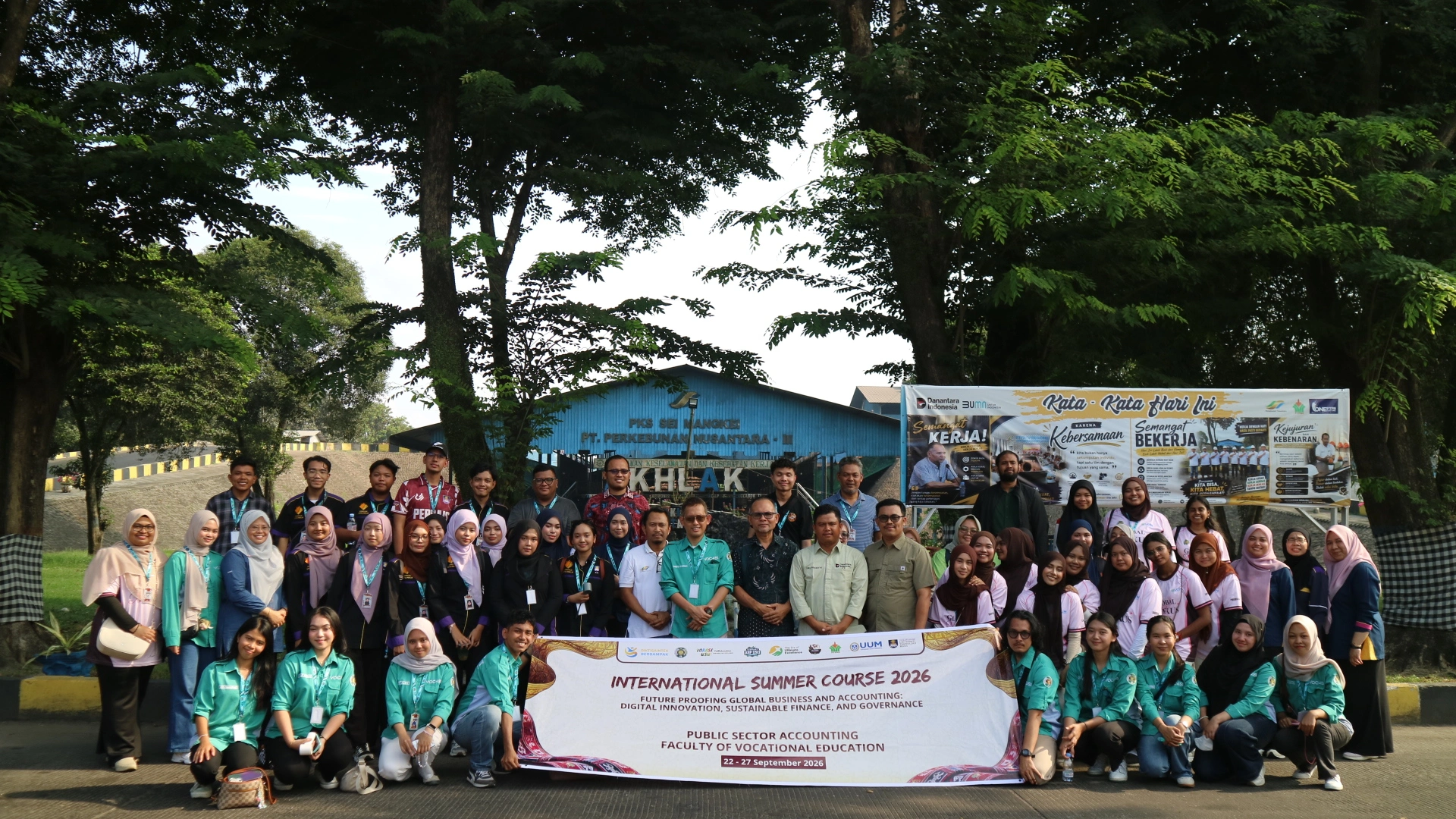
Simalungun, September 25, 2026 — The series of field visits for the International Summer Course 2026 continued with an industrial visit to the Sei Mangkei Palm Oil Mill (PKS) PTPN IV PalmCo on Friday morning. The entire Malaysian delegation, along with the committee, had the opportunity to get a closer look at the palm oil processing process and see how technology and information systems are applied to support the operational activities of the industry. This visit was part of the direct learning experience after the participants attended various online academic sessions, as well as cultural exploration and local wisdom of North Sumatra.
Upon arrival at the Sei Mangkei PKS, participants were given an explanation regarding the history, development, production processes, and the systems used to support the factory's operations. The explanation was delivered by Muhammad Abduh, S.T., M.M., the Manager of Sei Mangkei PKS.
In his presentation, participants were introduced to the journey of Sei Mangkei PKS, which began operations in 1999 with an initial capacity of 30 tons of Fresh Fruit Bunches (TBS) per hour. This capacity then developed through the addition of processing lines to reach a total of 75 tons of TBS per hour.
The explanation of the production process was one of the aspects that captured the delegation's attention. Participants were introduced to the processing flow consisting of several stations, starting from the loading ramp station, sterilizer station, thresher station, press station, clarification station, kernel station, power station, to the water treatment station.
Through this explanation, participants could see that the processing of Fresh Fruit Bunches (TBS) into palm oil products involves a series of interconnected processes. The main products produced from this processing include Crude Palm Oil (CPO) and kernels.
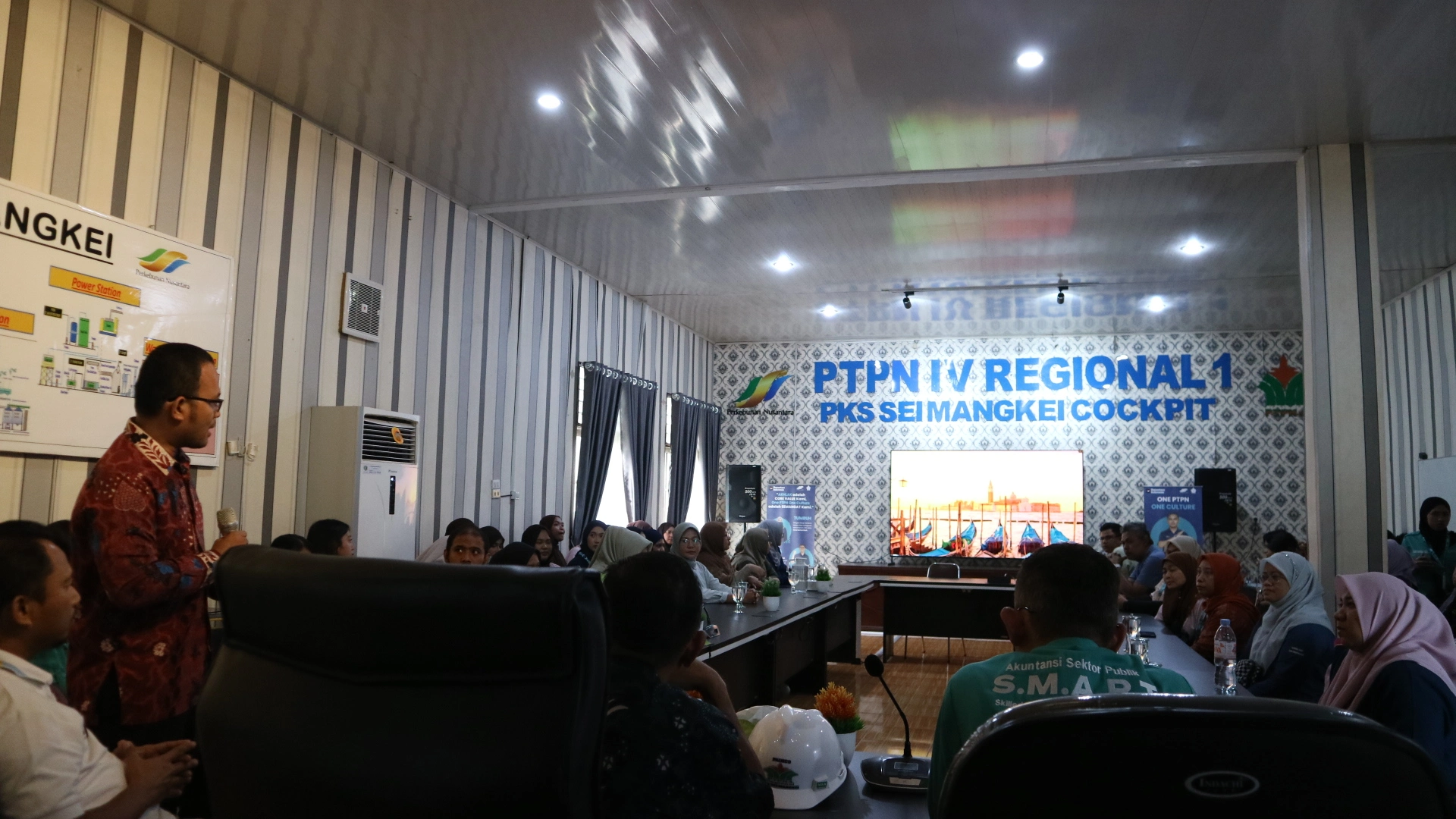
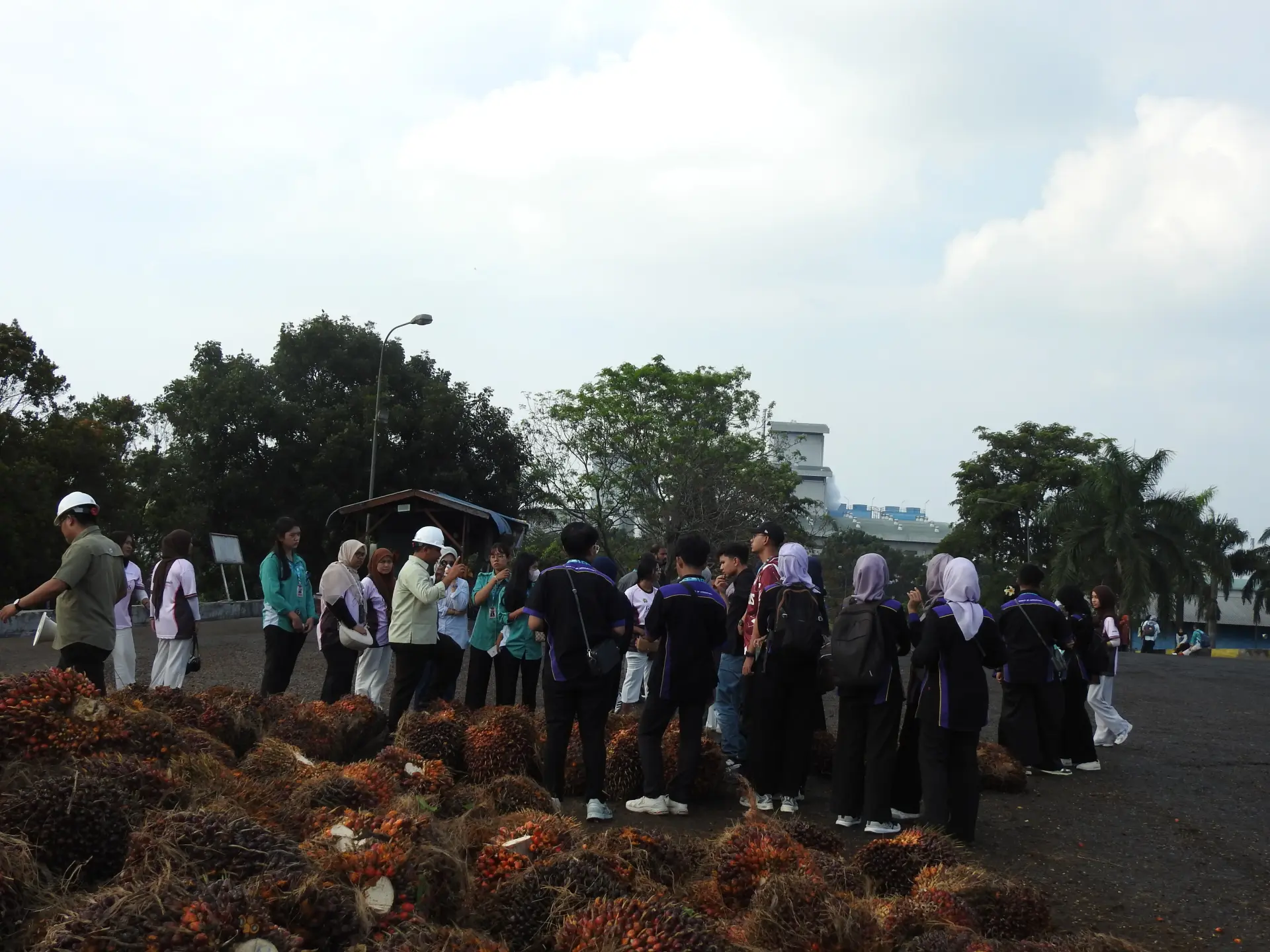
After receiving an explanation in the room, the delegates had the opportunity to see an overview of the processing activities from outside the factory. This experience provided a more concrete understanding of how the processes previously known only through learning materials could take place in a real industrial environment.
Not only did the visit introduce the production process, but it also showcased the use of technology in factory operations. The Sei Mangkei Palm Oil Mill has implemented various digital systems to support monitoring, information management, and operational activities, including SCADA (Supervisory Control and Data Acquisition), PICA, MyPalmCo, Intank, and Elemen, as introduced to the participants during the visit.
This development becomes increasingly relevant with the ongoing transformation of the palm oil industry aimed at efficiency, traceability, and sustainability. Recently, the Sei Mangkei Palm Oil Mill has become one of the PTPN IV PalmCo units to achieve a Green PROPER rating for the 2024–2025 period. This factory also operates a methane capture facility to capture methane from palm oil mill effluent (POME) and convert it into energy through a Biogas Power Plant (PLTBg).
In addition to environmental aspects, Sei Mangkei Palm Oil Mill is also an example of the integration of plantation and mill data to support the traceability of Fresh Fruit Bunch (TBS) sources. This system allows the origin of raw materials to be traced back to their source, thereby enhancing transparency in the supply chain.
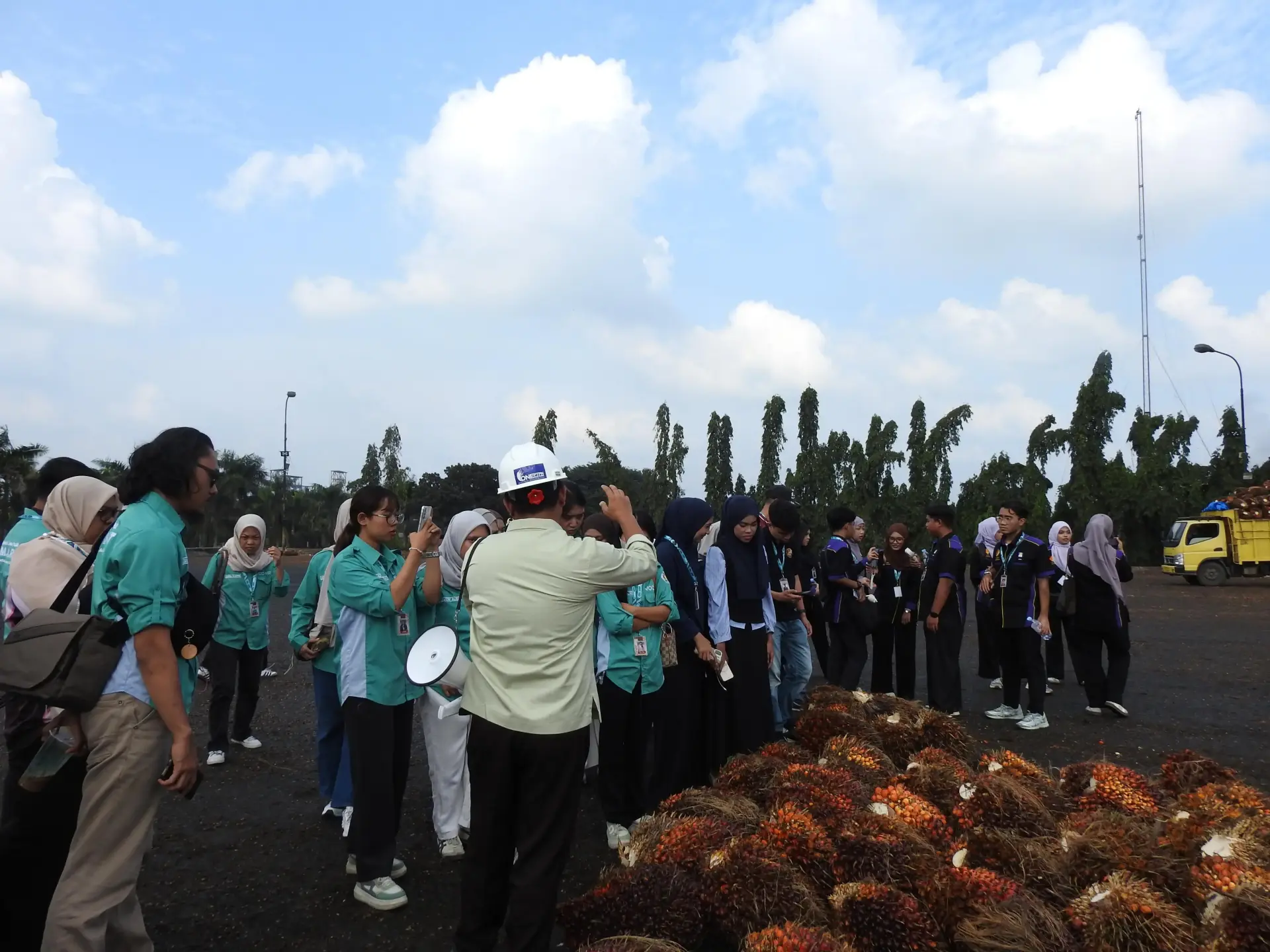
The experience of seeing the industrial process firsthand provides a new perspective for participants, especially students who have primarily learned about business processes through academic study. One of them, Safwa, a Business Administration student from UUM, expressed that the visit was interesting because it offered the opportunity to see firsthand how palm oil is processed, rather than just learning about it through lectures or social media. He admitted that he just realized the production of palm oil products involves so many stages. This experience also made him see the close relationship between the production system and the accounting information system.
“In the company or factory, they have to calculate the raw material use, the raw production, the labor force, and everything. So accounting still needs to calculate all the costs in the factory.”
According to Safwa, this experience also changed his view about the work environment in the industry. After seeing the process firsthand, he realized that industrial operations involve many stages, roles, and departments that must work together to produce a product.
This experience demonstrates that field visits not only introduce participants to the work environment but also help connect the concepts learned in business and accounting with real operational practices.
The experience during the series of the International Summer Course 2026 also received positive responses from the Malaysian delegates. For Annisya Helmi and Aliyah Fareha, students of the Finance Study Program from UUM, this activity was their first time participating in the International Summer Course.
Both were interested in joining the program because they wanted to gain broader international insights, get to know different cultures, improve their communication skills, and step out of their comfort zone. They felt that the online sessions provided a lot of knowledge about finance, business, governance, and fintech, while the offline sessions offered experiences in collaborating and communicating with people from diverse backgrounds.
According to them, this experience could serve as a foundation for seeking more international experiences and building connections with people from various countries in the future.
For Aliyah, the program was “a new experience, fun and memorable,” while Annisya described it with three words: “learn, connect and grow.” Both also remembered their experience in Samosir as one of the most memorable moments, especially when singing together and enjoying meals together.
A similar experience was shared by Najwa, an Accountancy student from UiTM. As her first experience participating in the International Summer Course, she saw the program as an opportunity to step out of her comfort zone while gaining new knowledge.
According to Najwa, both online and offline sessions provided different learning experiences. She gained experience communicating in a multicultural environment and obtained insights that she felt could be applied in her career in accounting.
Some of the most memorable experiences for her emerged from moments of togetherness, such as singing together on the bus on the way to Lake Toba and participating in traditional Batak Toba dances in Huta Siallagan. She described the experience with three words: “empowering, fun, and knowledgeable.” In fact, if allowed to participate in a similar program again, Najwa stated she would join again because of the many experiences and knowledge she gained during the activities.
According to Aidil, cross-country experiences like this are worth continuing because they provide opportunities for participants from diverse backgrounds to learn from each other, connect, and exchange knowledge. He described the experience of the International Summer Course 2026 as “lovely, happy, and memorable.”
The visit to PKS Sei Mangkei became one of the experiences that bridged academic learning with the realities of the working world. Participants not only gained insight into how the palm oil production process takes place but also saw the connection between technology, human resources, information systems, production processes, and cost management within an industrial organization.
For the Malaysian delegation, this experience complemented the series of learning from the International Summer Course 2026 that previously took place online and was then followed by various offline activities in North Sumatra.
From virtual classrooms to industrial environments, from academic discussions to introductions to local culture, this series of activities provided participants with opportunities to broaden their horizons while building cross-country relationships.
In the end, the field visit not only brought participants to see new places but also helped them view learning tangibly, understand diversity through firsthand experience, and build connections that can be carried into the future.