


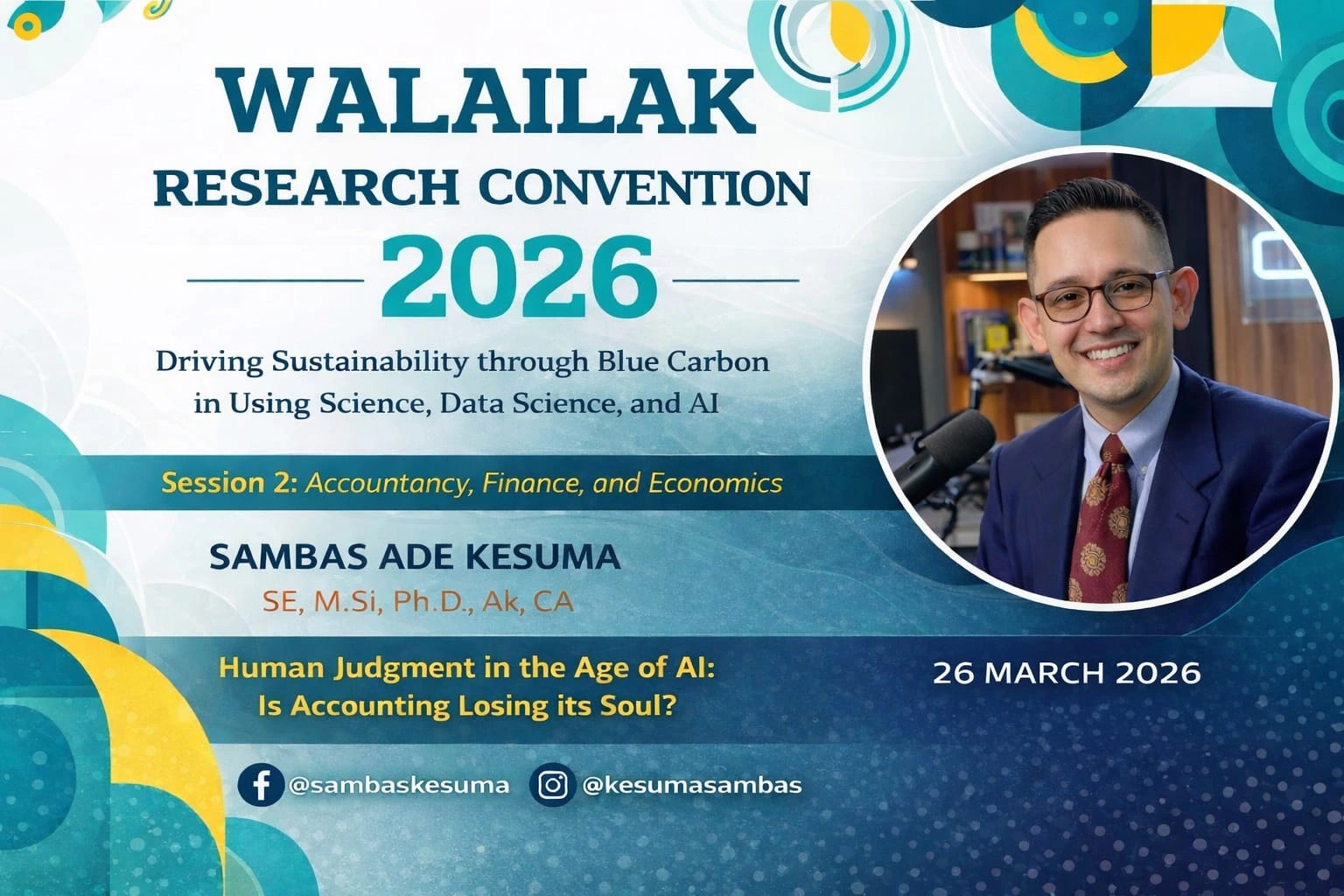
Zoom Meeting, March 26, 2026 — The Public Sector Accounting Diploma 4 Study Program once again demonstrated its contribution on the international stage through its participation in the 2026 Walailak Research Convention, hosted by Walailak University. At this event, the Head of the Public Sector Accounting Program, Sambas Ade Kesuma, S.E., M.Si., Ph.D., Ak., CA., had the opportunity to serve as a keynote speaker.
In his presentation titled “Human Judgment in the Age of AI: Is Accounting Losing Its Soul?”, he addressed a rapidly evolving issue: the role of human judgment amidst the rapid advancement of artificial intelligence (AI) in the field of accounting.
He emphasized that the transformation currently taking place is not merely a technological shift but a fundamental shift in accounting practices—from recording to automation, from reporting to real-time analysis, and a reduction in the role of human subjective judgment. According to him, this is crucial because accounting is not just about numbers but also involves trust, critical reasoning, and professional responsibility.
Furthermore, he cautioned that the main challenge is not that AI will replace the accounting profession, but rather the human tendency to rely too heavily on AI without conducting critical evaluation. “When we stop questioning, we stop being professionals,” he said.
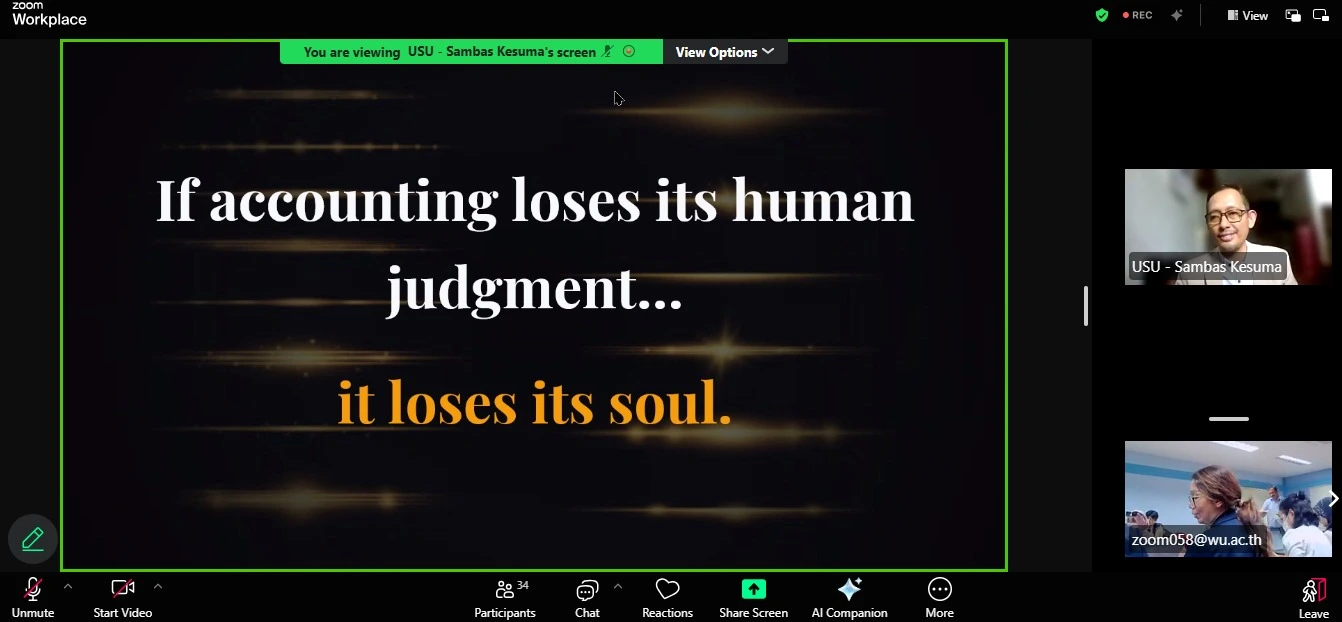
In one of the case studies presented, the AI system was able to classify a transaction as normal based on statistical patterns, but failed to detect signs of fraud. In contrast, human auditors were able to interpret the behavioral patterns underlying the data and identify suspicious intent. This demonstrates that while AI can detect anomalies, humans remain superior in understanding context and intent.
He also emphasized the importance of maintaining accountability in the use of AI, by ensuring that every result produced is explainable and accountable. Without such a framework, AI can indeed speed up processes, but it does not necessarily improve the quality of decision-making.
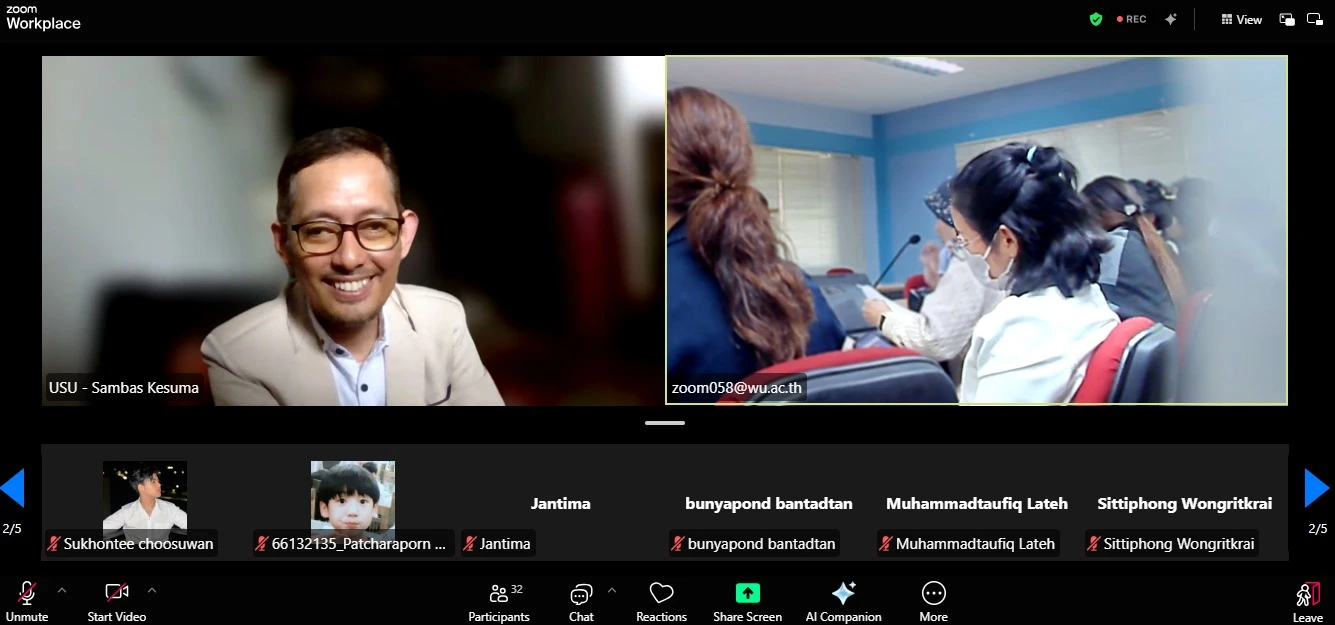
During the discussion session, he addressed participants’ concerns regarding the future of the accounting profession in the age of AI. He emphasized that AI is not a threat, but rather a tool that must be utilized wisely. In the future, the accounting profession will increasingly require individuals who not only understand technology but also possess critical thinking skills, a strong sense of ethics, and multidisciplinary expertise.
This event not only served as a platform for knowledge exchange at the international level but also broadened students’ perspectives on the importance of the human role in maintaining the integrity of the accounting profession amid the rapidly accelerating digital transformation.