


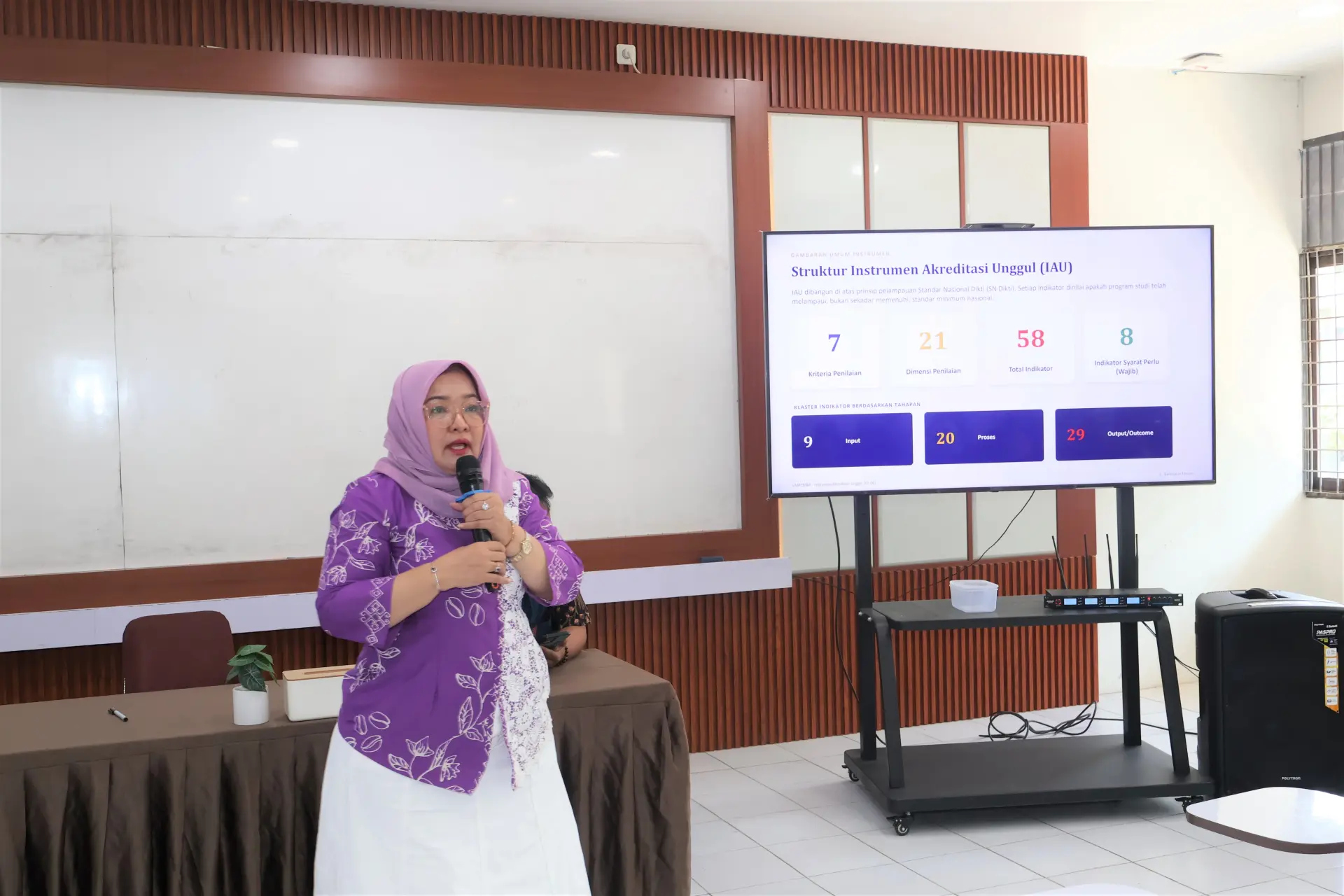
Medan, July 23, 2026 – The Faculty of Vocational Education, Universitas Sumatera Utara (USU), continues to strengthen its commitment to improving the quality and standards of its academic programs through a Preparatory Meeting for LAMEMBA Study Program Accreditation. Held in Room 203 of the Faculty of Vocational Education, the meeting was attended by the faculty leadership, heads of study programs, homebase lecturers, the head of administration, subdivision heads, and administrative staff.
The meeting focused on preparing five study programs within the Faculty of Vocational Education for accreditation by the Independent Accreditation Agency for Economics, Management, Business, and Accounting (LAMEMBA). These programs include the Diploma in Tax Administration, Applied Bachelor's Degree in Public Sector Accounting, Applied Bachelor's Degree in Banking and Finance, Applied Bachelor's Degree in Digital Office Administration, and Applied Bachelor's Degree in Tourism Business Management. The session was led by the Dean of the Faculty of Vocational Education, Prof. Dr. Isfenti Sadalia, S.E., M.E., as part of the faculty's efforts to strengthen coordination and ensure each study program is well prepared for the accreditation process.
Discussions centered on the LAMEMBA Excellence Accreditation Instrument (IAU), which emphasizes performance that exceeds the National Standards for Higher Education (SN Dikti). The instrument comprises seven assessment criteria, 21 dimensions, 58 indicators, and eight mandatory prerequisite indicators, all of which serve as key priorities in accreditation preparation.
During the meeting, each study program was encouraged to assess its readiness against the required indicators, particularly the eight mandatory prerequisites covering strategic orientation, governance and internal quality assurance systems, curriculum, research, and community service. Special attention was also given to faculty qualifications and academic outputs, including educational qualifications, academic ranks, publications and scholarly outputs, as well as professional certifications required for vocational education programs.
In addition to mapping institutional readiness, participants discussed strategic measures to be undertaken by each study program, including conducting a gap analysis against the 58 indicators, fulfilling mandatory requirements, compiling supporting evidence and documentation, and carrying out internal evaluations and mock assessments. These efforts are expected to ensure that all required data and supporting documents are systematically prepared and accurately demonstrate each study program's achievements.
Through this preparatory meeting, the Faculty of Vocational Education reaffirmed its commitment to fostering a sustainable quality culture and strengthening the governance of its study programs. The collaboration among the faculty leadership, study programs, lecturers, and administrative staff is expected to serve as a solid foundation for preparing the five study programs for the LAMEMBA accreditation process by prioritizing data readiness, comprehensive documentation, and strong academic substance in pursuit of Excellent Accreditation.