


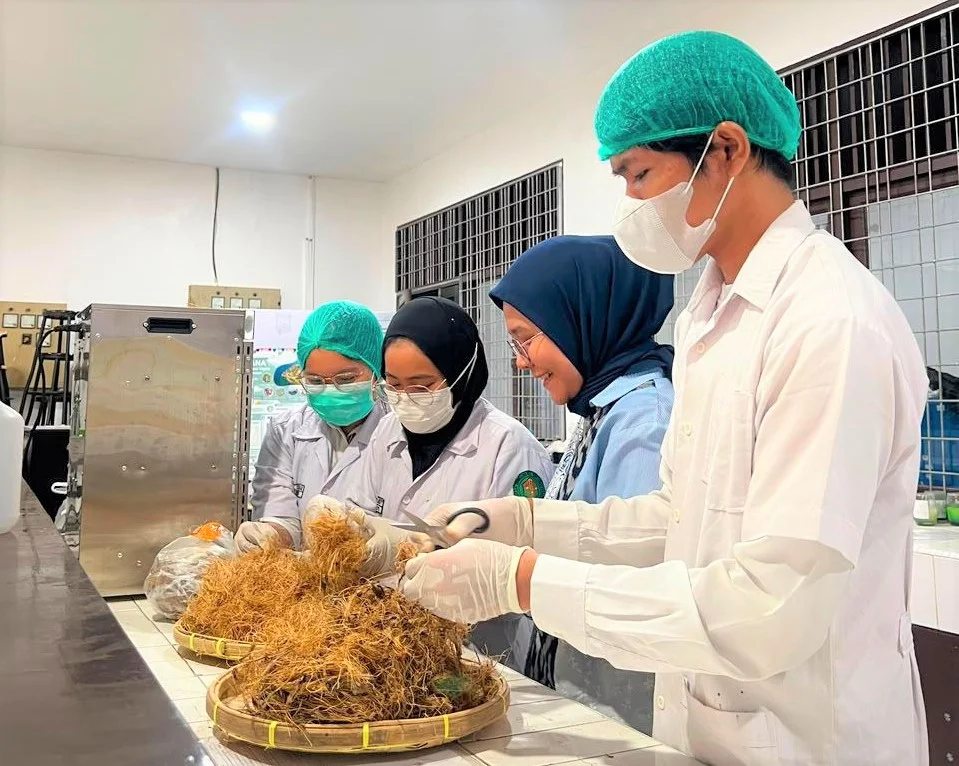
Medan, September 29, 2026 – The high rate of post-harvest loss in strategic horticultural commodities such as red chilies (Capsicum annuum L.) due to weather fluctuations and hydrometeorological disasters, such as floods, often triggers drastic price increases in the market. In response to this challenge, the Universitas Sumatera Utara (USU) Exact Sciences Research Student Creativity Program (PKM-RE) Team, consisting of students from the Applied Bachelor's Degree Program in Applied Chemistry, Faculty of Vocational Education, and the Faculty of Mathematics and Natural Sciences (FMIPA) USU, has developed an environmentally friendly packaging technology innovation in the form of an active nanocomposite edible film.
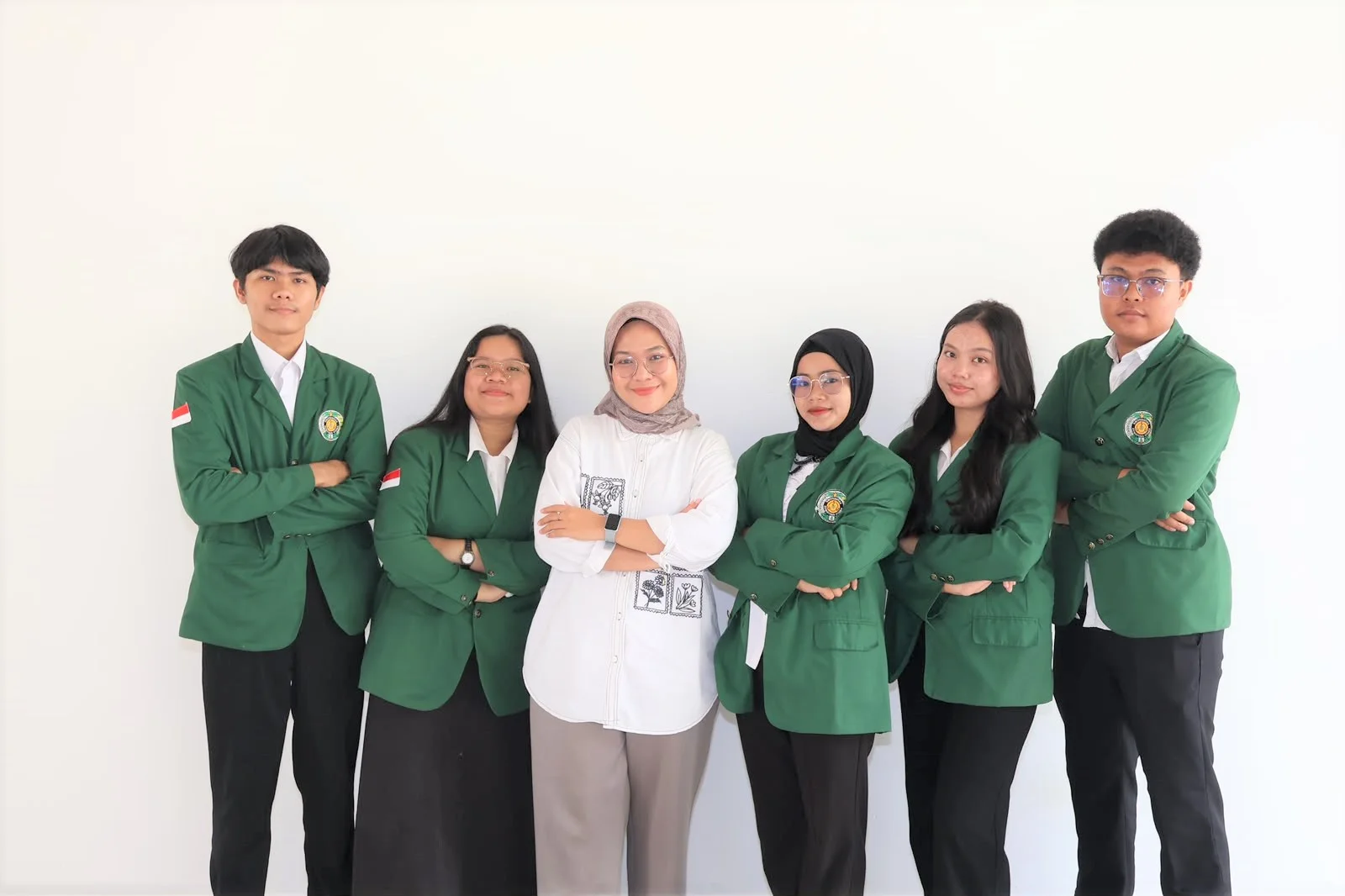
The research, entitled "Development of Chitosan Edible Film with Cellulose Nanofibers from Empty Fruit Bunches of Oil Palm and Rambutan Peel Extract as Active Packaging for Post-Flood Red Chilies," carries the first PKM theme, namely food, energy, and water independence, through the development of post-harvest packaging engineering technology based on local biomass.
The research is led by Inggrid Auralya Sandy, together with team members Novaldo Imanuel Haloho and Crisya Lestari Siregar, who are also from the Applied Bachelor's Degree Program in Applied Chemistry, Faculty of Vocational Education USU, as well as other team members from FMIPA USU. The research group is directly supervised by a lecturer of the Faculty of Vocational Education USU, Juli Novita Sari, S.Si., M.Sc.
Inggrid explained that the selection of these raw materials was based on the abundant potential of local agro-industrial waste in North Sumatra. So far, empty fruit bunches of oil palm (EFB) and rambutan peels have often been treated merely as waste with limited economic value.
"We utilize chitosan from shrimp shells combined with cellulose nanofibers from EFB waste as a reinforcing material, as well as rambutan peel extract, which is rich in natural antioxidant and antimicrobial compounds," said Inggrid.
Through a series of laboratory research processes, the team successfully formulated the best edible film, enriched with 1% rambutan peel extract, to protect red chilies. Based on real application testing under humid storage conditions resembling a post-flood environment (RH ≥ 85%) for 15 days, the protective layer proved highly effective in maintaining the quality of the chilies.
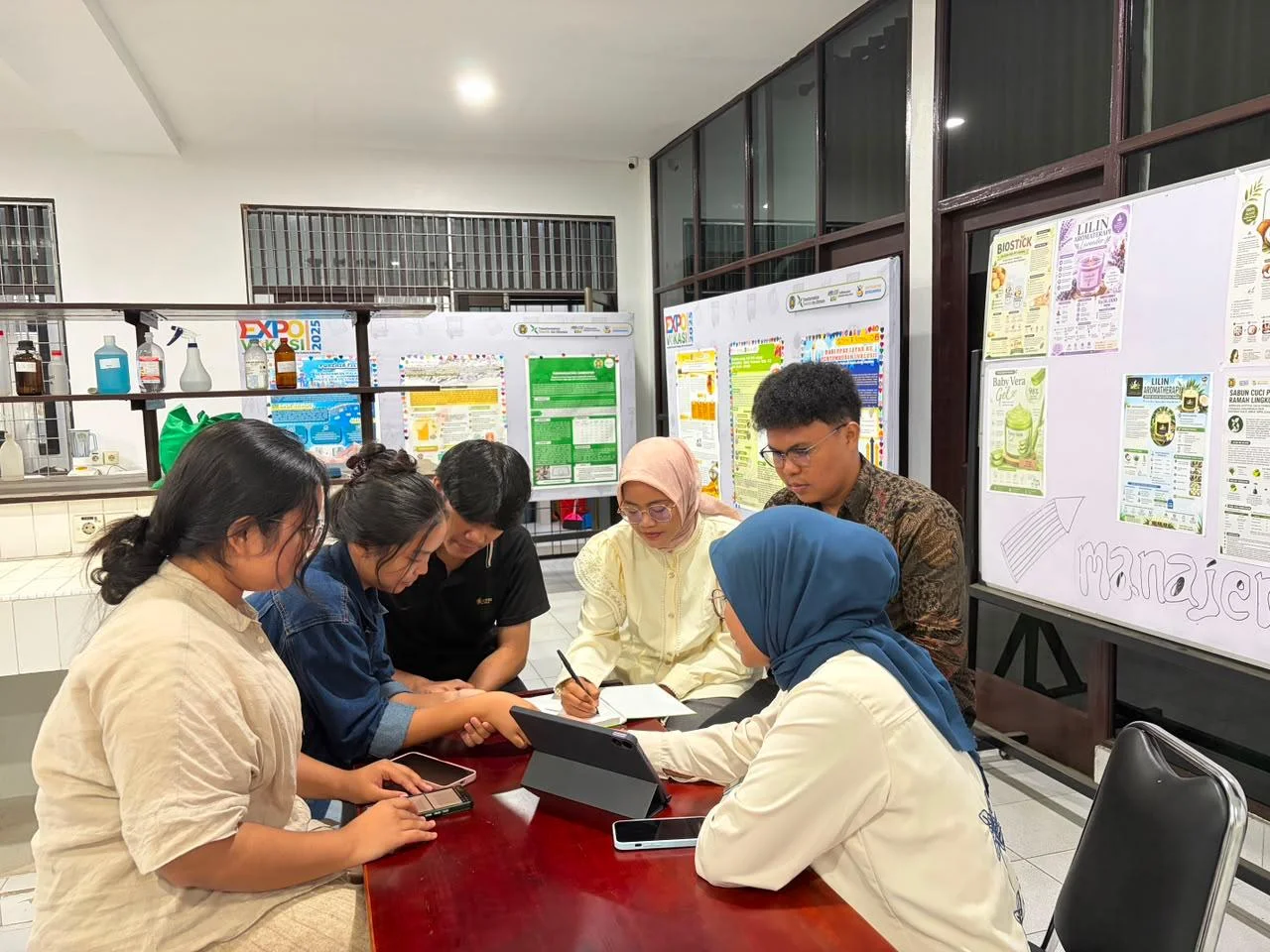
The use of this edible film reduced chili weight loss to 12.0% (significantly lower than the 21.5% recorded for unprotected chilies), significantly inhibited the growth of spoilage microorganisms, and maintained the freshness and intensity of the chilies' red color for much longer, up to the 15th day.
"Our team also hopes that this research can take us to PIMNAS 39 and inspire other students to continue innovating," she explained. Through this innovation, the team hopes that the local biomass-based active packaging technology can become a strategic solution for farmers and supply chain actors in maintaining the quality and extending the shelf life of red chilies, particularly in addressing distribution vulnerabilities caused by extreme weather.
This article is part of the publication of the USU 2026 PKM-RE activity supervised by Juli Novita Sari, S.Si., M.Sc. Follow the journey of the SPICEFILM innovation through its official Instagram and TikTok account: @spicefilm.team.