


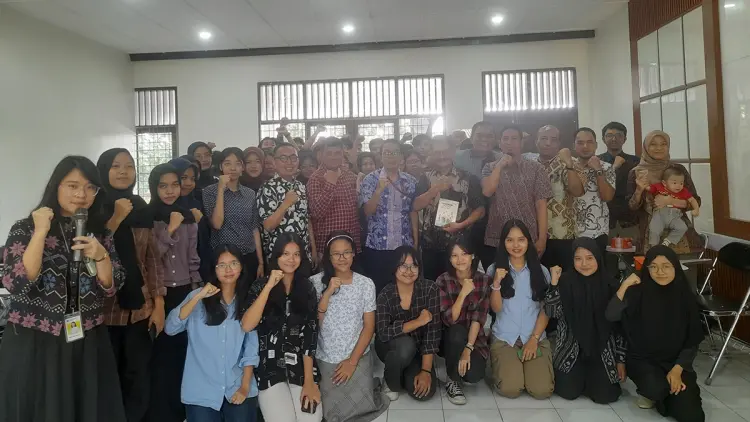
Friday, November 22, 2024 – The D3 Tax Administration Program held a socialization event on handling transfer pricing for the academic community of the USU Vocational Faculty. In collaboration with the USU Tax Center and KPP Madya 2 Medan, this event aimed to provide a comprehensive understanding of transfer pricing issues for Vocational Faculty students. Additionally, the event introduced the Core Tax Administration System (CTAS), which is set to be implemented starting January 1, 2025.
According to USU Vocational Faculty Vice Dean I, M. Husni Thamrin Nasution, understanding transfer pricing is crucial, especially for students who will enter the workforce. This socialization program is expected to enhance students' knowledge of transfer pricing and familiarize them with the Core Tax Administration System (CTAS). The goal is to ensure that when CTAS is officially implemented, the USU academic community will face no difficulties using it, particularly when filing annual personal income tax returns (SPT Tahunan PPh Orang Pribadi).
The event featured speakers from KPP Madya 2 Medan, including Robert Selamat Simanjuntak, Head of Services, and Ahmad Husein Tanjung, Head of Supervision II. They provided a comprehensive explanation of transfer pricing. They outlined the strategies employed by KPP Madya 2 Medan to enforce regulations against unfair trade transactions that could harm the country’s financial stability.
Following this, the socialization session on the Core Tax Administration System (CTAS) was presented by Junior Expert Tax Instructor Fadhlansyah Nasution from KPP Madya 2 Medan. He explained the operational aspects of the Core Tax application, which will officially take effect on January 1, 2025. The Core Tax is expected to simplify taxpayers' obligations compared to the previous system.
In closing, Vice Dean I of the USU Vocational Faculty, M. Husni Thamrin Nasution, expressed his hope that students and the wider Vocational Faculty community could understand the Core Tax Administration System (CTAS). He emphasized that the CTAS should be supported in its implementation as part of tax reform. However, since this system is still new to the public, he hopes that this socialization event provides a clear and valid understanding of it.