


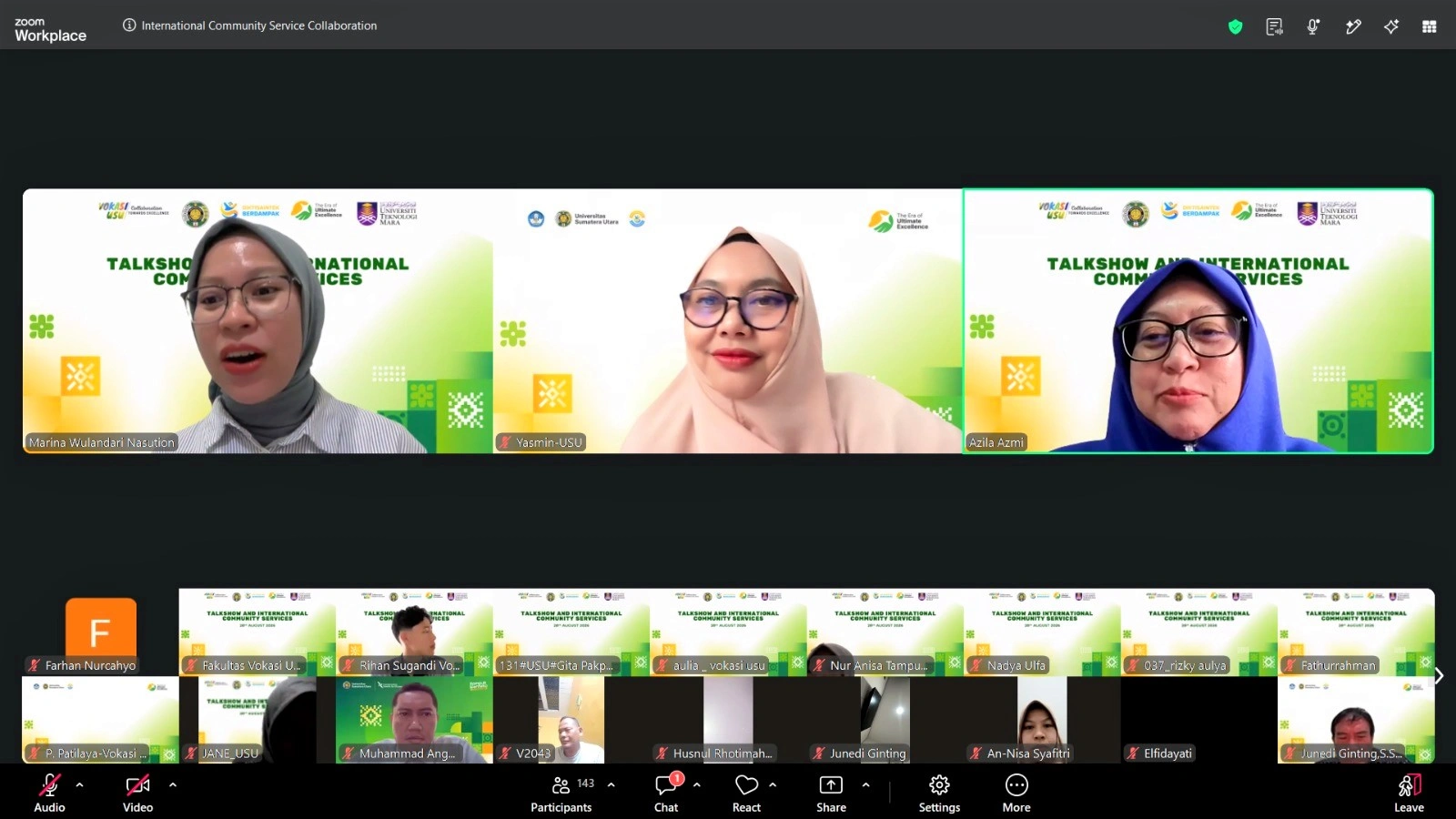
Medan, August 10, 2026 – The Faculty of Vocational Education, Universitas Sumatera Utara (USU), continues to strengthen its contribution to community empowerment through international collaboration. This effort was realized through the Talkshow and International Community Services activity with the topic “Transforming Local Potential into Business Opportunities: Strategies for Strengthening Economic Independence in Post-Disaster Recovery,” which was held online via Zoom on August 28, 2026.
The activity was opened by the Vice Dean for Administration, Finance, Human Resources, and Academic Infrastructure of the Faculty of Vocational Education USU, Dr. Yasmin Chairunisa Muchtar, S.P., MBA. This activity was a continuation of the Community Service (PKM) program under the Internationalization Collaboration scheme carried out by the Faculty of Vocational Education USU in collaboration with UiTM Cawangan Pulau Pinang.
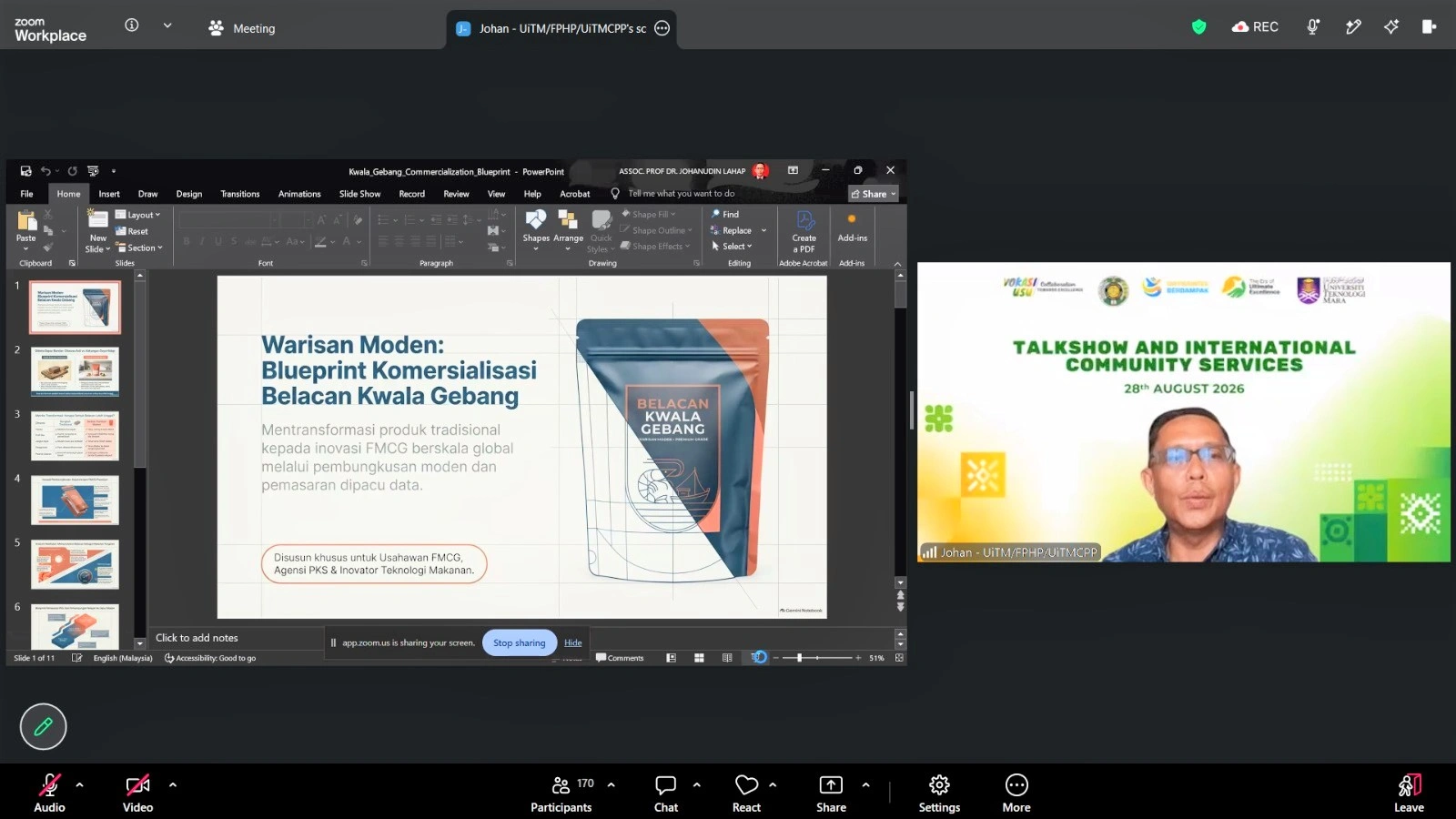
The talkshow featured two speakers from UiTM who provided perspectives and knowledge related to developing local potential into business opportunities. The first speaker, Dr. Johanudin Lahap, Associate Professor, delivered a presentation entitled “Warisan Moden: Blueprint Komersialisasi Belacan Kuala Gebang” with the focus “Transforming Traditional Products into Global-Scale FMCG Innovation through Modern Packaging and Data-Driven Marketing.”
In his presentation, Dr. Johanudin discussed how traditional products can be developed into products with broader competitiveness through innovation, particularly in terms of modern packaging and data-based marketing strategies. This approach is one of the efforts to increase the added value of local products while opening opportunities for broader market development.
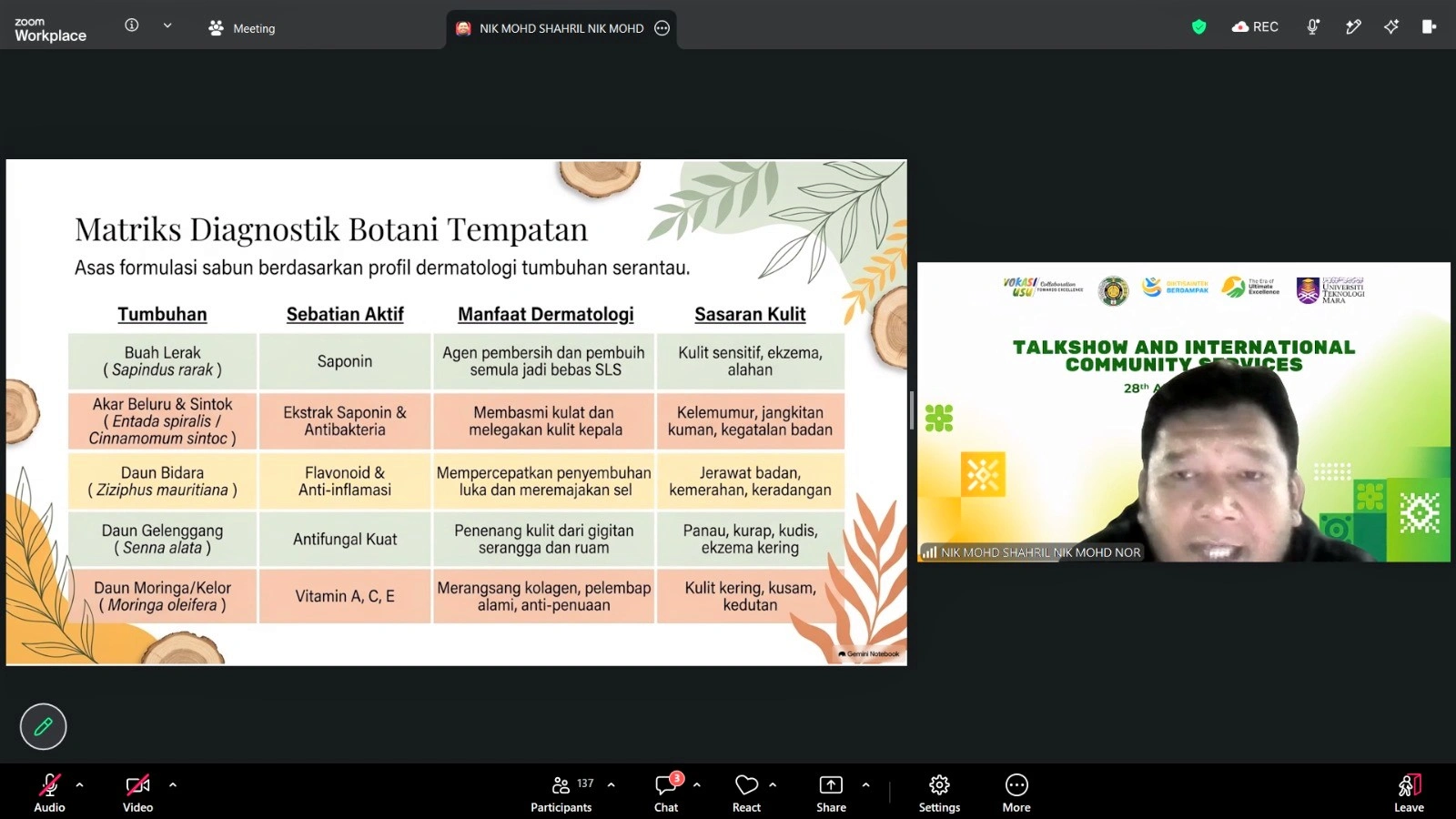
The next presentation was delivered by Dr. Nik Mohd Shahril Nik Mohd Nor, Senior Lecturer, with the topic “Inovasi Botanika Moden” and the theme “Transforming Local Plants into a Resilient Economy.” The material provided an understanding of the potential utilization of local plants as part of product development and economic opportunities that can support community resilience and independence.
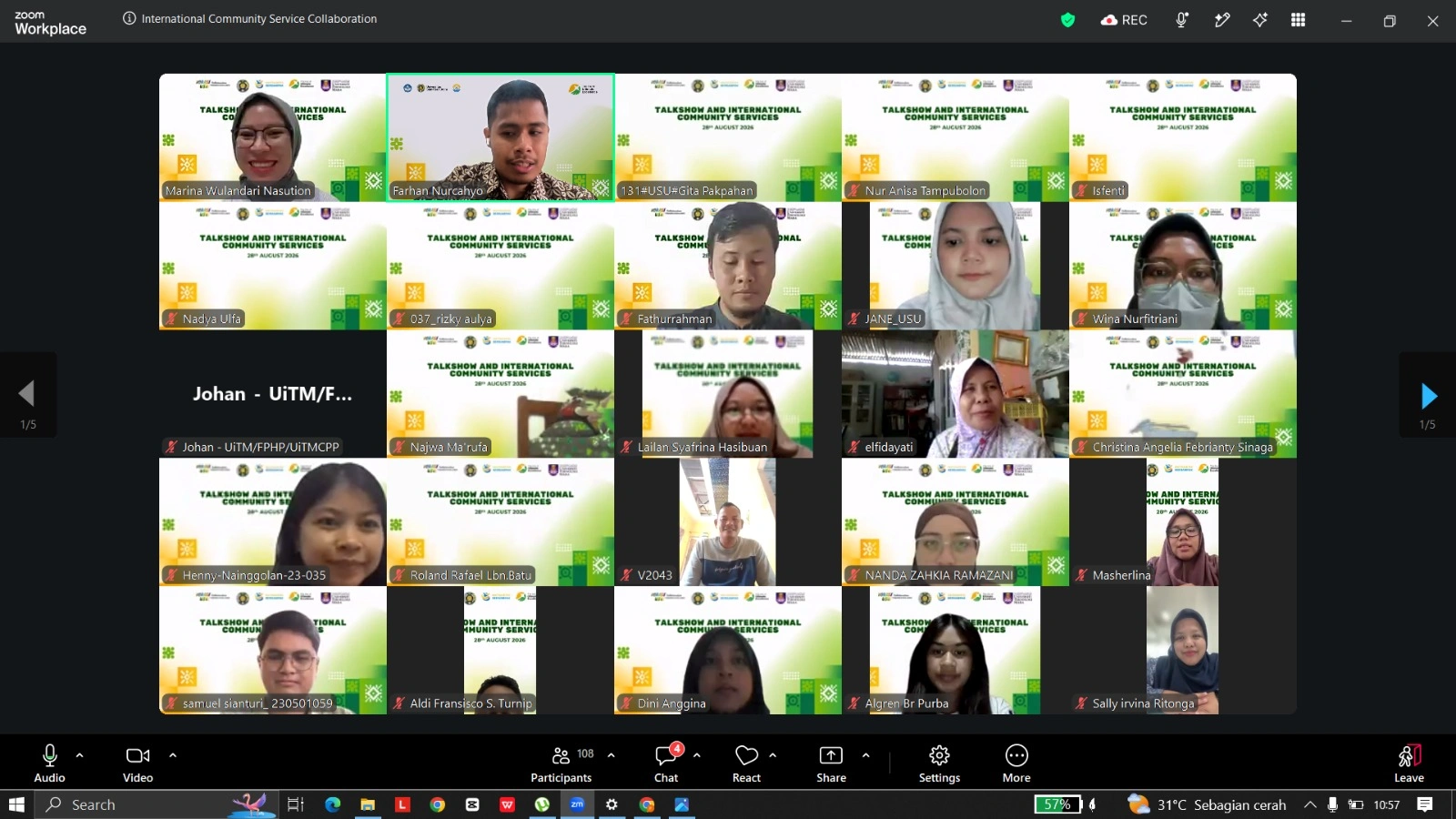
In addition to the presentation sessions, the activity also served as a space for sharing experiences between UiTM and the PKM partners of the Faculty of Vocational Education USU in Langkat Regency. The partners involved in the community service activity included the Kuala Indah Forest Farmer Group (KTH), shrimp paste entrepreneurs and producers, as well as teachers, students, and administrators of the Al-Nazhar Foundation.
During the session, the community service partners from Langkat Regency shared the developments, processes, and results achieved during the implementation of the PKM program. The direct sharing of experiences was an important part of reviewing the achievements of the program while identifying various challenges that are still faced by the partners.
Furthermore, UiTM provided understanding, input, and solutions to various challenges presented by the partners. Through this knowledge-sharing process, the partners are expected to gain new insights into developing their potential, increasing the economic value of local products, and strengthening business strategies to become more adaptive and sustainable.
The collaboration between the Faculty of Vocational Education USU and UiTM Cawangan Pulau Pinang through this activity represents a concrete form of strengthening international cooperation in the implementation of the Three Pillars of Higher Education, particularly in the field of community service. The exchange of knowledge and experiences is expected not to stop at the talkshow activity but to provide a real impact on the sustainability of the program and the economic independence of partner communities.
Through the Talkshow and International Community Services, the Faculty of Vocational Education USU demonstrates its commitment to continuing to organize community service activities that are responsive to community needs. The transformation of local potential into business opportunities is expected to serve as one of the steps toward strengthening community economic resilience, particularly in the process of post-disaster recovery and reconstruction.
