


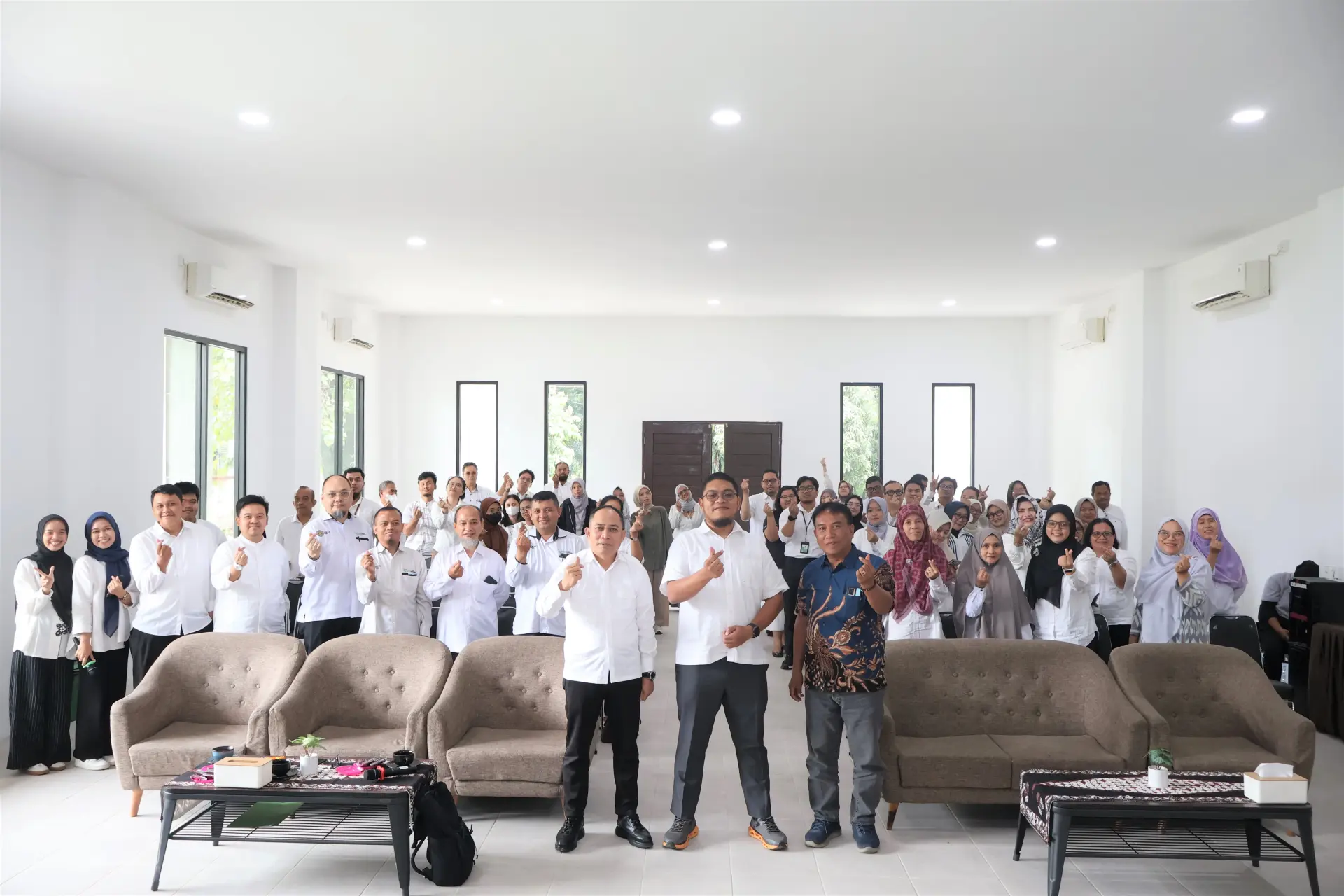
Medan, July 13, 2026 – The Faculty of Vocational Education, Universitas Sumatera Utara (USU), organized a Massive Open Online Course (MOOC) Socialization at the Faculty Hall as part of its efforts to expand access to digital learning while supporting technology-driven educational transformation across the university. The event served as a platform for the academic community to gain a deeper understanding of the concept, benefits, and implementation of MOOCs in promoting a more flexible, innovative, and technology-adaptive learning environment.
The event was attended by the Secretary to the Director of the Directorate of Learning Digitalization USU, the Vice Dean for Education, Student Affairs, and Alumni Relations, the Vice Dean for Research, Community Service, Collaboration, and Internationalization, Heads of Study Programs, lecturers, the Head of Administration, and heads of administrative sub-units within the Faculty of Vocational Education.
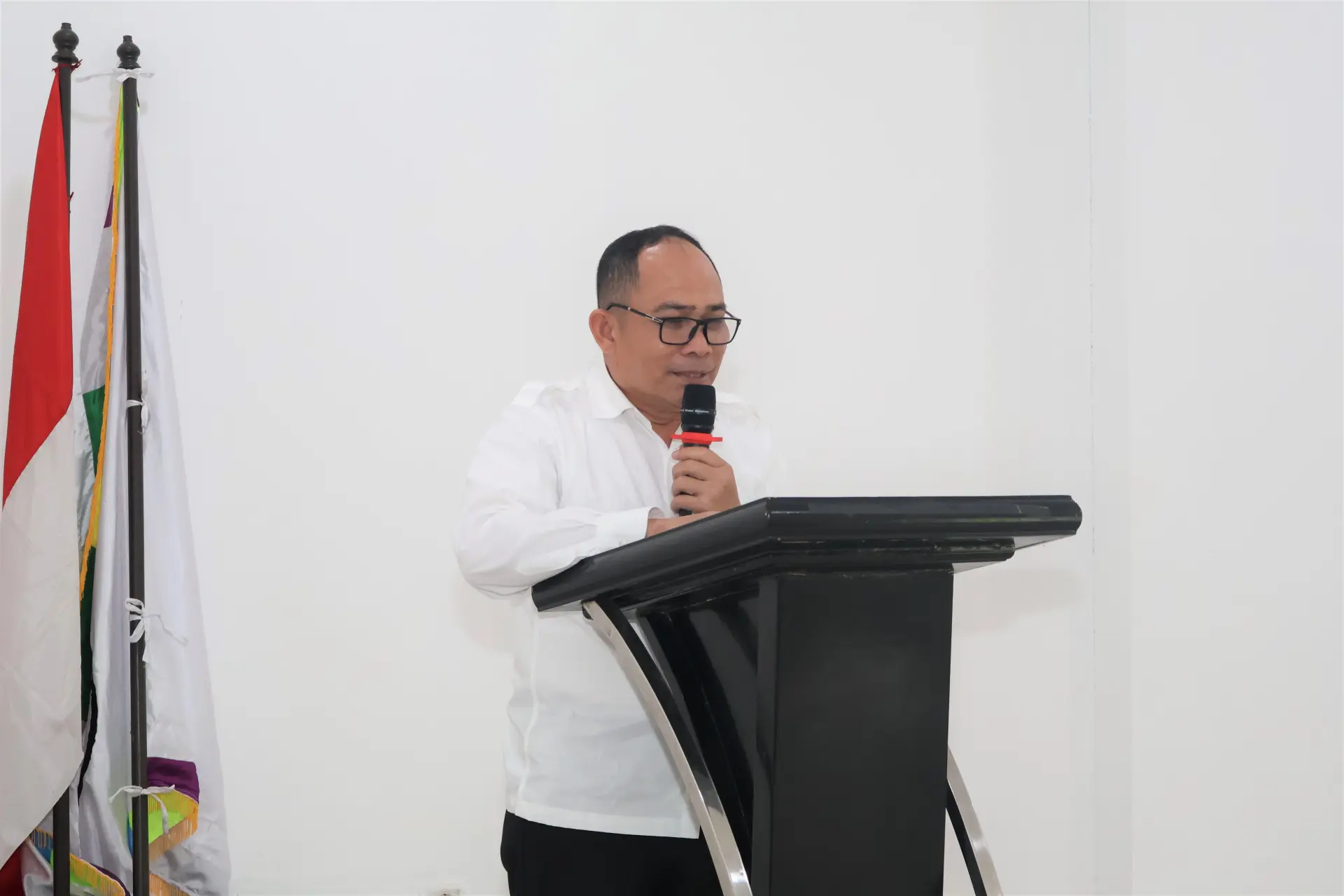
The program was officially opened by the Vice Dean for Education, Student Affairs, and Alumni Relations, Dr. Solahuddin Nasution, S.E., M.SP., who emphasized the importance of digital technology in enhancing the quality of higher education. In his opening remarks, he stated that digital transformation is no longer merely an option but a necessity for creating more effective, flexible, and responsive learning experiences that meet the demands of the digital era.
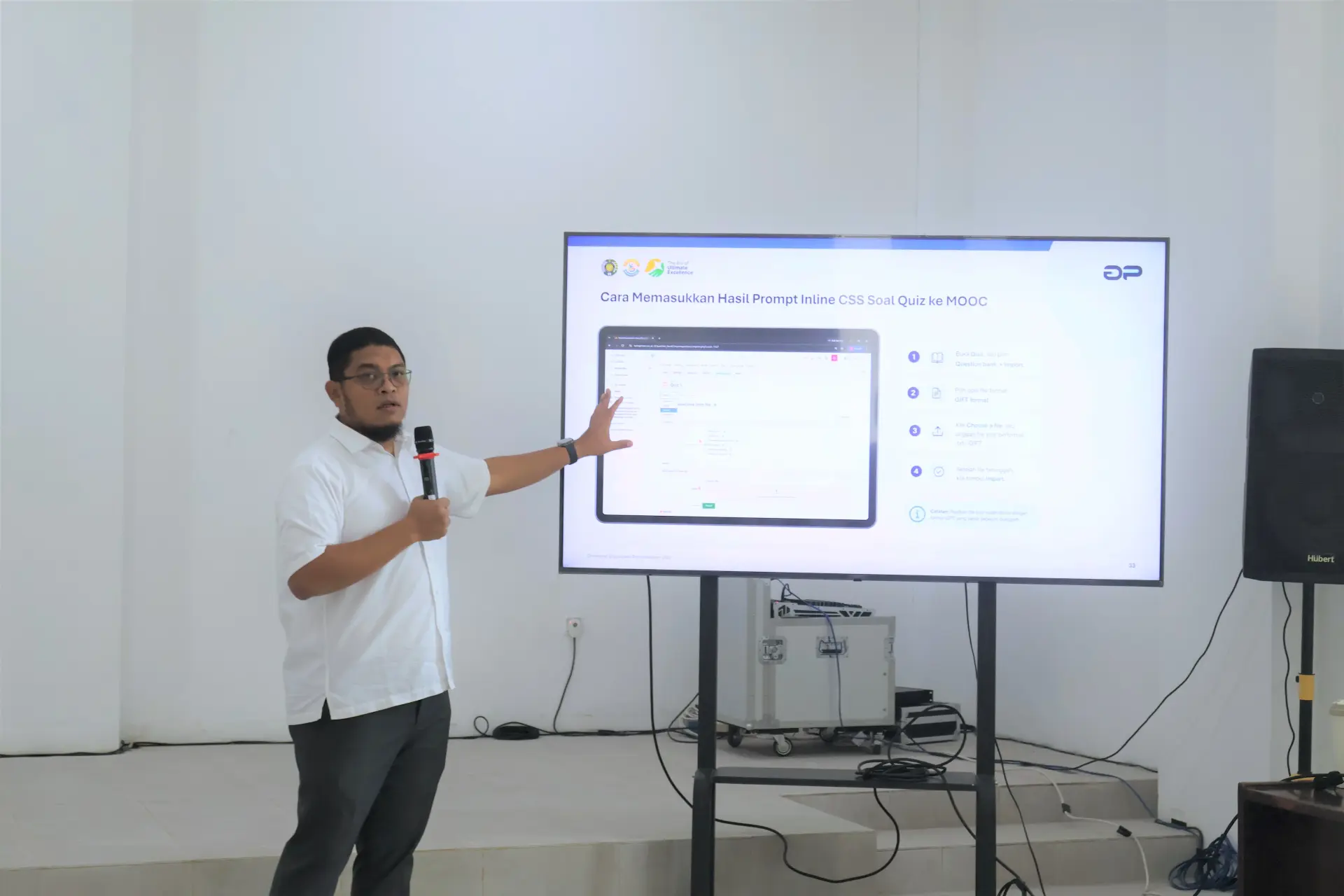
The socialization session was delivered by Ir. Ferry Rahmat Astianta Bukit, S.T., M.T., IPM, Secretary to the Director of the Directorate of Learning Digitalization USU. During his presentation, he explained that a Massive Open Online Course (MOOC) is an online learning platform that enables learners to access educational materials openly, flexibly, and independently without limitations of time or location.
In addition to introducing the fundamental concept of MOOCs, the speaker outlined the process of developing digital learning content, the stages of course design, and strategies for implementing MOOCs within Universitas Sumatera Utara. Faculty members were encouraged to begin developing interactive digital learning materials that could complement classroom instruction while also supporting students' independent learning.
During the discussion session, participants demonstrated strong enthusiasm by raising questions about the development of MOOC-based courses, quality standards for digital learning materials, and the potential of MOOCs to support student-centered learning. The interactive discussion provided an opportunity for participants to exchange experiences and strengthen their understanding of the importance of innovation in higher education.
Through this initiative, the Faculty of Vocational Education USU hopes that lecturers and study program administrators will be better prepared to integrate digital technology into the teaching and learning process. The implementation of MOOCs is expected not only to broaden access to high-quality learning resources but also to enhance learning effectiveness, encourage educational innovation, and reinforce the Faculty's commitment to advancing digital transformation at Universitas Sumatera Utara.