


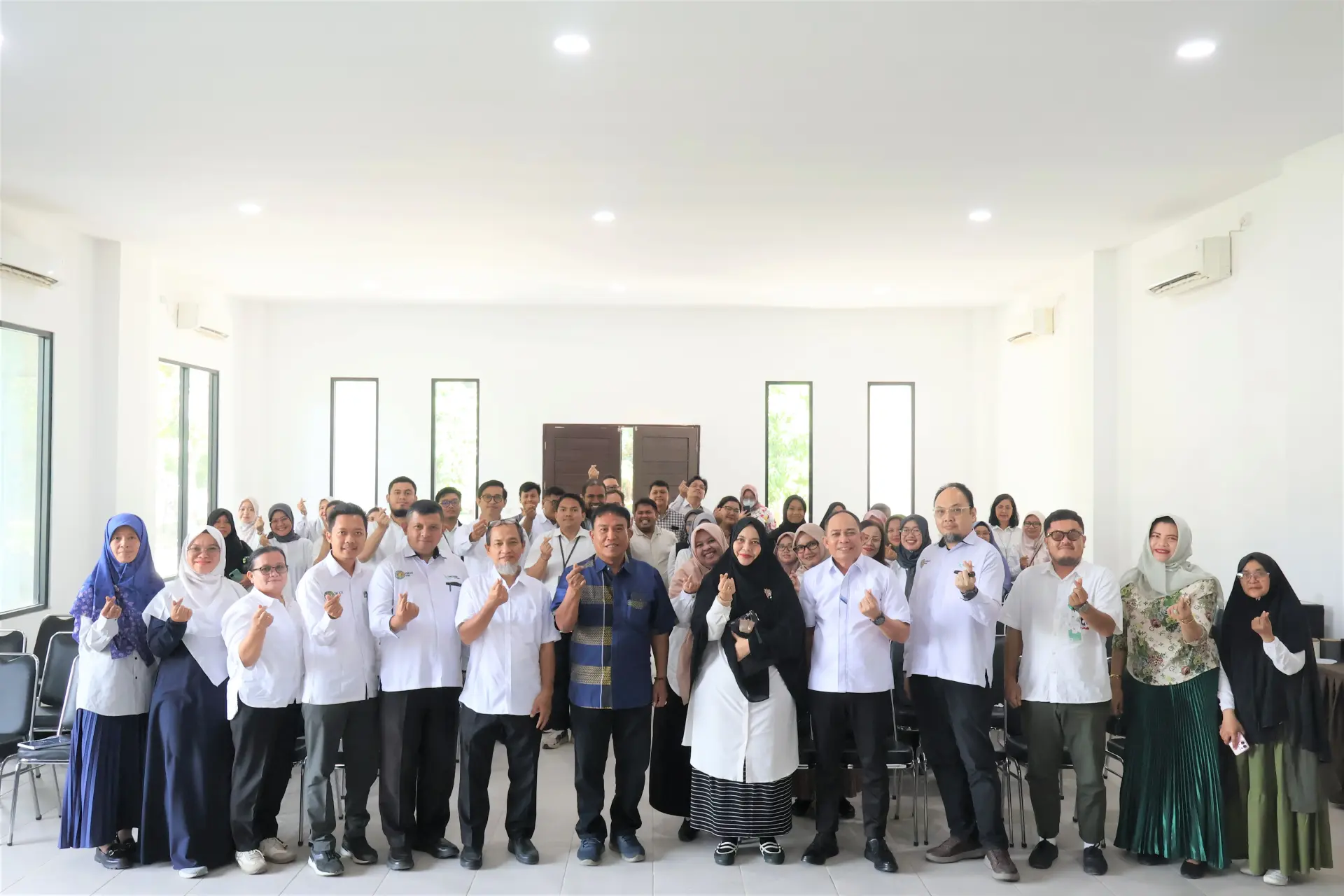
Medan, August 31, 2026 – The Faculty of Vocational Education, Universitas Sumatera Utara (USU), continues to strengthen research and scientific innovation through the Lecturer Scientific Cluster Meeting held at the Hall of the Faculty of Vocational Education USU on Monday, August 31, 2026.
The activity was attended by the faculty leadership, Heads of Study Programs, homebase lecturers, and Heads of Subsections (Kasubag) within the Faculty of Vocational Education USU. The meeting was part of the faculty's efforts to establish a more focused and structured mapping of lecturers' expertise while supporting the development of education, research, and community service.
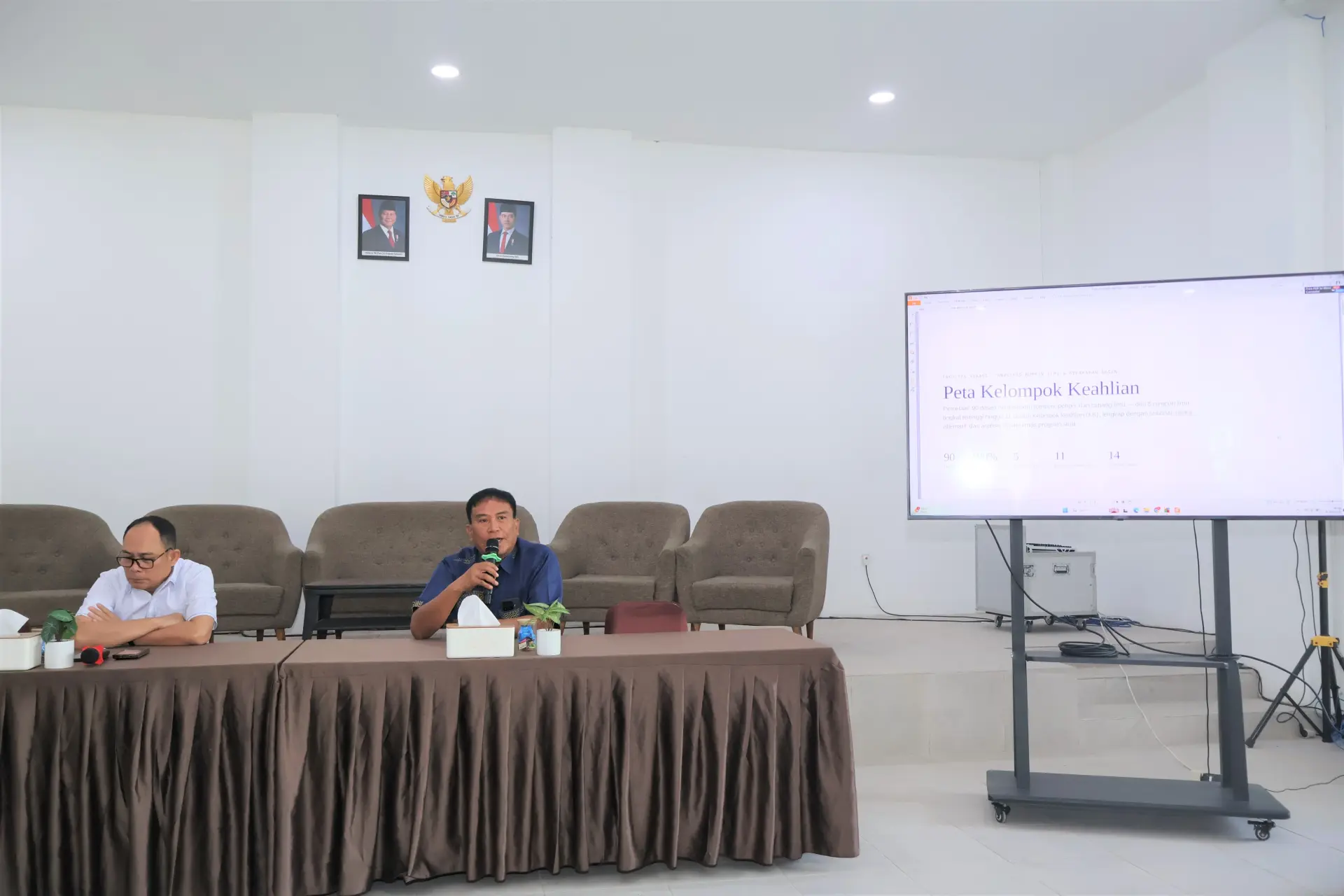
The activity was opened and led by the Vice Dean for Research, Community Service, Cooperation, and Internationalization, Junedi Ginting, S.Si., M.Si. In his presentation, he emphasized the importance of scientific cluster mapping as a basis for strengthening lecturers' expertise, building collaboration across study programs, and developing areas of expertise aligned with the characteristics of vocational education.
During the meeting, lecturers were directed to determine and identify scientific clusters according to their respective disciplines, fields, branches of science, and areas of expertise. This mapping is expected to provide a clearer picture of the scientific potential within the Faculty of Vocational Education while serving as a foundation for developing research expertise groups within the faculty.
Based on the lecturer expertise mapping analysis presented, there are five scientific disciplines and 11 proposed expertise groups covering various fields, including Management and Entrepreneurship; Instrumentation Engineering, Materials, and Energy; Data Science, Statistics, and Computer Science; Social Sciences, Law, and Public Administration; Chemistry and Applied Sciences; Applied Languages and Linguistics; Accounting; Tourism and Destinations; Health and Pharmacy; Information Science and Library Science; as well as Biotechnology and Interdisciplinary Studies.
The mapping also shows that the expertise groups within the Faculty of Vocational Education have the potential to be developed across study programs. On average, each expertise group encompasses at least two study programs, so their existence is expected to serve as a platform for strengthening research collaboration, including the teaching of courses across programs and community service activities.
Through this meeting, the Faculty of Vocational Education USU encourages each lecturer to gain a better understanding of and accurately map their respective areas of expertise. The mapping results are expected to serve as an initial step in establishing strong, collaborative, and sustainable scientific clusters while supporting the improvement of the quality of the three pillars of higher education and strengthening the excellence of vocational education.