


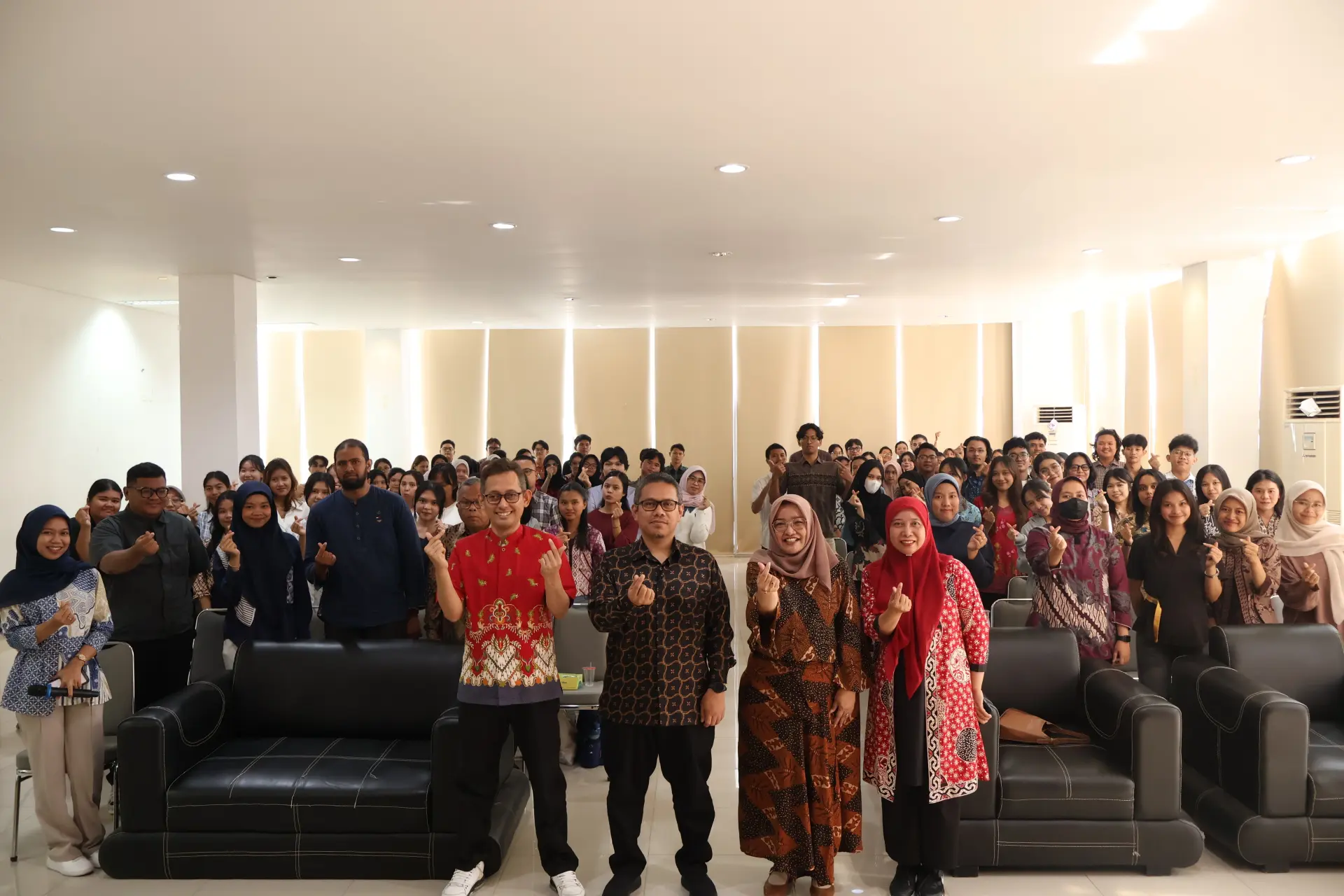
Medan, September 05, 2026 — The Applied Bachelor's Degree Program in Public Sector Accounting, Faculty of Vocational Education of Universitas Sumatera Utara (USU), held a Public Lecture and Teaching Collaboration with Prof. Dr. Ram Al Jaffri Saad from Universiti Utara Malaysia (UUM) at the Mikie Wijaya Hall, Faculty of Economics and Business (FEB), USU. This activity serves as a learning space for students to expand their academic horizons while understanding the values that need to be cultivated in preparing themselves as future accountants. The event was attended by the Dean of the Faculty of Vocational Education, USU, Prof. Dr. Isfenti Sadalia, SE., ME., the Dean of FEB USU, Dr. Abdillah Arif Nasution, S.E., M.Si., Ak., CA., QGIA., the Head of the Public Sector Accounting Study Program, Sambas Ade Kesuma, S.E., M.Si., Ph.D., Ak., CA., as well as faculty members and students of the Applied Bachelor's Degree Program in Public Sector Accounting.
In his speech, Sambas Ade Kesuma stated that Prof. Ram is a mentor figure who inspires the development of academic insight and the character building of students. The presence of the academician from UUM is expected to enrich students' perspectives, especially in understanding the developments in accounting science and the challenges of the profession amid changes in the business and government environment.
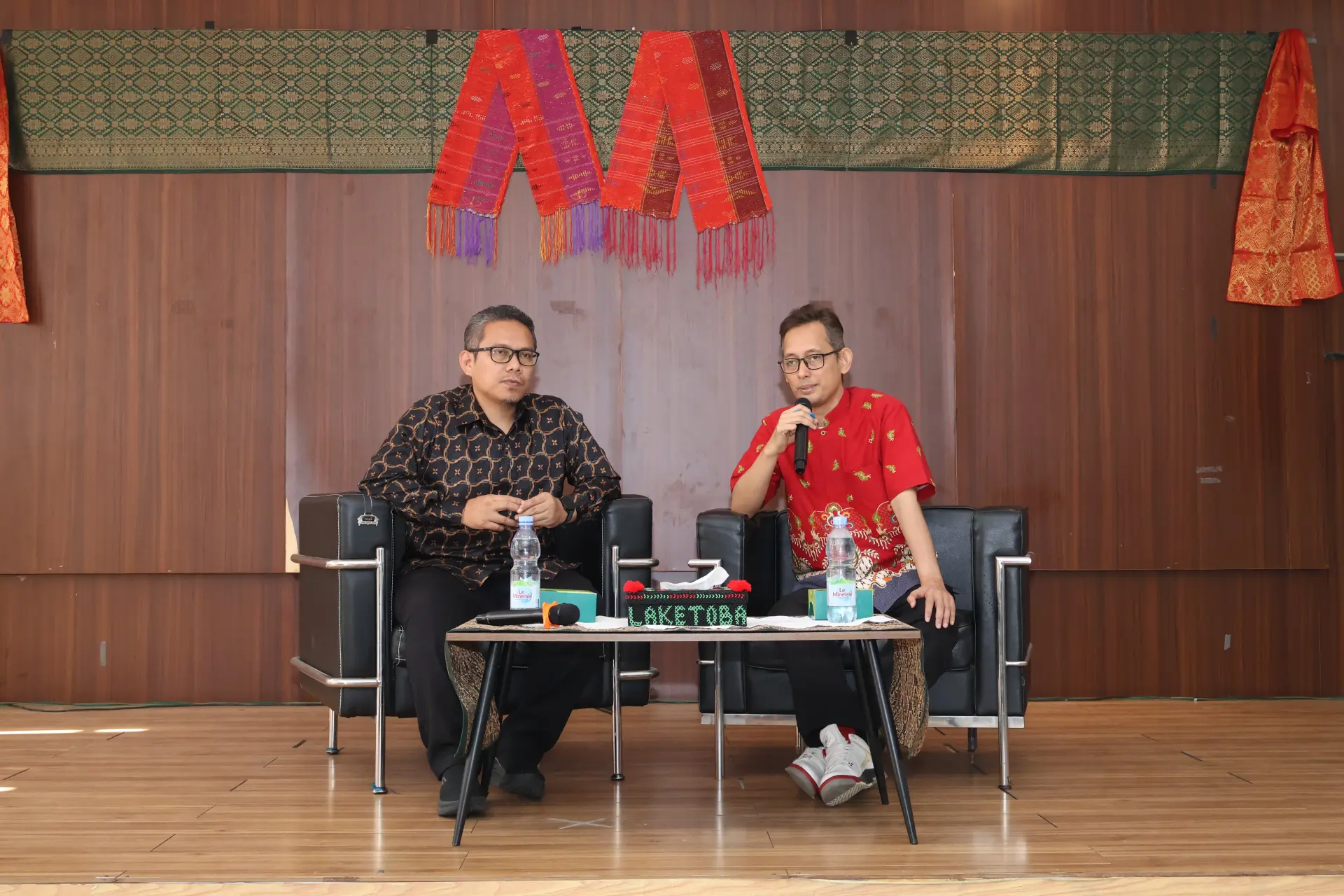
In his presentation, Prof. Ram emphasized three important things that students need to possess: knowledge, character, and dedication. These three are complementary foundations in shaping graduates who are not only academically excellent but also have character and awareness of their responsibilities to society.
Knowledge is the primary capital for students to understand their field of study, develop critical thinking skills, and address increasingly complex problems. Amidst the ease of access to information and technological advancements, including artificial intelligence (AI), students still need to build a deep understanding and the ability to evaluate the truth and relevance of the information they acquire. However, mastery of knowledge alone is not enough.
Character relates to ethics, integrity, and attitudes in using knowledge, while dedication reflects the willingness to apply knowledge for broader interests. Therefore, higher education is not solely oriented towards academic achievement but also towards the formation of individuals who can make a real contribution. This message is particularly relevant to Applied Bachelor's Degree Program in Public Sector Accounting students, who will later play a role in financial management, reporting, oversight, and governance in the public sector. In this field, technical competence must go hand in hand with integrity and responsibility towards societal interests.
The development of AI has also become one of the important issues in discussions about the future of the accounting profession. The ability of technology to help process data, organize information, and automate certain tasks presents both opportunities and challenges for students preparing to enter the workforce.
In responding to questions about the possibility of AI replacing accountants in the future, the general lecture material highlights the importance for students not to stop at mastering theory. Students need to develop skills that go beyond basic knowledge, including analytical reasoning, problem-solving, context understanding, and professional judgment.
AI can be a helpful tool in accounting work, but its use still requires users who can understand the results, verify the accuracy of information, and consider the implications of decisions. Therefore, mastery of technology needs to be combined with a strong understanding of accounting, rather than replacing the learning process.
For students in Public Sector Accounting, this also relates to the need to understand the responsible use of technology, especially when financial information is used to support decision-making and public accountability. The upcoming challenge is not only about the ability to use AI but also about how to use it appropriately, critically, and ethically.
The discussion session also addressed students' preparations for entering the workforce. One student, Rachel Amanda, raised a question about steps that students can take to enhance their readiness and professional competitiveness.
In his response, Prof. Ram advised students to wisely utilize social media as a means of building a professional portfolio. Students should not rely solely on their resumes but should start showcasing their competencies and personal development process through works, projects, organizational experiences, academic activities, and relevant learning outcomes.
In addition to building a portfolio, students are also encouraged to expand their knowledge as much as possible. The learning process should not be limited to lecture materials but can be developed through readings, discussions, scientific activities, and experiences that expose students to real-world issues.
In addition to building a portfolio, students are also encouraged to expand their knowledge as much as possible. The learning process should not be limited to lecture materials, but can be developed through reading, discussions, scientific activities, and experiences that bring students face-to-face with real issues.
The message emphasizes that readiness to enter the workforce is built gradually. Knowledge, experience, communication skills, and documented evidence of competence can be assets for students in demonstrating their capabilities to potential employers and the professional environment.
In a subsequent discussion, a question arose regarding the importance of higher education institutions and educators pursuing rankings. In response, Prof. Ram believes that rankings still hold significance in the higher education environment, but they should not be the sole goal.
Rankings can serve as one indicator to encourage improvements in the quality of education, research, and graduates. However, if attention is overly focused on achieving rankings, there is a risk that the substance of education and the real needs of students are overlooked. Therefore, quality improvement should start from fundamental aspects, such as quality learning processes, the development of faculty and student competencies, and the utilization of the potential that higher education institutions already possess. Institutional achievements should ideally grow as a result of efforts to strengthen these qualities, rather than becoming a goal that sidelines character development.
This perspective reiterates the importance of nurturing a generation that possesses knowledge, etiquette, and dedication. Academic achievements will be more meaningful when aligned with good character and the ability to contribute positively to the surrounding environment.
The issue of sustainability also became part of the discussion when a student named Ikbar raised the development of accounting studies in line with government needs and the challenges of implementing green accounting in the business world. The question reflects the students' concern about the role of accounting in supporting resource management and environmental responsibility.
In this context, green accounting can be understood as an approach that considers environmental aspects in the processes of recording, measuring, reporting, or making economic decisions. This approach helps organizations see that operational activities not only have financial consequences but can also have environmental impacts.
In response to the question of how students can contribute to the implementation of green accounting in the future, Prof. Ram emphasized the importance of awareness that the knowledge one possesses carries responsibility. Understanding environmental accounting needs to be followed by a willingness to apply it, including through small, consistent contributions.
For students in the Applied Bachelor's Degree Program in Public Sector Accounting, this understanding can be developed through learning about budgeting, reporting, accountability, and how financial and non-financial information is used to support more sustainable policies. Students can also start to become accustomed to paying attention to resource efficiency, environmental impact, and accountability in various academic and organizational activities.
Thus, green accounting is not only a subject studied in the classroom but also opens up space for students to understand the relationship between accounting competencies, public interests, and sustainability.
The implementation of this Public Lecture and Teaching Collaboration is part of the effort to expand students' learning experiences through interaction with international academics. The meeting provided a space to discuss the relationship between mastery of knowledge, character formation, technology utilization, achieving educational quality, and the professional responsibilities of accountants.
For the Applied Bachelor's Degree Program in Public Sector Accounting, such learning is relevant to strengthen students' readiness to face changing demands in the job market and governance in the public sector. Students are expected not only to understand accounting concepts but also to apply knowledge critically, uphold integrity, and consider the impact of their decisions on society and the environment.
Through this activity, the Applied Bachelor's Degree Program in Public Sector Accounting at the Faculty of Vocational Education USU continues to encourage the development of students that integrates academic competence with character and social responsibility. The values of knowledge, virtue, and devotion serve as a reminder that the quality of a future accountant is measured not only by what they know but also by how they use that knowledge to provide benefits.