


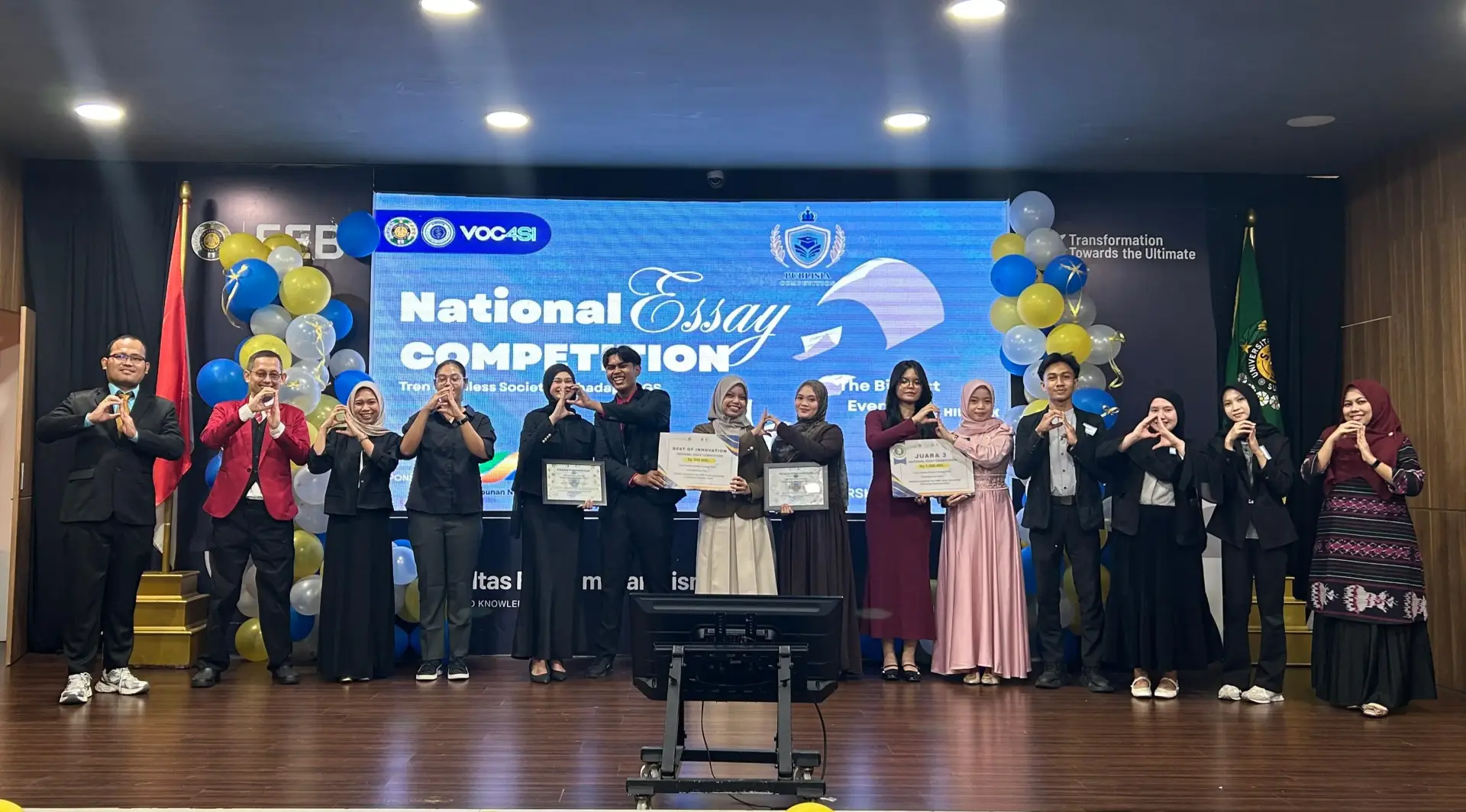
Medan, April 30, 2026 — The Student Association of the Public Sector Accounting Study Program at the Faculty of Vocational Education of the Universitas Sumatera Utara successfully organized the PUBLISIA (Public Ideas & Student Insight Arena) Competition 2026, a national essay competition centered on the theme “The Impact of the Cashless Society Trend on the SDGs.” This event served as a platform for university students across Indonesia to share innovative ideas regarding the development of a digital society and its contribution to achieving the Sustainable Development Goals (SDGs).
By addressing the issue of a cashless society, PUBLISIA not only focused on essay-writing skills but also encouraged students to think critically, innovatively, and solution-oriented regarding various social challenges in the era of digital transformation. Through a theme relevant to current trends, participants are encouraged not merely to express opinions but to present ideas with the potential for real-world implementation within society.
The chair of the organizing committee explained that the selection of this theme was based on shifts in societal lifestyles, which increasingly prioritize efficiency through digital payment systems. The emergence of technologies like QRIS is seen as having brought significant changes to economic activities, as transactions have become faster, more practical, and more efficient.
“The main objective of this event is to provide a platform for students across Indonesia to share their ideas and innovations regarding the cashless society trend and its impact on the SDGs through the PUBLISIA Competition,” he said.
The competition was participated in by 33 teams from various renowned universities in Indonesia, including Diponegoro University (UNDIP), Airlangga University (UNAIR), the Sumatra Institute of Technology (ITERA), and the State Finance Polytechnic (STAN). The entire evaluation process was conducted online, while the winners were announced during the Gala Dinner, which served as the culmination of the event series.
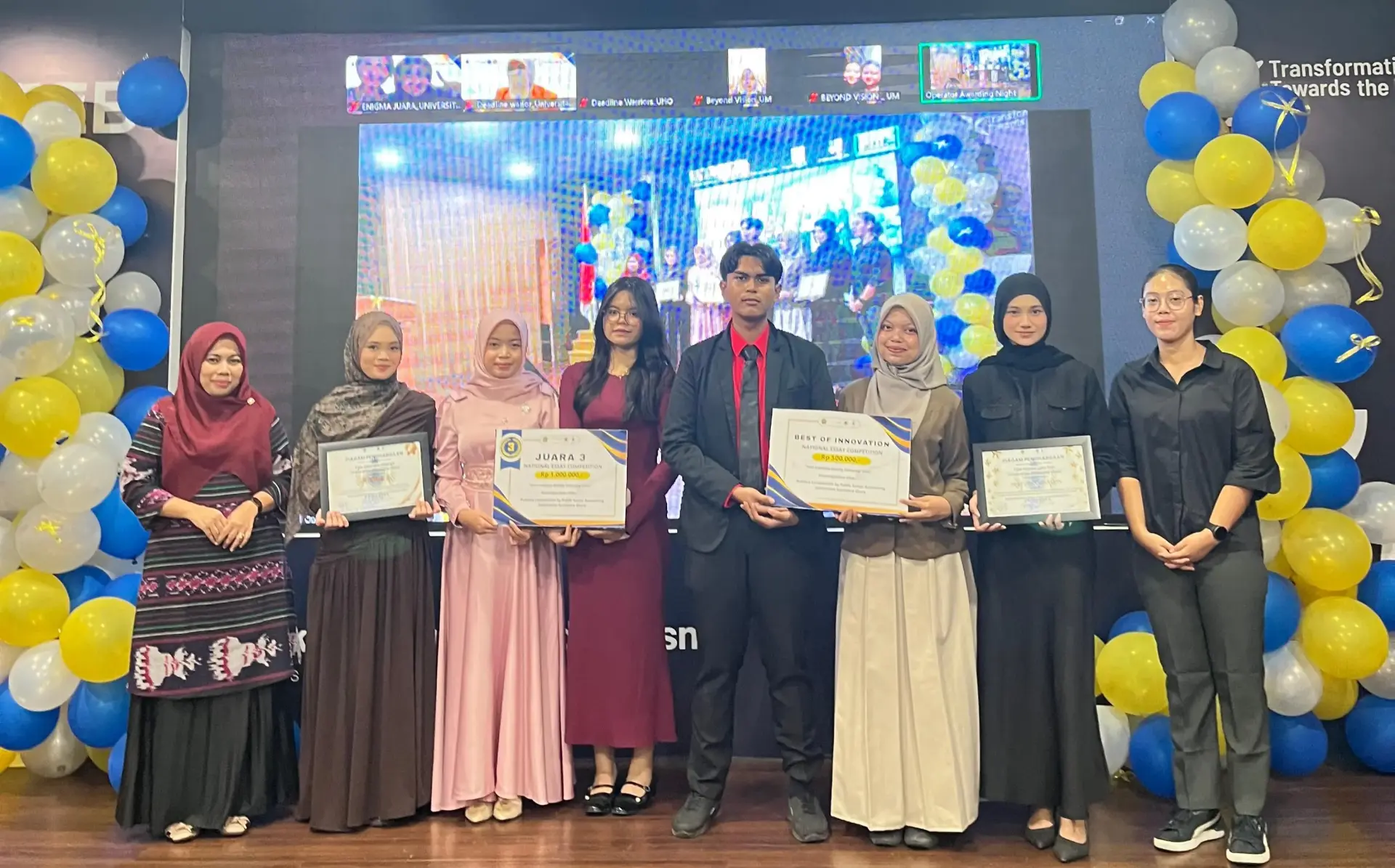
The evaluation process for the PUBLISIA Competition involved a panel of judges from various universities and academic practitioners, namely Sambas Ade Kesuma, S.E., M.Si., Ph.D., Ak., CA from the Public Sector Accounting Program at USU; Assoc. Prof. Dr. Debbi Chyntia Ovami, S.Pd., M.Si., CBV., CIIQA., CERA from the Al-Washliyah Nusantara Muslim University, and Syafira Ulya Firza, S.Ak., M.Si. from Mikroskil University. The presence of this cross-institutional panel of judges further strengthens the quality of the evaluation while demonstrating PUBLISIA’s commitment to delivering an objective and high-quality academic competition.
One of the judges, Syafira Ulya Firza, S.Ak., M.Si., from Mikroskil University, noted that the quality of this year’s entries was quite surprising and exceeded her expectations. According to her, the submitted works not only addressed social issues but also highlighted global challenges related to digitalization and sustainability.
“What really surprised me was that the participants didn’t just use AI in a superficial way. This was evident in how they were able to combine qualitative and quantitative approaches in their work. Additionally, the issues they addressed weren’t limited to social concerns but extended to global challenges,” she explained.
He also noted that many of the ideas presented by participants have significant potential to be developed into real startups. In his view, some participants were even able to convince the judges of the potential of the business ideas they proposed, even though most were still at the proposal stage.
“All participants have interesting ideas. However, what makes a team stand out is when they are truly confident in the product they’re offering. The way they speak can make the audience believe that the idea is indeed good and worth developing,” she added.
Furthermore, Syafira noted that events like PUBLISIA have a positive impact on increasing student engagement with current issues while fostering critical thinking among the younger generation.
“Competitions like this are great for raising students’ awareness of current issues and training them to think more deeply,” he said.
In addition to serving as an academic competition, PUBLISIA also provides a space for discussion and the exchange of ideas among students from various regions across Indonesia. The Gala Dinner was one of the most memorable moments of the event series, as it brought together the organizing committee, participants, and winners in person to share their perspectives on digital innovation and the future of a cashless society in Indonesia.
Overall, the PUBLISIA Competition 2026 is not only a platform for a national essay competition but also reflects the quality of thought among Indonesia’s youth in responding to the challenges of the digital era. Through the innovative ideas born from this competition, students demonstrate that digital transformation is not merely about technology but also about how innovation can have a tangible impact on society and support the achievement of the Sustainable Development Goals (SDGs).