


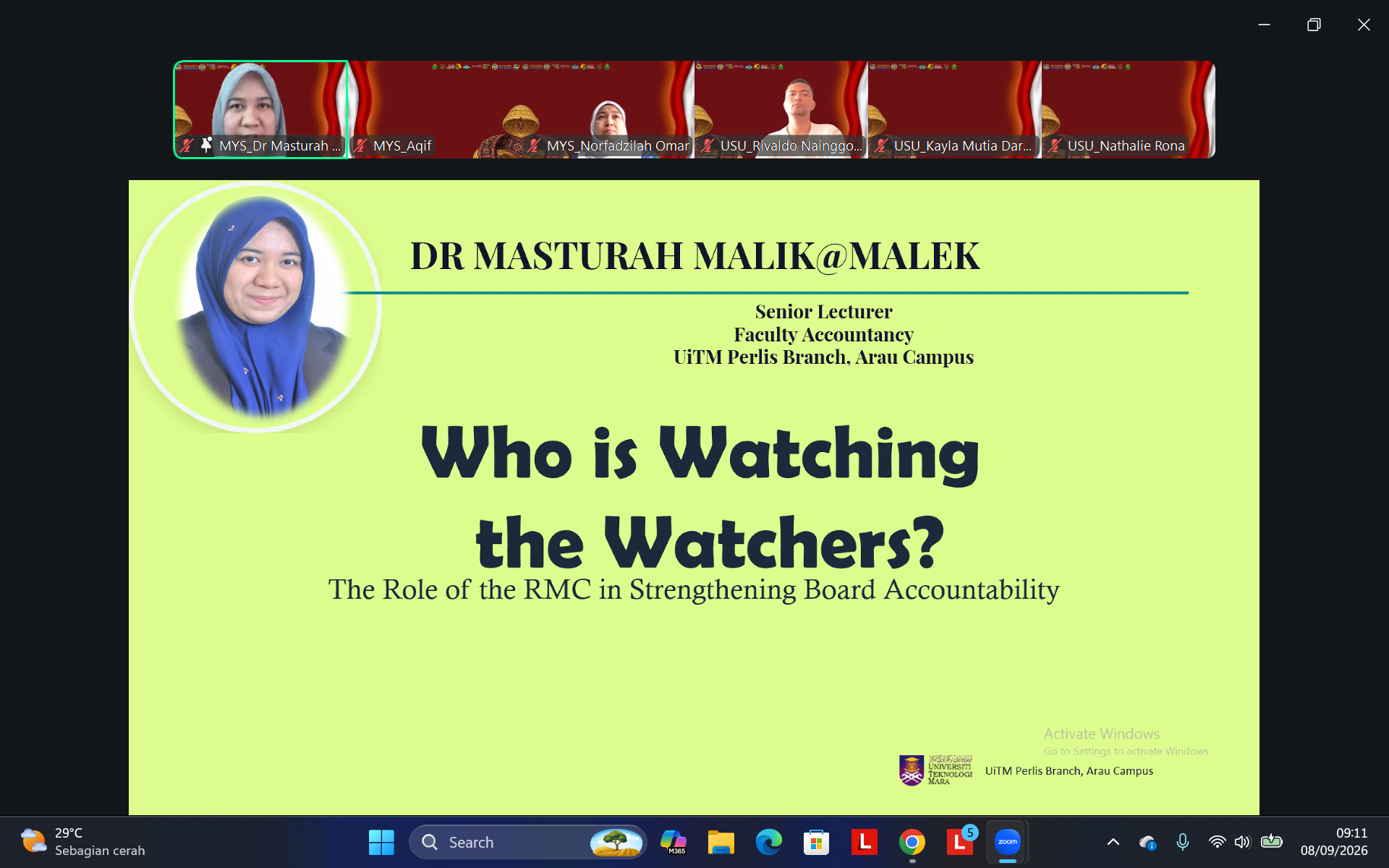
Medan, September 8, 2026 — The series of the International Summer Course 2026 at the Faculty of Vocational Education, Universitas Sumatera Utara (USU) continued with a session entitled “Who is Watching the Watchers? The Role of RMC in Strengthening Board Accountability.” This session featured Dr. Masturah Binti Malik as the speaker, with Marina Wulandari Nasution, S.Si., M.Si. serving as the moderator.
The online event provided a learning space for students from various backgrounds and countries to understand how the Risk Management Committee (RMC) plays a crucial role in strengthening board accountability and ensuring that various risks within organizations are effectively monitored.
Before starting the material, Dr. Masturah expressed her appreciation to Dr. Sambas, the Head of the Public Sector Accounting Study Program at the Faculty of Vocational Education USU and the Chair of the Organizing Committee for the International Summer Course 2026, for the opportunity to be a speaker. She also expressed her happiness to see students from diverse backgrounds and hoped the session would provide new perspectives for the participants.
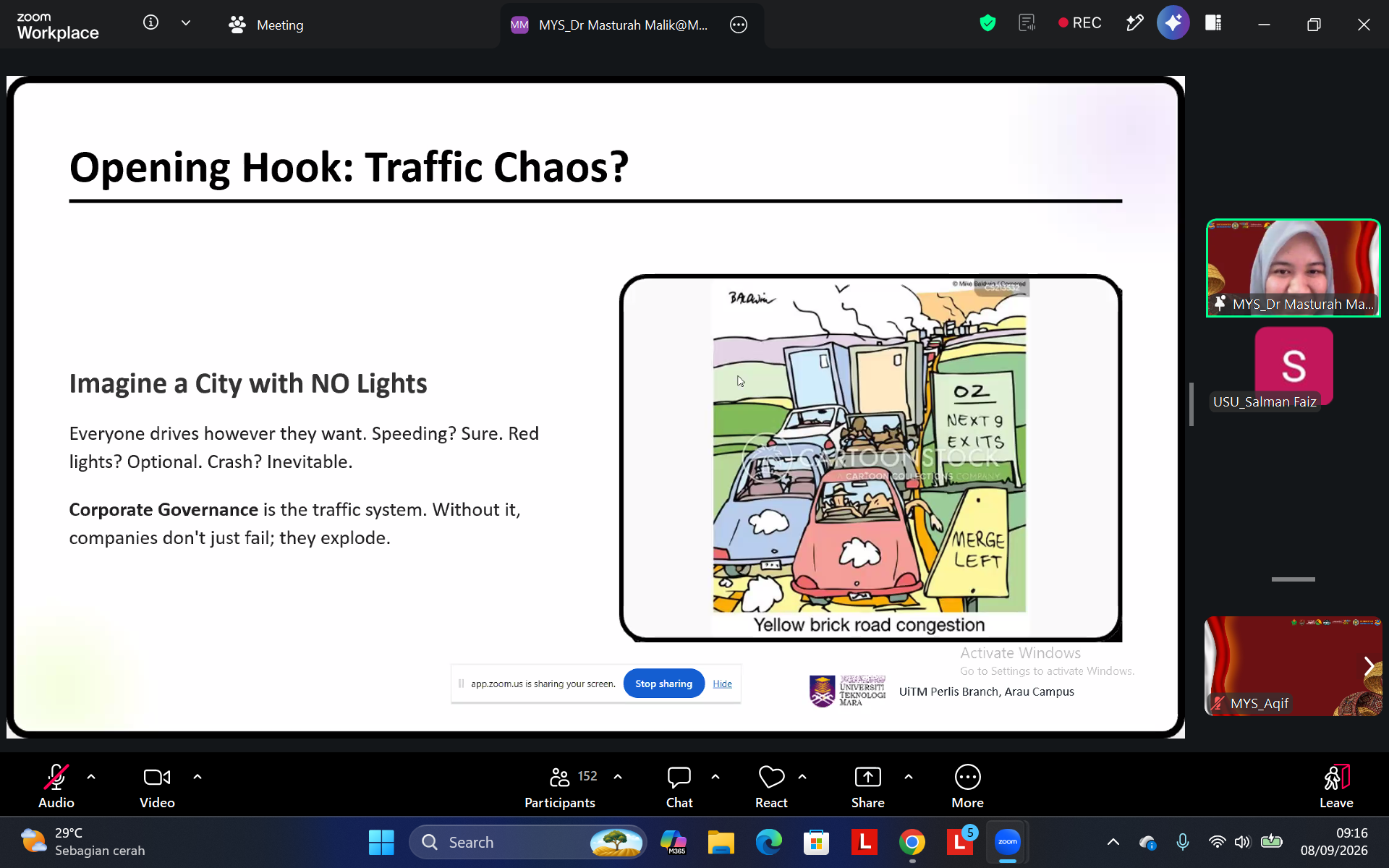
To begin the material, Dr. Masturah invited the participants to imagine a city without traffic lights, rules, speed limits, or authorities overseeing the situation. In such conditions, everyone could drive as they pleased, leading to chaos and accidents that would be difficult to avoid. This analogy was then linked to corporate governance. In the material presented, corporate governance is positioned as a system that ensures companies do not operate without rules and oversight. The presentation also highlighted that corporate decisions rest in the hands of the Board of Directors, raising an important question of who ensures that the Board of Directors does not take risks that could jeopardize the company's sustainability.
From the question, participants were introduced to the role of the Risk Management Committee (RMC) as an important part of the risk oversight mechanism. The RMC plays a role in identifying various threats, including financial, operational, technological, and cyber risks, and serves as an early warning system for the company.
One important part of the session was the discussion of “The Accountability Chain,” which illustrates the relationship between Management → RMC → Board → Shareholders. Each part has a role in ensuring that information, risks, and decisions are accountable. Dr. Masturah explained that if one of these links does not function properly, the overall accountability system will weaken. For example, when management is aware of a significant risk but does not report it, the RMC cannot evaluate risks that it is unaware of. Conversely, when the RMC has identified and reported risks, but the Board of Directors ignores them, the accountability mechanism fails again.
The key message emphasized is that the existence of a committee on paper does not automatically indicate that corporate governance is functioning well. The effectiveness of governance is determined by whether the committee truly performs its oversight function and whether its recommendations are acted upon.
In the materials, the RMC is described as having several main functions, including identifying risks, setting risk tolerance limits, monitoring changes in the risk profile, and reporting findings to the board so that risks can be effectively addressed.
To reinforce participants' understanding, the session also discussed several cases of corporate oversight failures, including Wirecard, Toshiba, and 1MDB. These cases were used to illustrate how weak oversight, unhealthy organizational culture, and failure to respond to risk warnings can contribute to scandals and significant losses. The materials specifically highlighted fake profits, neglect of whistleblowers, pressure from management, and a culture that silences criticism in several of these cases.
The discussion provides the perspective that risk management is not merely an administrative activity. The Risk Management Committee (RMC) has the function of ensuring that potential risks can be identified and communicated before they develop into larger problems.
The enthusiasm of the participants was evident in the interactive question-and-answer session with questions from students in Indonesia, Malaysia, Nigeria, and other participants. One question addressed the situation when the RMC has warned the board, but the warning is still ignored in pursuit of profit. Dr. Masturah explained that corporate culture has a significant influence. If an organization has a culture that does not value input or risk warnings, the presence of the RMC will not be optimal. In such conditions, RMC members at least need to ensure that their duties and recommendations have been communicated effectively.
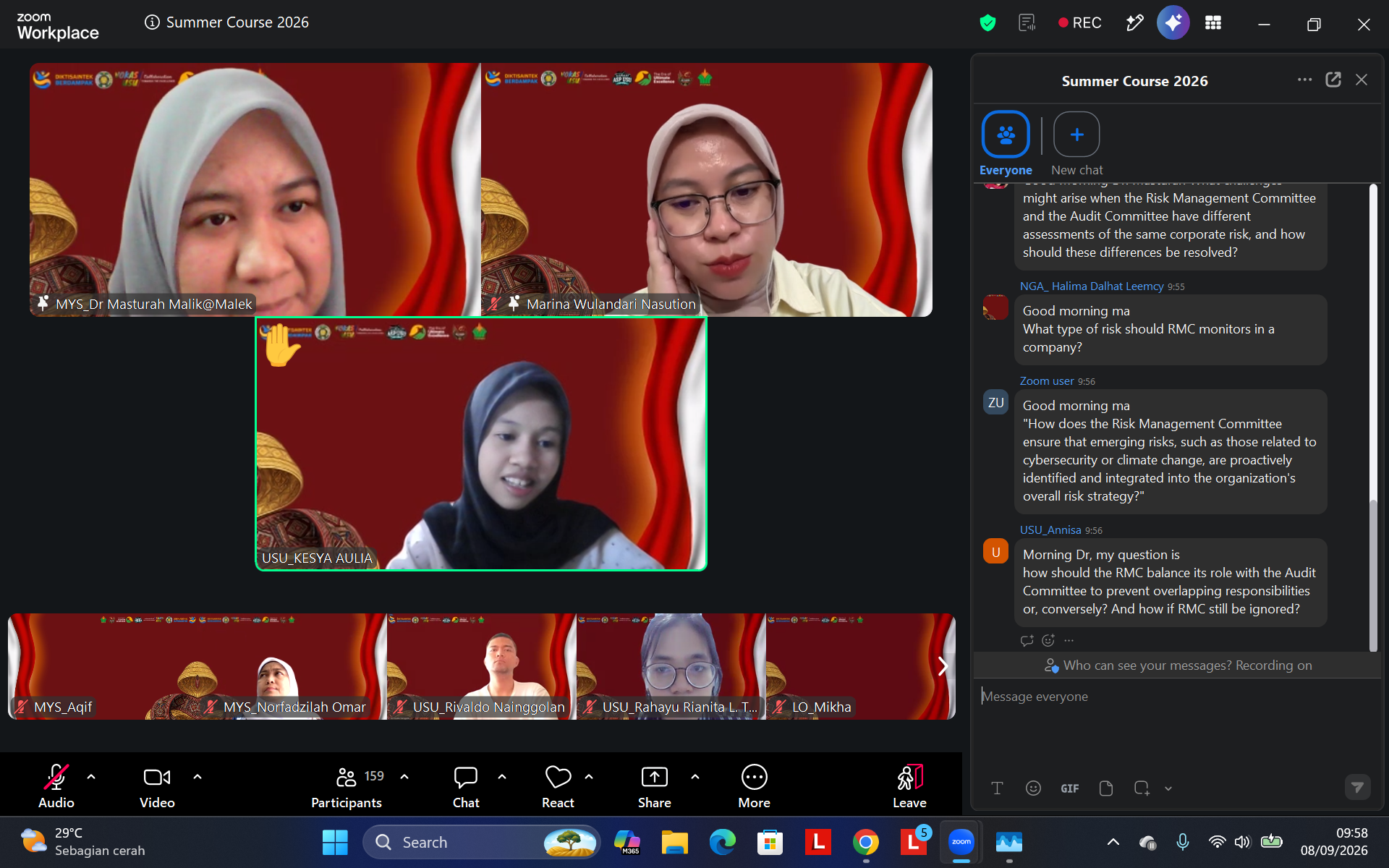
Participants also questioned how the RMC and Audit Committee can work without overlapping functions. Dr. Masturah explained that in practice, some companies combine the two functions, while others have a separate RMC. The distinction in functions is important because the RMC needs to have expertise aligned with the expanding scope of risks, including technology and cyber risks.
Another question highlighted the skills needed for students who wish to pursue a career in risk analysis and compliance. Participants gained an understanding that competencies in risk analysis and relevant certifications can be added value for students looking to build a career in risk management.
One interesting topic for the participants was how to cultivate an organizational culture that encourages members to speak up about warnings or disagreements. Dr. Masturah emphasized that a speak-up culture can be fostered starting from the educational environment. Opportunities to present, attend conferences, or engage in discussions in a college setting can help students build confidence in expressing their opinions. According to her, the ability to speak up when encountering something that is not understood or when having a different perspective is an important part of the learning process. This habit is expected to be carried over when students enter the workforce and face various organizational issues.
The discussion also evolved around questions regarding the types of risks that RMC needs to pay attention to. The discussion was not limited to financial risks, but also included cyber risk, technology risk, environmental risk, consumer risk, and other risks that could affect the sustainability of the company.
The material places RMC as a party that needs to have a perspective on the ongoing development of the company's risk profile. Identified risks then need to be integrated into risk management strategies and reported so that the board has adequate information to make decisions.
For students in the Public Sector Accounting Study Program, the discussion about RMC provides a broader perspective on the relationship between accounting, risk, oversight, and organizational governance. Understanding risk and accountability is not only relevant to the accounting profession but also to various roles related to oversight, compliance, audit, and decision-making.
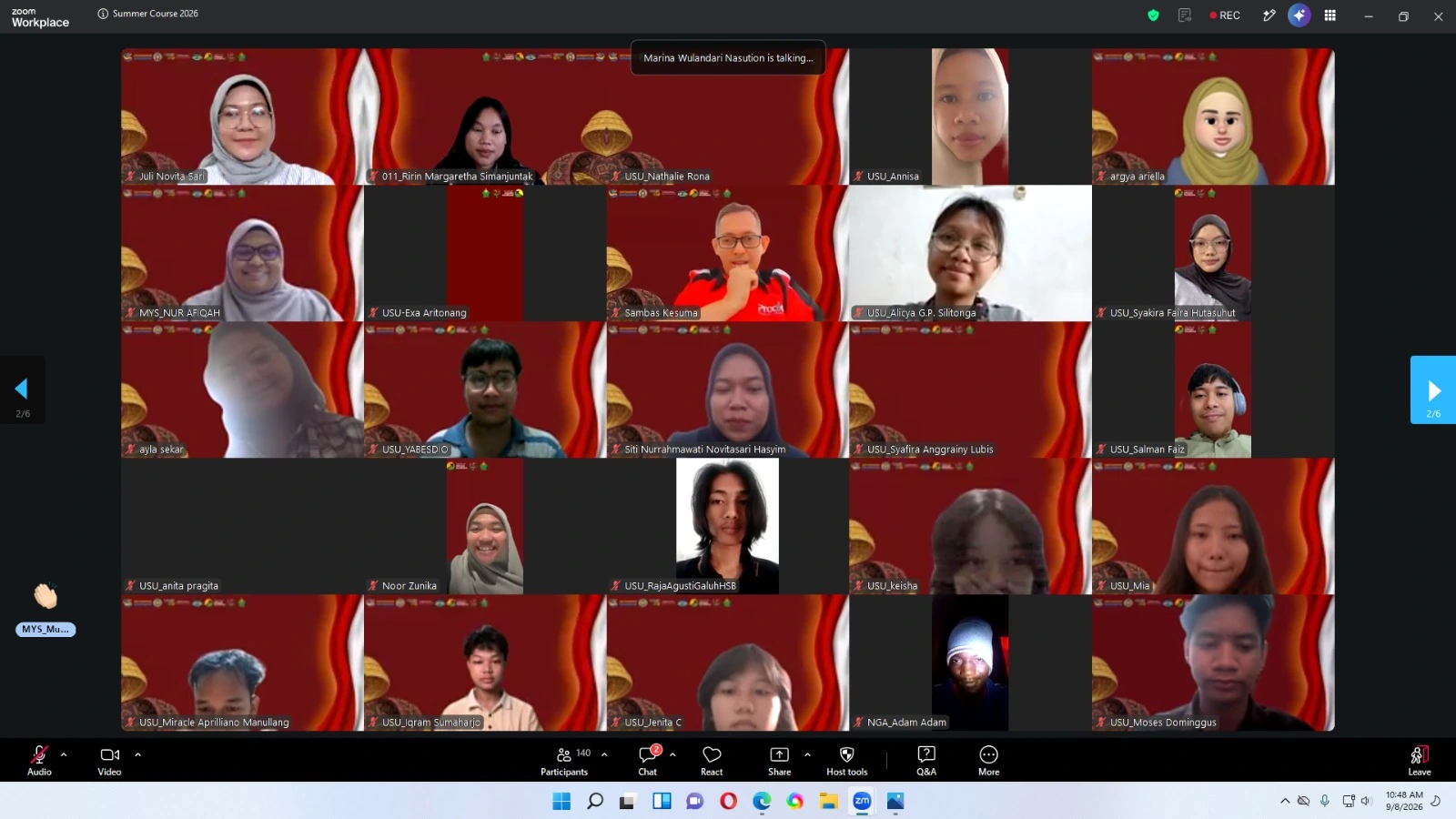
This session also demonstrated that learning in the International Summer Course 2026 does not stop at the delivery of material but evolves into discussions across countries and perspectives. The various questions posed by participants showed a high level of enthusiasm among students to connect the concept of corporate governance with issues that can be encountered in practice.
Through the session "Who is Watching the Watchers?", students gained an understanding that accountability does not only depend on the existence of oversight structures but also on the courage to communicate risks, the quality of available information, and the willingness of those in authority to listen and follow up on those warnings.
In the end, the main message of this session returns to the importance of effective governance in practice, which is not merely about having committees or rules, but ensuring that oversight mechanisms truly function to prevent risks from developing into organizational failures.