


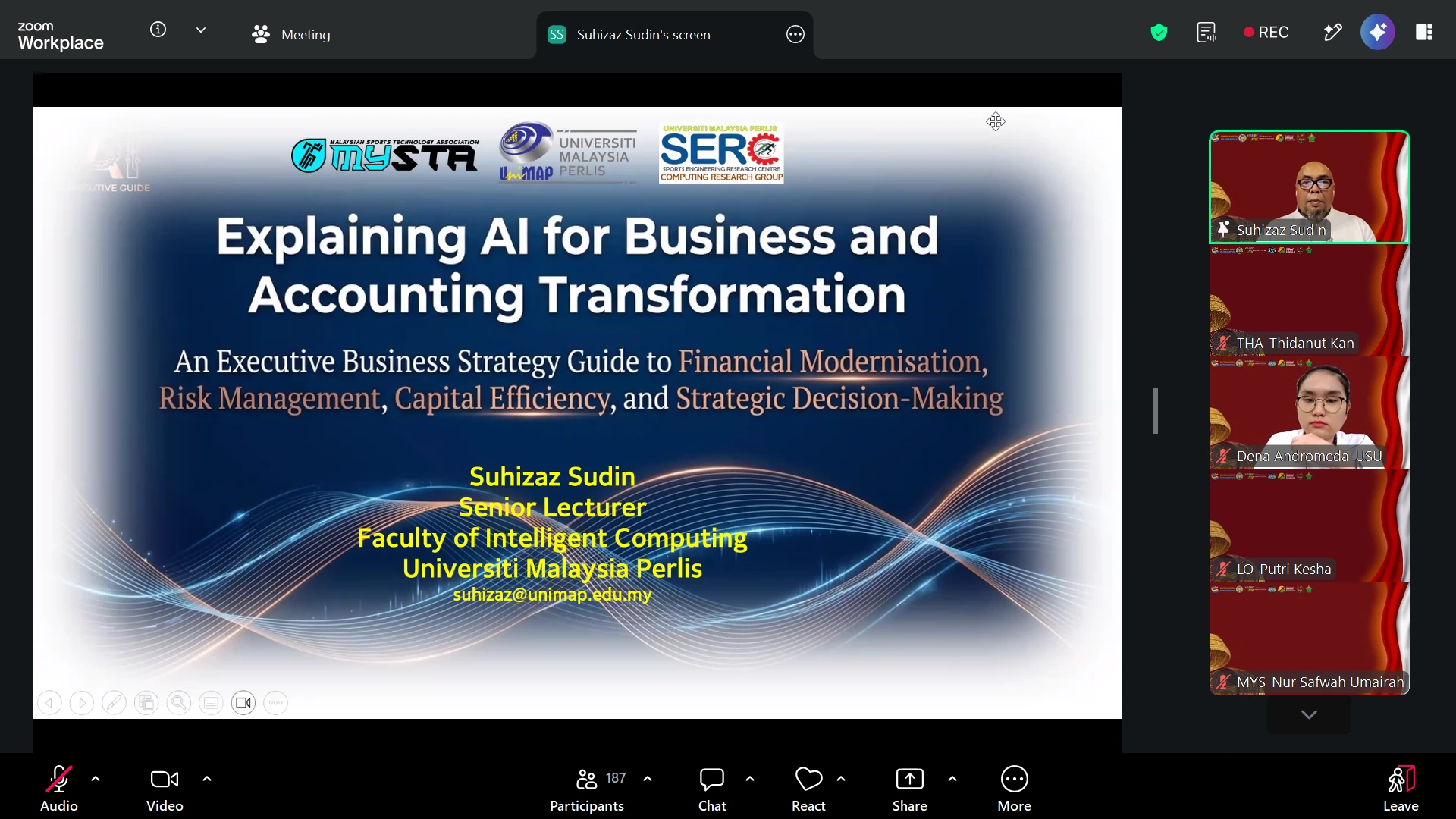
Medan, September 7, 2026 — The Public Sector Accounting Study Program, Faculty of Vocational Education of Universitas Sumatera Utara (USU), participated in the inaugural session of the International Summer Course 2026. The session, conducted online via Zoom, covered the topic “Artificial Intelligence for Business and Accounting Transformation” and featured Suhizaz Sudin from Universiti Malaysia Perlis as the speaker.
Starting at 09:00 a.m. after the opening ceremony of the International Summer Course 2026, this session provided perspectives on the development of artificial intelligence (AI) and its influence on the business world and the accounting profession. The discussion positioned AI not only as a technology for automating jobs but also as part of the changes in how organizations process and utilize data to support analysis and planning processes.
In his presentation, Mr. Suhizaz Sudin explained how AI can continuously process business data so that the data becomes more than just a record of past conditions; it can also be used to generate forecasts and provide insights into possible future conditions. This perspective indicates that digital transformation is shifting the role of the accounting profession towards jobs that require stronger analytical skills and technological understanding.
One of the discussions that garnered attention during the discussion session was the readiness of students to face Accounting 4.0. In this context, students need to develop not only technical skills in accounting but also soft skills and technological competencies relevant to labor market demands.
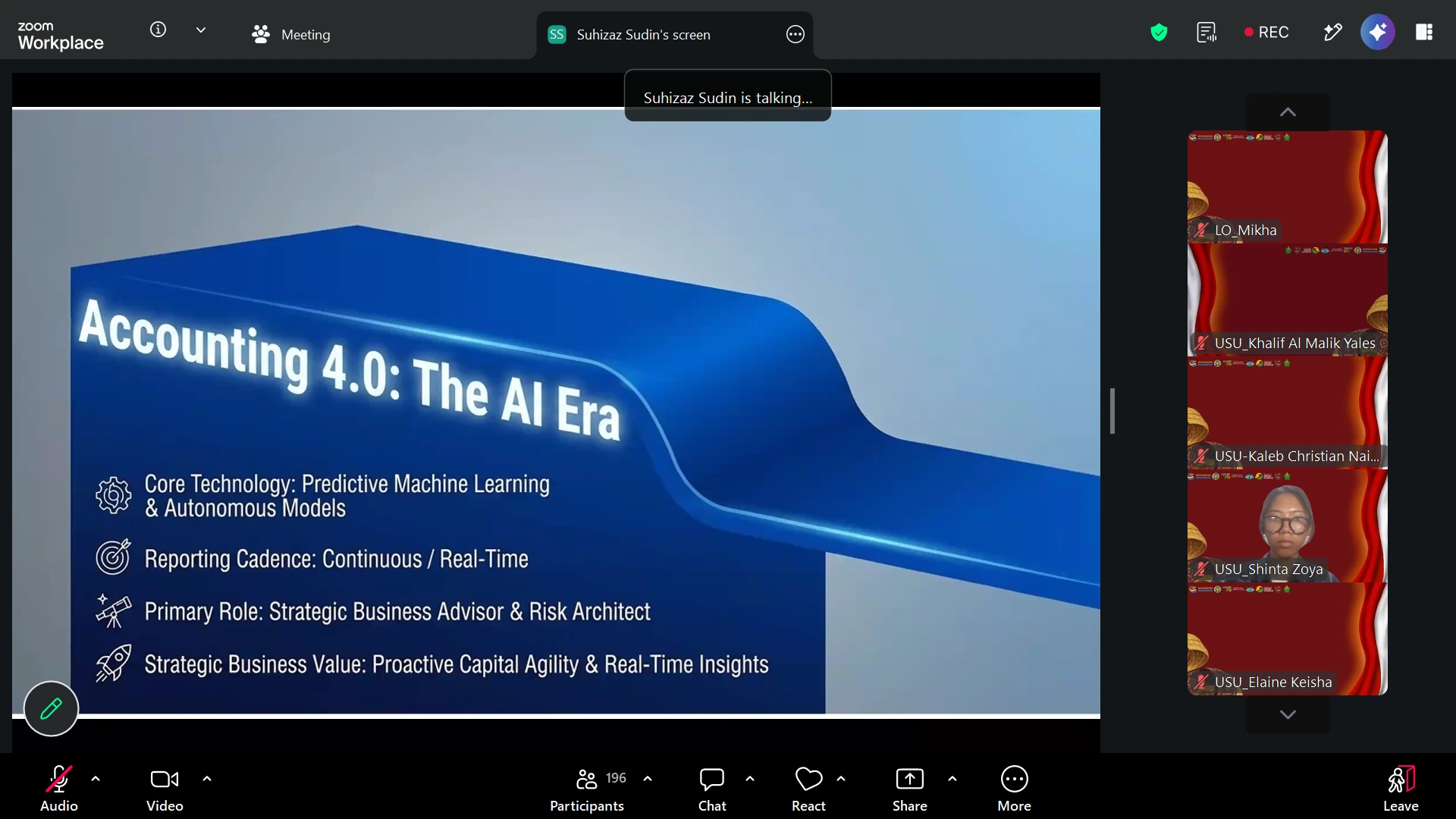
Mr. Suhizaz Sudin emphasized the importance of technological competency for future accounting professionals. Students are expected not only to be users of technology or AI but also to understand how technology is used, to determine the appropriate technology, and to apply it correctly in solving business and accounting issues.
This perspective is relevant for the development of competencies in students of the Public Sector Accounting Study Program, especially in facing an increasingly digitalized work environment. Mastery of technology can support students in developing analytical skills while also understanding how accounting information is used in the decision-making process.
The discussion also addressed the importance of professional judgment in utilizing technology. AI can help identify anomalies in transactions and signal data that requires further attention. However, the results of technology still require human capability to understand the context, conduct analysis, and provide professional considerations.
Another topic highlighted the use of stress testing in facing various business scenarios. Participants were introduced to the importance of understanding scenarios, instruments, and parameters used before building the testing model. The use of code and modeling can help combine various parameters so that scenarios can be tested and analyzed more systematically.
This session also provided an overview of the increasingly relevant technological competencies to consider in accounting education. The integration of accounting and Accounting Information Systems (AIS), programming, databases, information systems planning, artificial intelligence, machine learning, and modeling becomes part of the competencies that can support students' readiness to face developments in the profession.
For Public Sector Accounting students, this understanding offers insight that technological advancements do not stand independently outside the field of accounting. On the contrary, technology becomes an increasingly integrated part of the information processing, analysis, and decision-making processes within organizations.
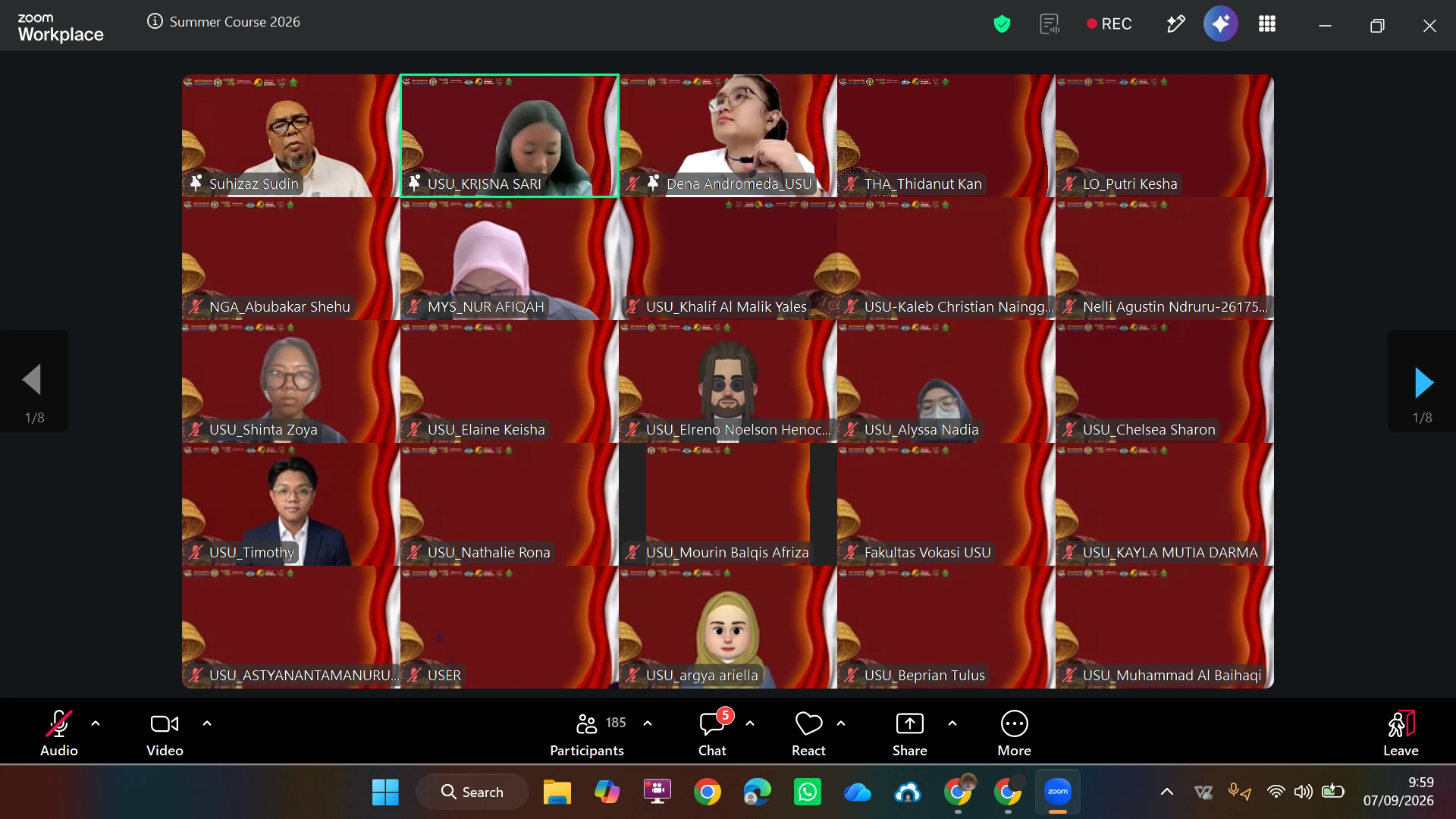
Interestingly, the Q&A session also raised questions about whether AI is capable of making better business decisions compared to experienced managers. In response, Mr. Suhizaz Sudin explained that AI essentially serves to assist humans in decision-making, not to replace human experience and judgment.
This view underscores that technological development needs to be balanced with the strengthening of human capabilities. Mastery of AI must occur alongside analytical skills, professional judgment, contextual understanding, and the ability to make appropriate decisions.
This inaugural session provides relevant international learning for students of the Public Sector Accounting Study Program in understanding the direction of the accounting profession's development in the digital era. In addition to gaining insights from international academics, students also receive perspectives on the competencies that need to be prepared to face a work environment increasingly influenced by technology.
Through participation in the International Summer Course 2026, the Public Sector Accounting Study Program not only opens avenues for students to gain knowledge from an international perspective but also encourages their readiness to become graduates capable of integrating accounting competencies, technology, data analysis, and professional judgment in facing future professional challenges.